
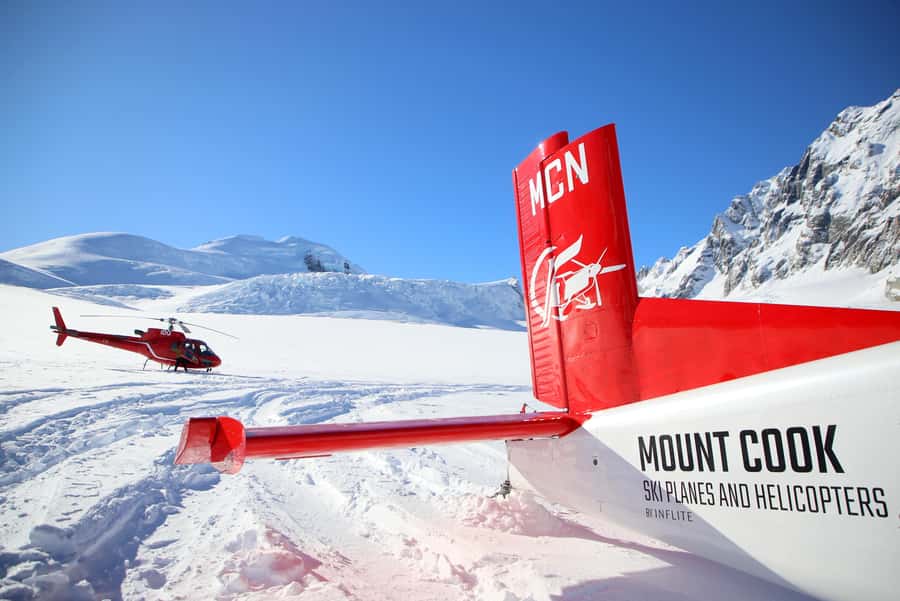
REVIEW · GLACIER HELI HIKES AND SNOW LANDINGS
Mount Cook: Ski Plane and Helicopter Glacier Combo Flight
A glacier landing makes the air feel real. This 45-minute Mount Cook flight is a rare ski plane and helicopter combo, with a snow-and-ice landing on the Tasman Glacier and big views of Aoraki/Mt Cook National Park.
I especially love the way you see the ice from above in two different aircraft. First you glide by ski plane for sweeping sightlines over the Tasman Valley, then you swap into a helicopter for a closer, more flexible viewpoint on the mountains and ice. One thing to consider: weather can affect flight plans, and weight limits can sometimes lead to a timing swap or reschedule.
In This Review
- Why This Glacier Combo Feels Like a Full Mountain Day, in 45 Minutes
- The Flight Up: From Mount Cook Aerodrome to the Tasman Valley Ice Features
- The Glacier Landing on the Tasman Glacier: What You’re Really Paying For
- Swapping Aircraft Back at Mount Cook Airport: The Return Flight View
- Who Should Book This Tasman Glacier Ski Plane and Helicopter Combo
- Price and Value: Is $328 for 45 Minutes Worth It?
- Weather Reality in Aoraki/Mount Cook: How to Think About Reschedules
- What to Bring, What Not to Bring, and the Small Rules That Matter
- The Quick Verdict: Should You Book This Mount Cook Glacier Combo Flight?
- FAQ
- Where does the Mount Cook ski plane and helicopter experience start?
- How long is the experience?
- What is included in the flight?
- Is there a glacier landing?
- What flight views and landmarks should I expect?
- What should I wear and bring?
- What can’t I bring on the aircraft?
- What time do I need to check in?
- Do I need to provide passenger details in advance?
- What happens if the weather causes a cancellation?
Why This Glacier Combo Feels Like a Full Mountain Day, in 45 Minutes
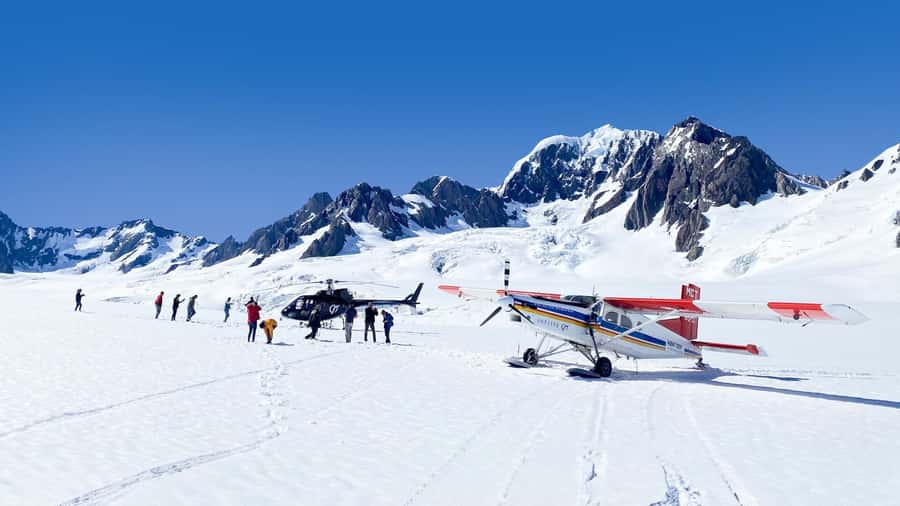
This is the kind of Mount Cook experience you remember because it changes perspective fast. In one short window you get the big-picture geography from a skiplane, then you trade to the helicopter for sharper angles and that up-close “I’m actually here” feeling.
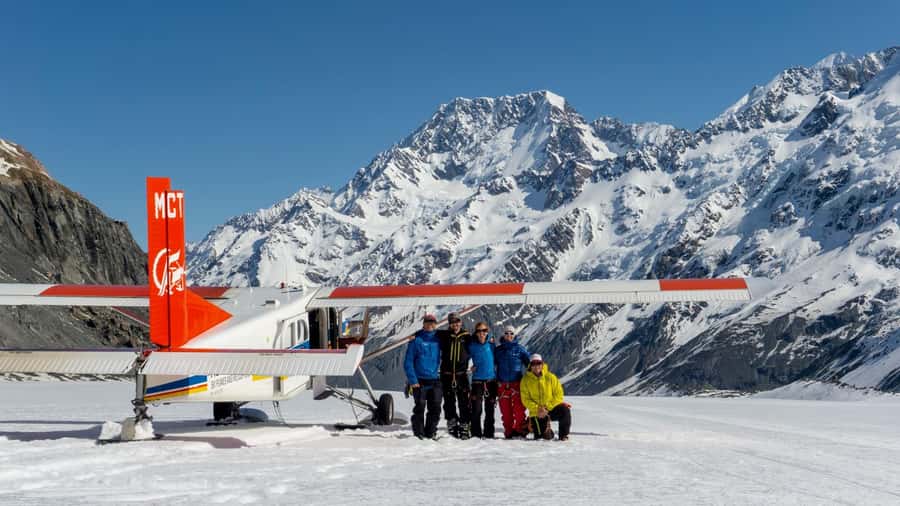
The heart of the trip is simple: fly up the Tasman Valley, then land on the Tasman Glacier’s upper snowfields. The operator notes the aircraft fully shuts down on landing, so you get that rare moment of silence while you’re standing on the snow. That stillness is the contrast to the wind and motion you get in the air.
Also, the route is built around major ice features and iconic peaks. Expect views of the Hochstetter Icefall, the blue glacier lake areas in the valley, and of course Aoraki Mt Cook itself when weather allows. If your time in Mount Cook is limited, this combo is one of the most direct ways to get onto glacier terrain without spending a full day hiking.
Higher up, around Aoraki and Tekapo
- Mount Cook: Scenic Helicopter Flight with Alpine Landing
★ 4.8 · 442 reviews - Mt Cook Small Group Scenic Day Tour from Queenstown
★ 5.0 · 407 reviews - Mount Cook: Ski Plane and Helicopter Glacier Combo Flight
★ 4.6 · 271 reviews - Mount Cook: Mountains High 40-Minute Helicopter Flight
★ 5.0 · 53 reviews
The Flight Up: From Mount Cook Aerodrome to the Tasman Valley Ice Features
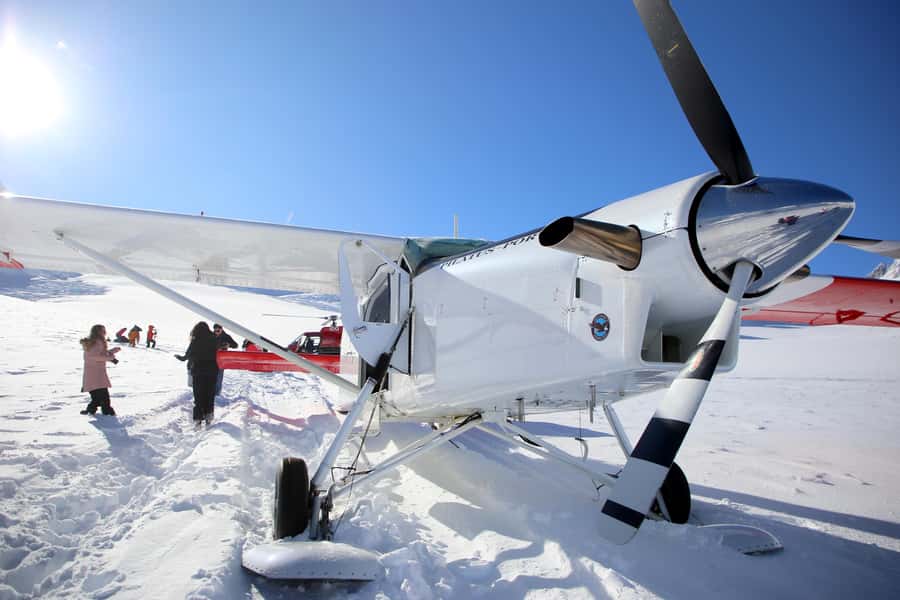
Your day starts at Mount Cook Aerodrome in the Mount Cook National Park area. Check-in is time-sensitive, so plan to arrive early enough to handle weather checks and weight paperwork without stress. Closed-toe shoes are required, and the aircraft rules are strict: you can bring phones and cameras, but no bags.
Once you’re airborne, you’ll fly up the Tasman Valley. This is where the ski plane part earns its keep. From a skiplane, the views tend to feel long and clean, which helps you understand how the valley stretches and how the glacier sits within the wider system.
On this route you can expect:
- A look up the Tasman Valley toward the glacier areas
- Views over the Tasman Terminal Lake and related ice-and-water sections
- Sightlines toward Grand Plateau and Plateau Hut areas
- A strong chance to pick out ice textures like the Hochstetter Icefall
In practical terms, this matters because people often see glacier photos but miss the scale and structure. Icefall zones, terminal lakes, and plateau areas read like abstract shapes from the ground. From the air, you start seeing the logic of the terrain, which makes the landing feel even more dramatic.
The Glacier Landing on the Tasman Glacier: What You’re Really Paying For
The best part is not just that you land on a glacier. It’s that you land on a glacier you can step onto, with time to look around. This trip includes a snow landing on New Zealand’s longest glacier, the Tasman Glacier, and you get to enjoy the alpine environment up close.
A few details help you set expectations:
- You’ll land on the upper snowfields of the Tasman Glacier.
- The operator notes the aircraft fully shuts down on landing.
- Time on the glacier is part of the experience, not just a quick touch-and-go photo stop.
That aircraft shutdown detail sounds small until you’re there. The moment you’re standing on snow and everything goes quiet, you really feel how far above the everyday world this is. People also talk about getting on fresh snow rather than worn tracks, which is exactly the kind of thing you hope for. Weather conditions and surface conditions drive what you’ll see, but the landing itself is the core value.
And don’t treat the stop like a stand-and-stare museum visit. Even on short timeframes, you’ll want to look for:
- The glacier’s surface patterns and how they change with the angle
- How the surrounding peaks frame the ice
- The way Aoraki/Mt Cook and the ice system sit together in the same view
If you’re the type who likes photos, you’ll have plenty of chances. The rules allow cameras and phones during the flights, but the operator does restrict selfie sticks, drones, and anything bag-like that creates extra handling.
Swapping Aircraft Back at Mount Cook Airport: The Return Flight View
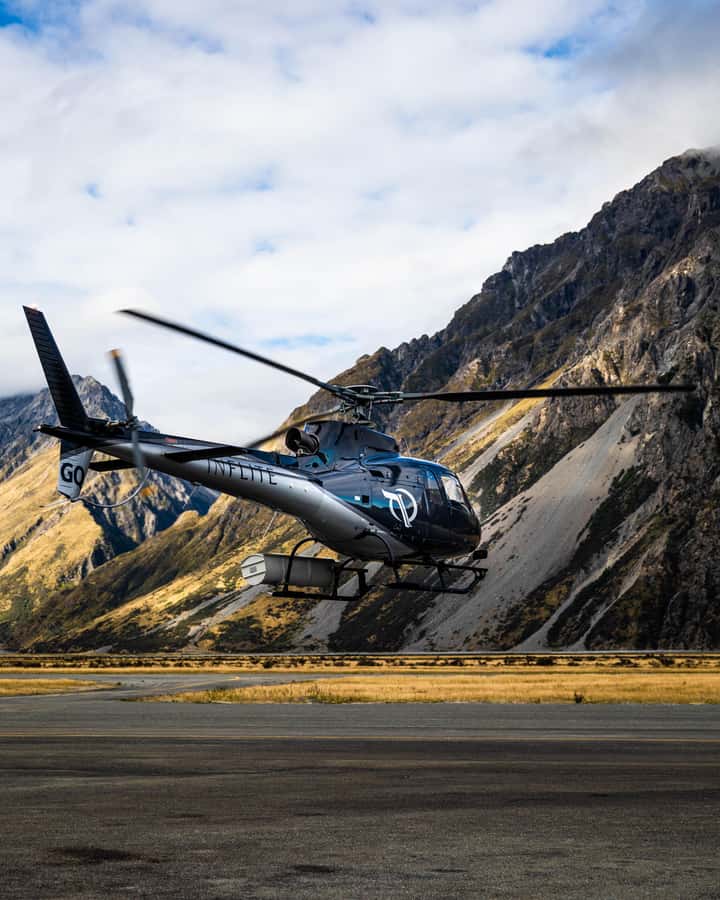
After the glacier time, you swap aircraft and return to Mount Cook Airport. This is where the combo format feels clever instead of gimmicky. You don’t just do two flights. You do two different ways of seeing the same area.
When people compare the two, the helicopter often feels more “all-around.” In a few situations, the seat you get can affect your outside views. If you end up in a middle back-row seat, your view might be slightly blocked compared with seats closer to the side windows. That’s not a reason to skip it, but it is a real tip: if you have any preference for window views, say so early when you check in or when the operator confirms your details.
Also note that pilots tend to act as guides. Several pilots are specifically praised for being friendly and helpful, and some have strong local commentary. Names that came up include Ben, Jordan, Mark, and Greg. If your flight has good conditions, that pilot knowledge turns “pretty views” into “I understand what I’m looking at.”
Who Should Book This Tasman Glacier Ski Plane and Helicopter Combo
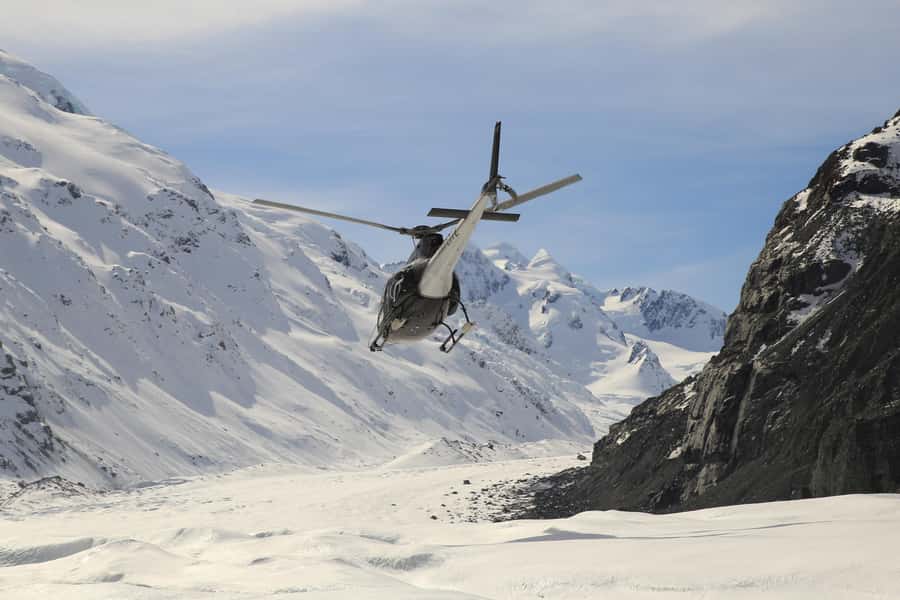
This trip fits best if you want glacier access without committing to a full day on the ground. You get the main glacier experience: aerial context plus an on-snow landing. It’s also ideal for couples, solo travelers, and families who want a bucket-list moment that stays contained in a manageable timeframe.
You’ll probably love it if:
- You’re short on time but still want to reach the glacier
- You enjoy aerial views and want the same scenery from two aircraft types
- You care about photo opportunities but also want real grounding time on the snow
You might think twice if:
- You get motion-sensitive. Helicopters and small aircraft can feel more intense for some people.
- You’re very picky about photos from a specific seat location. The helicopter seating arrangement can affect sightlines.
- You need to bring lots of gear. No bags are allowed, so plan to travel light and rely on your phone or camera.
Other ways onto the ice
Price and Value: Is $328 for 45 Minutes Worth It?
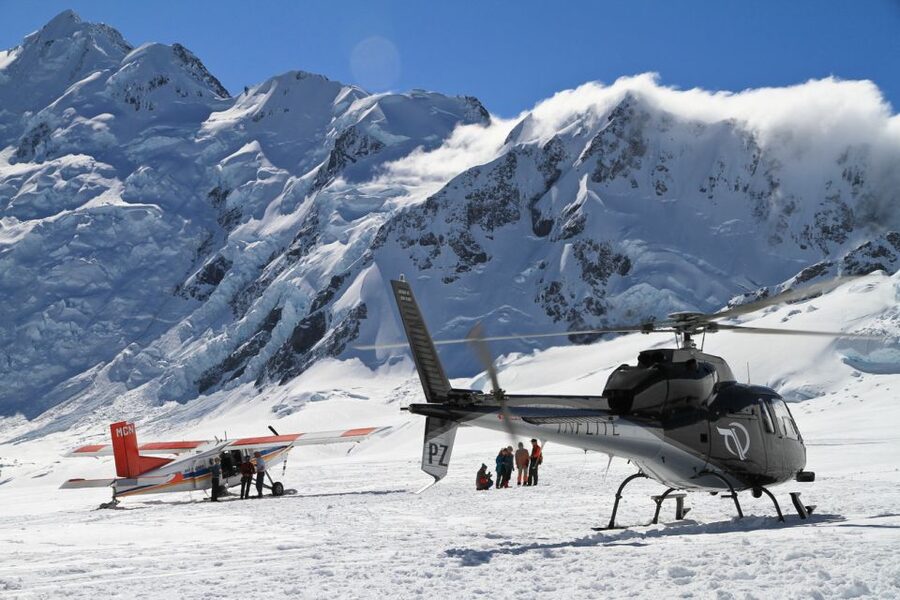
At $328 per person for a 45-minute flight window, this is not a budget activity. The question is what that money buys you.
Here’s what you’re really paying for:
- Access to a glacier landing. Getting onto Tasman Glacier snowfields is the expensive part.
- Two aircraft in one day, which means you see the terrain two ways instead of just one.
- A flight plan focused on major ice features and iconic Mount Cook scenery.
- A setup where pilots manage the aircraft and also provide useful guidance while you’re up there.
Is it “worth it”? For many people, yes, because this is one of the few ways to get glacier access in such a short time. But the value depends on your priorities. If you want pure hiking time, you might find this pricey. If you want the glacier to be part of your Mount Cook story and you want it fast, this combo is one of the strongest uses of money.
Also, the experience is structured so you don’t feel rushed. You have a glacier landing with time on snow, and the flights are set up around the most photogenic and iconic parts of the route.
Weather Reality in Aoraki/Mount Cook: How to Think About Reschedules
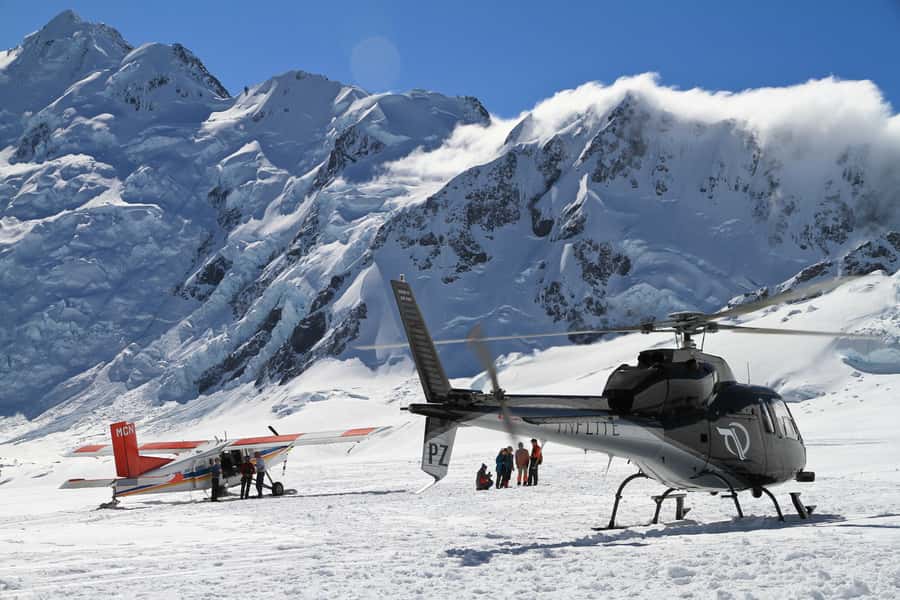
Mount Cook weather is famous for being changeable. This activity is weather-dependent by nature, because aircraft need safe conditions for flight paths and for landing on snowfields.
What you should take from the experience, practically:
- Flights can be rescheduled if conditions force a change.
- If the original plan cancels, the operator tries hard to get you into an alternative slot.
I like that the process is handled like a practical field decision, not a “wait and hope” situation. Still, treat your Mount Cook schedule with flexibility. If you only have one day available, your risk is higher than if you have two or more.
If you’re on a tight itinerary, consider building in a little slack time for reschedules. That’s the best “strategy” you can use here, because weather controls the final outcome.
What to Bring, What Not to Bring, and the Small Rules That Matter
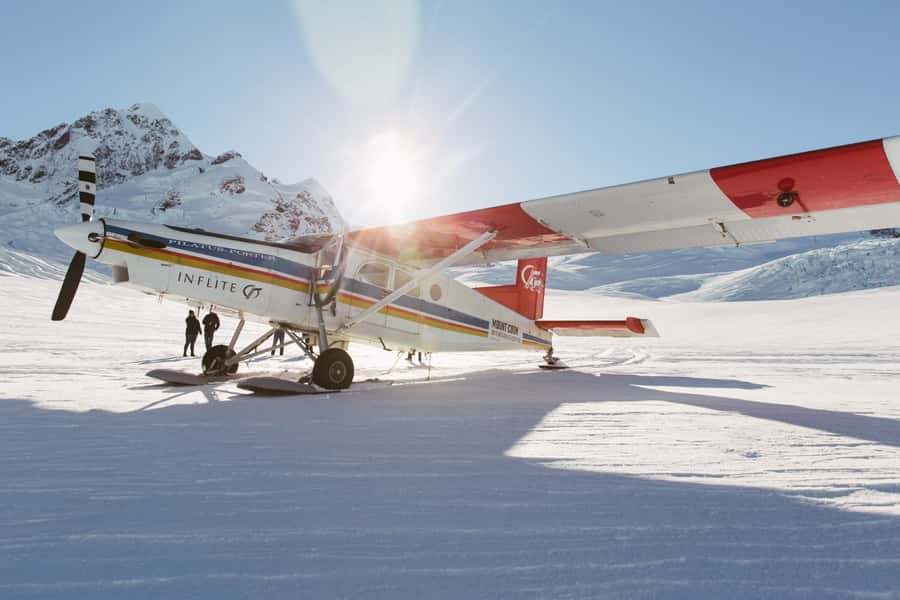
The rules are there for safety and simplicity. If you follow them, the day runs smoother.
Bring:
- Closed-toe shoes
Don’t bring:
- Food and drinks
- Drones
- Selfie sticks
- Bags
A few details also matter:
- You’ll need to provide all passengers’ full names and weights when booking, because weight and balance limits apply to the aircraft.
- Camera(s) and phones are allowed during the flights.
- Check-in closes 45 minutes prior to the flight time.
If you’re planning photos, dress like you’re going to be outside, but be prepared for cold at altitude. The aircraft landing and shutdown is part of the magic, so you’ll be standing still on snow for short periods, and that cold can feel sharper than you expect.
The Quick Verdict: Should You Book This Mount Cook Glacier Combo Flight?
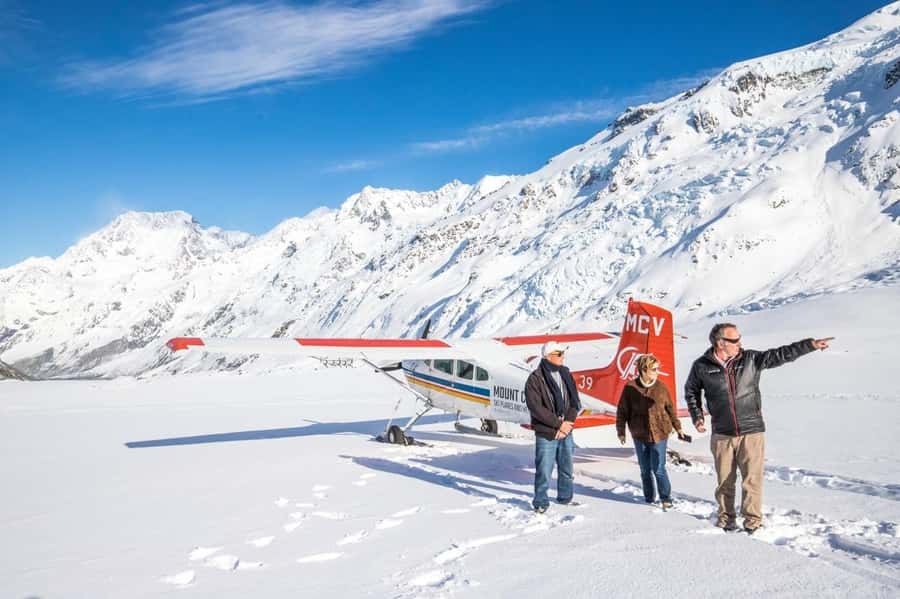
Book it if you want the classic Mount Cook experience, with the Tasman Glacier literally under your feet. The ski plane gives you scale and structure, and the helicopter adds angles and close-up mountain drama. The glacier landing is the deal-maker, and the combination format makes the whole day feel longer than 45 minutes.
Pass or consider alternatives if you hate weather uncertainty, hate being without a bag for gear, or you want a long walking-focused glacier day instead of an aerial-plus-landing hit.
If you have flexible days in Aoraki/Mt Cook National Park, this is exactly the kind of experience that turns “I saw photos” into “I stood on the snow.”
FAQ
Where does the Mount Cook ski plane and helicopter experience start?
It starts at Mount Cook Aerodrome in Mount Cook National Park, New Zealand, which is also the stated meeting point.
How long is the experience?
The total duration is listed as 45 minutes.
What is included in the flight?
The experience includes a skiplane flight and a helicopter flight, plus all taxes and fees. Free car parking at Aoraki Mt Cook Airport and free Wi-Fi are also included.
Is there a glacier landing?
Yes. The trip includes a glacier snow landing on the Tasman Glacier and time in that alpine environment.
What flight views and landmarks should I expect?
You should expect views up the Tasman Valley, the Hochstetter Icefall, Aoraki/Mt Cook, and also areas such as Tasman Terminal Lake, Grand Plateau, Plateau Hut, and the full length of the Tasman Glacier.
What should I wear and bring?
You need closed-toe shoes. Camera(s) and phone(s) can be used during the flights.
What can’t I bring on the aircraft?
Food and drinks are not allowed, and bags are not allowed. Drones and selfie sticks are also not allowed.
What time do I need to check in?
Check-in closes 45 minutes prior to the flight time.
Do I need to provide passenger details in advance?
Yes. You must provide all passengers’ full names and weights when booking, because weight and balance limits apply to the aircraft.
What happens if the weather causes a cancellation?
There is free cancellation up to 24 hours in advance for a full refund. If weather causes cancellation, the activity can be refundable and the local operator will try to reschedule your flight to suit your plans.
Everything Else We Wrote Up in Mount Cook

More Ways Onto the Ice
Aoraki and the Mackenzie
Just added to our Mount Cook notes
- Mt Cook: 55-Minute Scenic Flight in Helicopter or Ski Plane★ 4.1 · 6 reviews
- Mount Cook: 50-Minute Aoraki Scenic Helicopter Flight★ 4.7 · 10 reviews
- Mt Cook to Christchurch One-Way Small Group Tour via Lake Tekapo★ 5.0 · 16 reviews
- Mount Cook Alpine Explorer Helicopter Flight with Alpine Landing★ 4.0 · 22 reviews
- Mt Cook to Queenstown Small Group Tour (One-Way)★ 4.5 · 25 reviews
- Mount Cook: Alpine Vista Helicopter Flight with Alpine Landing★ 4.5 · 39 reviews
Glacier Heli Hikes and Snow Landings, compared.
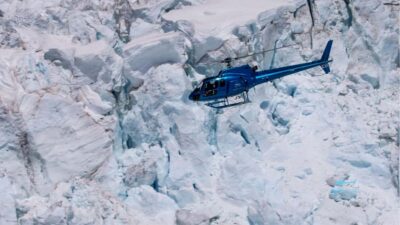 ★ 4.8Franz Josef Glacier: Helicopter Flight & Alpine LandingFrom $230619 reviews
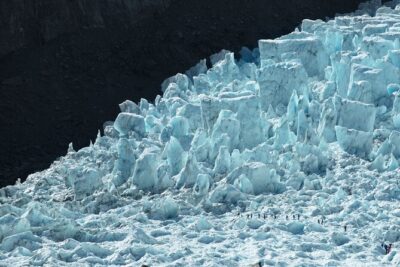 ★ 4.5Franz Josef Glacier Heli-HikeFrom $506618 reviews
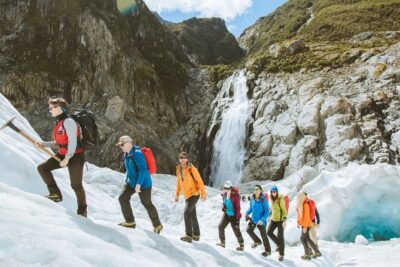 ★ 5.0Heli Hike Fox GlacierFrom $477563 reviews
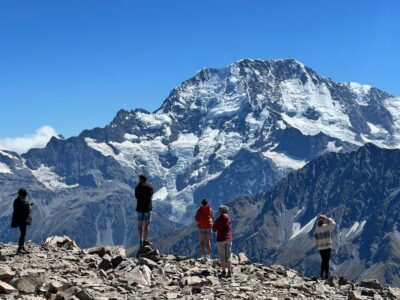 ★ 4.8Mount Cook: Scenic Helicopter Flight with Alpine LandingFrom $226442 reviews
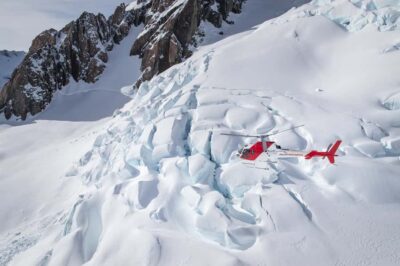 ★ 4.7Franz Josef & Fox Glaciers Helicopter Flight & Snow LandingFrom $289342 reviews
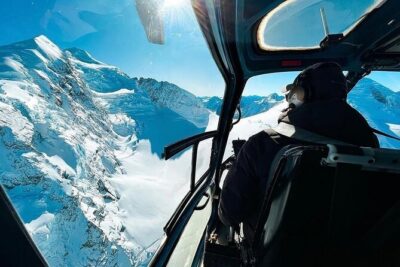 ★ 5.0Pilot’s Choice: 2 Glaciers & Snow Landing – 35minFrom $300336 reviews
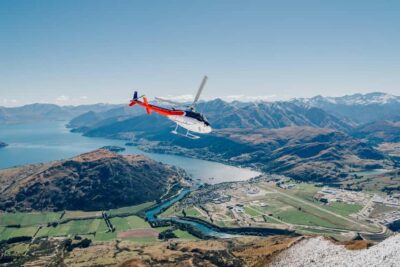 ★ 4.9Queenstown: Pilot’s Choice Helicopter Tour & Alpine LandingFrom $230291 reviews
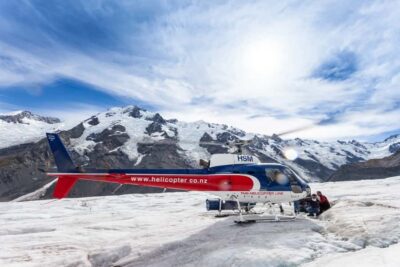 ★ 4.7Mount Cook: 3 Hour Heli Hike to the Tasman GlacierFrom $564218 reviews
Browse the lists this tour appears in