
REVIEW · GLACIER HELI HIKES AND SNOW LANDINGS
Mount Cook Alpine Explorer Helicopter Flight with Alpine Landing
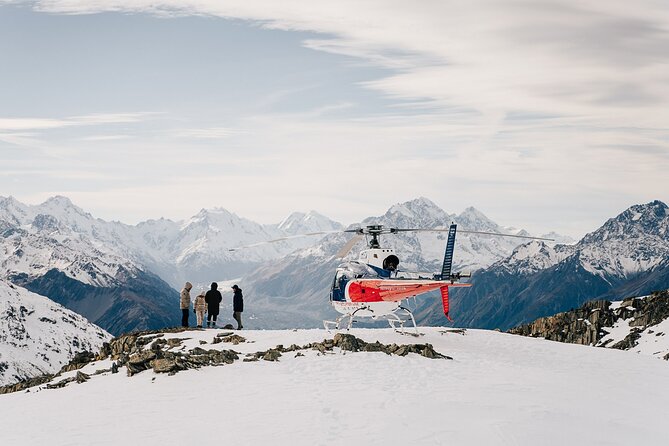
Snow at 3,700 meters, by helicopter. This 35-minute alpine flight above Aoraki Mount Cook and the Ben Ohau Range can include a snow landing when conditions allow, with pilot narration as you fly over ridges and valleys you usually can’t reach.
I love the pilot narration, especially when you hear geography explained in real time, plus you might even get pilots like Greg or Dan who point out what you’re actually looking at. I also love the intimacy of up-to-six seating, which keeps the experience personal and makes it easier to get photos without a huge crowd.
The main drawback to plan for is that the snow landing is weather and season dependent, so you need to treat the snow part as a bonus, not a guarantee.
In This Review
- Quick hits before you book
- Glentanner Park: where your helicopter day starts
- What the 35-minute ride feels like, from takeoff to touchdown
- Ben Ohau and the Southern Alps: the views plus the pilot story
- The snow landing at Aoraki Mount Cook National Park: step out where few do
- Tasman Valley return and Lake Pukaki: the last look that sells the trip
- Price and value: what you’re paying for at $359.62 per person
- Logistics that matter more than you think
- Who this helicopter flight with alpine landing is perfect for
- Should you book the Mount Cook Alpine Explorer with snow landing?
- FAQ
- How long is the Mount Cook Alpine Explorer helicopter flight with alpine landing?
- How long is the flight time in the air?
- Where do I meet for the flight?
- Is the snow landing guaranteed?
- What will the pilot do during the flight?
- How many people are in the helicopter?
- What should I wear?
- Is the ticket mobile?
- Is there a weight limit for passengers?
- What happens if the experience is canceled due to weather?
Quick hits before you book
- Snow landing is conditional, but the mountain views are the constant.
- Small-group helicopter flight with seats for up to six passengers.
- Pilot commentary in the air, so the scenery has context, not just wow-factor.
- Aoraki Mount Cook National Park landing, with standout views up close.
- Tasman Valley return flight, with Lake Pukaki visible on the way back.
Higher up, around Aoraki and Tekapo
- Mount Cook: Scenic Helicopter Flight with Alpine Landing
★ 4.8 · 442 reviews - Mt Cook Small Group Scenic Day Tour from Queenstown
★ 5.0 · 407 reviews - Mount Cook: Ski Plane and Helicopter Glacier Combo Flight
★ 4.6 · 271 reviews - Mount Cook: Mountains High 40-Minute Helicopter Flight
★ 5.0 · 53 reviews
Glentanner Park: where your helicopter day starts
Your day starts at The Helicopter Line, Mount Cook Glentanner Park, on State Highway 80. It’s an easy base to reach for most South Island itineraries, and the whole setup is designed for quick check-in and getting everyone strapped in.
Once you arrive, expect a short safety briefing before you board. After that, you’ll step into a twin-engine helicopter that seats up to six passengers. That small cabin size matters. You feel like you’re in on something special, not herded through a big-tour machine.
Even if the flight is short, you’ll want to show up dressed for cold. Warm clothing and suitable footwear are strongly recommended because you can feel the chill even before the helicopter takes off.
What the 35-minute ride feels like, from takeoff to touchdown
This is listed as about 35 minutes total, including an alpine landing window. Your time in the air is roughly 20 to 25 minutes, with around 10 minutes on the snowfield if landing conditions are right.
The pacing is part of the magic. You’re airborne quickly, you’re shown a sequence of viewpoints, then you get the rare chance to actually step out onto a mountain snow surface. It’s not the kind of sightseeing where you sit, stare, and hope you can see the right angle. You get motion, perspective, and height, in one tight package.
Also, the route can shift with conditions. One review mentioned an alternative route that worked out closer to Mount Cook. That’s a clue that your pilot is adapting to the day, not just following a rigid script.
Ben Ohau and the Southern Alps: the views plus the pilot story
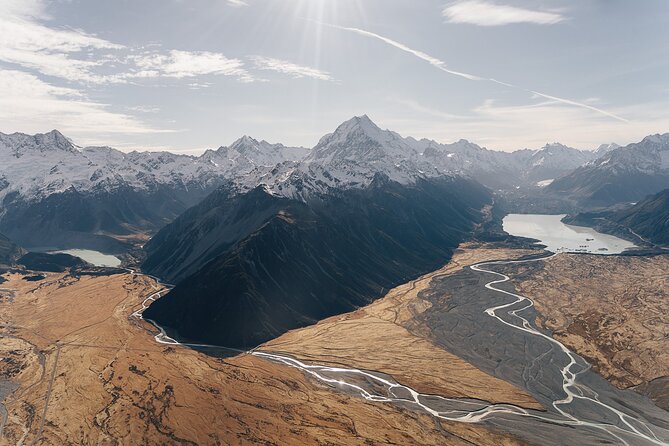
The flight focuses on the Ben Ohau Range and surrounding peaks in the Southern Alps. From the helicopter, you’re not just seeing mountains, you’re seeing how the terrain was shaped. The ridges look scarred and carved, like the land has a timeline written into it.
What elevates this experience is the narration. You’re not left with a view and a blank silence. Your pilot provides commentary as you fly, explaining points of interest and helping you connect the geography below to what you’re seeing above. If you’re lucky, you’ll hear the kind of storytelling that people specifically mention with pilots like Greg and Dan.
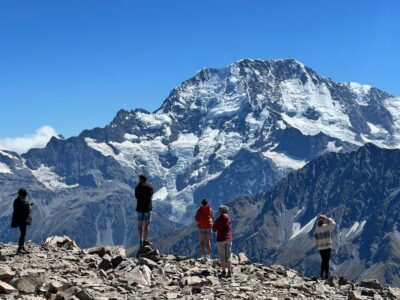
One highlight is the sense of scale as you pass near a mountain pass. From the air, the height feels real in a way that driving never does. You also get a strong view of Aoraki Mount Cook, including a sense of why it’s such a magnet for photographers and hikers.
And here’s a detail worth knowing before you go: Aoraki/Mount Cook is known in Māori culture as the cloud piercer. You’ll fly over the area surrounding the mountain and the mountain’s presence is part of the aerial explanation you’re given, including why it earns that name.
The snow landing at Aoraki Mount Cook National Park: step out where few do
If you’re booking for the snow landing, treat it like a weather-based gift. The snow landing is described as subject to season and weather conditions, so it only happens when the day cooperates.
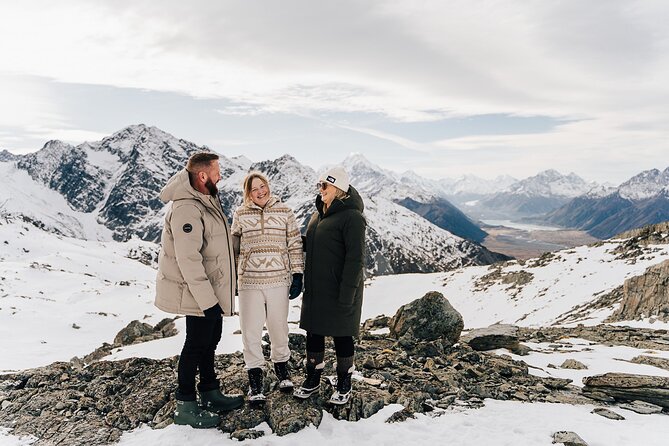
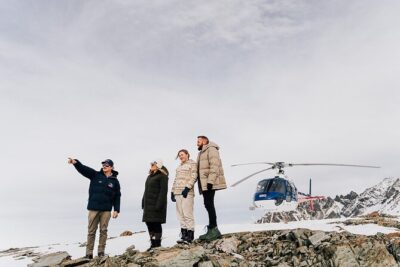
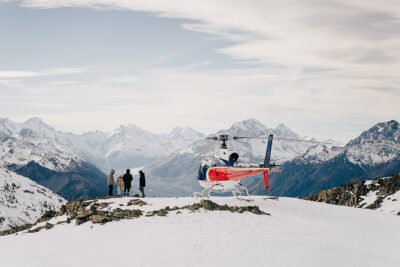
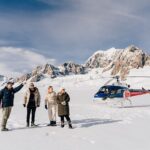
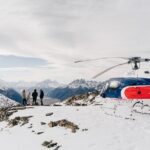
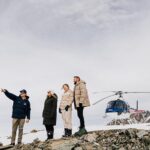
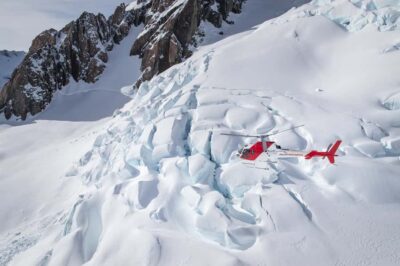
When it does happen, it’s about 10 minutes on the snowfield. You’ll step outside the helicopter, take in prime views of Aoraki Mount Cook from the air, and have a short window to play in the snow. That combination is what makes this feel more than just a scenic flight.
This landing happens in Aoraki Mount Cook National Park, also known as Te Wahipounamu. Landing in a protected alpine setting is a big part of the value here. You’re not just looking at a famous spot. You’re being physically placed near the landmark, and that changes how the whole trip feels.
Photo-wise, plan on a lot of quick snapshots. In a featured review, the pilot took pictures during the snow landing, and the photos were provided on a card you could purchase after the flight. That’s a nice touch because trying to take perfect photos one-handed while also managing cold hands is tough.
The practical side: warm layers help. Even in “nice” weather, the snow landing means cold air, and you’ll be outside the helicopter briefly. You don’t need to dress like a polar explorer, but you do need real warm clothing and footwear that won’t slip.
Other ways onto the ice
Tasman Valley return and Lake Pukaki: the last look that sells the trip
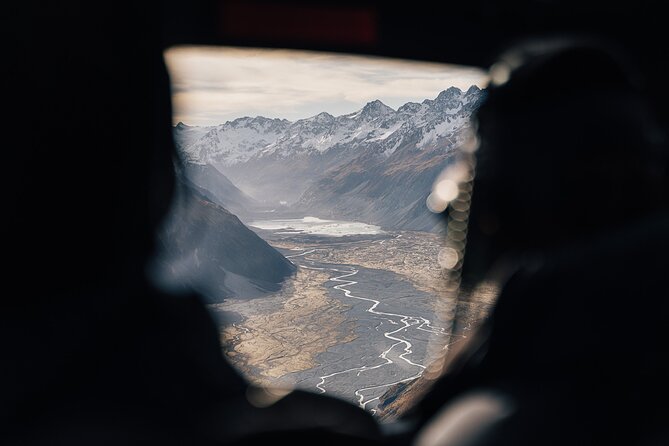
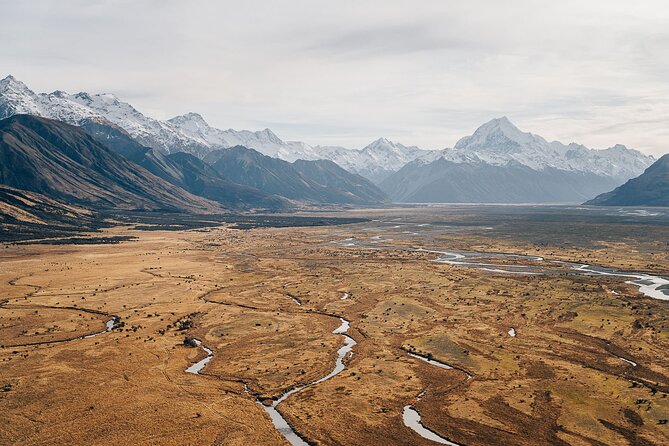
On the way back to Glentanner Park, the helicopter turns your attention to the Tasman Valley, including views toward Lake Pukaki.
This is a smart way to end. It gives you contrast, from the rugged alpine ridges near the Southern Alps to a wider valley view that helps you understand the geography. If Aoraki Mount Cook is the headline, the Tasman Valley and Lake Pukaki are the closing scene, the part that helps it all click.
Because the flight is only about 35 minutes total, you don’t get a long scenic slog. Instead, you get a sequence: mountains, ridges, snow landing chance, then valley perspective.
Price and value: what you’re paying for at $359.62 per person
At $359.62 per person, this isn’t a budget activity. But it also isn’t priced like a half-day tour with endless stops. You’re paying for three things that add real value.
First, you’re paying for access. Snow landing zones up high are not something you can easily reach by car, and even guided hikes are limited by time, weather, and safety. This is one of those experiences where the main feature is exactly what makes it expensive: you go where the road can’t.
Second, you’re paying for the small-group format. The helicopter seats up to six passengers, and the experience has a maximum group size of six. That matters because the value of helicopter time drops when you’re jammed shoulder to shoulder with strangers. Here, it’s designed to feel personal.
Third, you’re paying for the pilot narration. A good pilot makes the views easier to understand. The reviews that stand out mention history and pointing out areas of interest. That kind of live interpretation is the difference between seeing mountains and understanding what you’re looking at.
One more reality check. Because the snow landing is weather dependent, there is some uncertainty. There’s a risk you might end up with a scenic flight without the snow. That doesn’t ruin the experience for everyone, but it does change the value equation. If snow landing is your top priority, build in flexibility to reschedule if needed.
Logistics that matter more than you think
This is a mobile ticket experience. You’ll receive confirmation at booking time, so you should have what you need ahead of the day of departure.
It’s also a weight-based experience. The total weight per passenger is listed as 276 lbs. There’s also a child rule: children under 15 kg must sit on a parent’s lap, and children must be accompanied by an adult.
Those details matter because they can affect whether your party can fly. If you’re traveling with kids or you’re near the weight limit, double-check early so you don’t lose time on the day.
Cold weather prep matters too. Warm clothing and suitable footwear are recommended due to cold temperatures. Even if the flight day looks sunny, the alpine environment and snowfield exposure can still be chilly.
Who this helicopter flight with alpine landing is perfect for
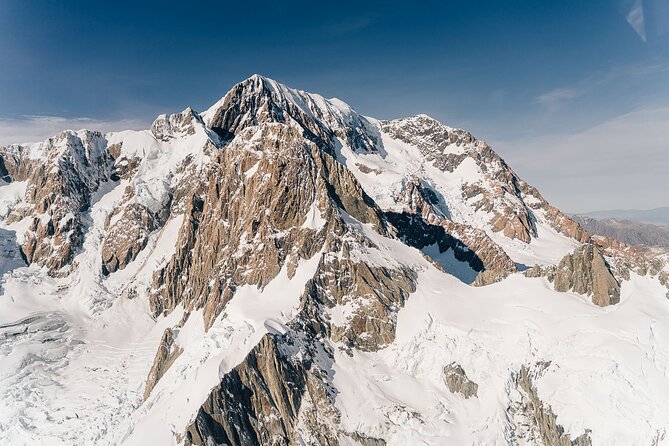
This is an excellent fit if you want Aoraki Mount Cook’s dramatic scenery with minimal time. The whole tour is about 35 minutes, and it packs in multiple viewpoints that would take much longer by land.
You’ll also like this if you enjoy learning as you travel. The pilot narration is included, and the best moments are when the explanation matches the view you’re seeing from the aircraft.
Because the group is small and the cabin is tight, it’s also a strong choice if you dislike big crowds. You’ll be among a few other people, and the focus stays on the scenery.
Should you book the Mount Cook Alpine Explorer with snow landing?
Yes, if you can handle weather uncertainty and you want a high-impact experience in a short time. I think this is one of the best ways to see the Mount Cook region because you get height, motion, and a potential snowfield landing all in one outing.
I’d hesitate only if you’re booking with the mindset that the snow landing is guaranteed. It’s weather and season dependent, and one experience can’t promise another. If snow is the whole point for you, bring flexibility and be okay with the idea that the day might turn into a scenic helicopter flight instead.
If you want the biggest chance of it going well, dress for cold, show up on time, and treat the flight as a mountain day, not a guaranteed snow day. When conditions line up, stepping out onto that snowfield is the kind of moment that makes the price feel fair.
FAQ
How long is the Mount Cook Alpine Explorer helicopter flight with alpine landing?
Total trip duration is about 35 minutes including the alpine landing.
How long is the flight time in the air?
Flight time is about 20 to 25 minutes.
Where do I meet for the flight?
Meet at The Helicopter Line, Mount Cook Glentanner Park, State Highway 80, Glentanner 7999, New Zealand.
Is the snow landing guaranteed?
No. The alpine landing is snow subject to season and conditions, so it depends on weather.
What will the pilot do during the flight?
You’ll have pilot guide and commentary included, with narration about the sights.
How many people are in the helicopter?
The twin-engine helicopter seats up to six passengers, and the tour has a maximum of 6 travelers.
What should I wear?
Warm clothing and suitable footwear are recommended due to cold temperatures.
Is the ticket mobile?
Yes, it includes a mobile ticket.
Is there a weight limit for passengers?
Yes. Total weight per passenger is listed as 276 lbs.
What happens if the experience is canceled due to weather?
It requires good weather. If canceled due to poor weather, you’ll be offered a different date or a full refund. You can cancel up to 24 hours in advance for a full refund.
Everything Else We Wrote Up in Mount Cook
More Ways Onto the Ice
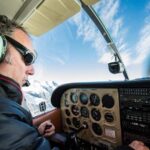
Aoraki and the Mackenzie
Just added to our Mount Cook notes
- Mt Cook: 55-Minute Scenic Flight in Helicopter or Ski Plane★ 4.1 · 6 reviews
- Mount Cook: 50-Minute Aoraki Scenic Helicopter Flight★ 4.7 · 10 reviews
- Mt Cook to Christchurch One-Way Small Group Tour via Lake Tekapo★ 5.0 · 16 reviews
- Mount Cook Alpine Explorer Helicopter Flight with Alpine Landing★ 4.0 · 22 reviews
- Mt Cook to Queenstown Small Group Tour (One-Way)★ 4.5 · 25 reviews
- Mount Cook: Alpine Vista Helicopter Flight with Alpine Landing★ 4.5 · 39 reviews
Glacier Heli Hikes and Snow Landings, compared.
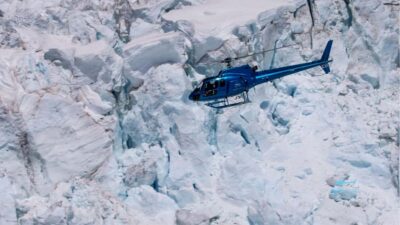 ★ 4.8Franz Josef Glacier: Helicopter Flight & Alpine LandingFrom $230619 reviews
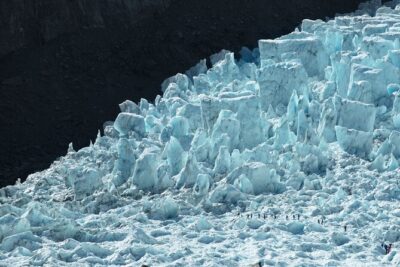 ★ 4.5Franz Josef Glacier Heli-HikeFrom $506618 reviews
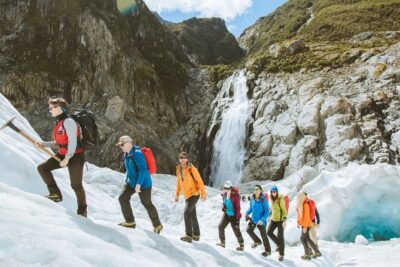 ★ 5.0Heli Hike Fox GlacierFrom $477563 reviews
 ★ 4.8Mount Cook: Scenic Helicopter Flight with Alpine LandingFrom $226442 reviews
 ★ 4.7Franz Josef & Fox Glaciers Helicopter Flight & Snow LandingFrom $289342 reviews
 ★ 5.0Pilot’s Choice: 2 Glaciers & Snow Landing – 35minFrom $300336 reviews
 ★ 4.9Queenstown: Pilot’s Choice Helicopter Tour & Alpine LandingFrom $230291 reviews
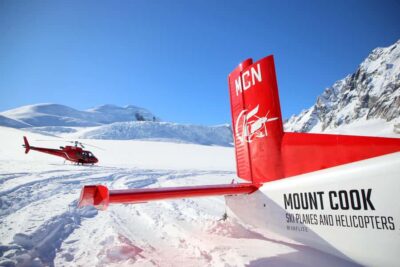 ★ 4.6Mount Cook: Ski Plane and Helicopter Glacier Combo FlightFrom $328271 reviews
Browse the lists this tour appears in