
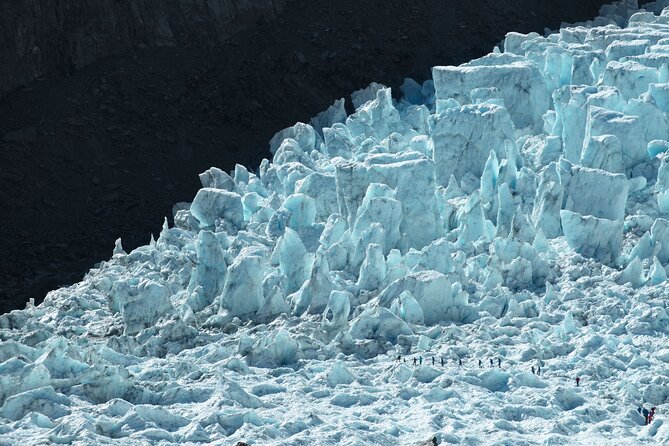
REVIEW · FRANZ JOSEF AND FOX GLACIER
Franz Josef Glacier Heli-Hike
Glacier ice gets an aerial makeover. I love the helicopter views over the Southern Alps, and I love how guides like Maya and Angus bring glacier science to life with Maori storytelling. The big catch is weather, because cloud and rain can ground helicopter landings.
You’ll also like that all the cold-weather gear is handled, from Gore-tex layers to crampon-ready boots. Plus, the max group size is 11, so safety checks and route adjustments feel personal.
Expect about 4 hours total, with around 10 minutes of flight time and roughly two hours on the ice.
In This Review
- Key highlights to look for
- Why this Heli-Hike feels different from a normal glacier visit
- Meeting at Te Ao Marama, 63 Cron Street: gear first, questions always
- The short helicopter flight over the Southern Alps
- Landing on the ice: what the walk actually looks like
- Ice caves, crevasses, and the geology your brain can hold onto
- Guides, safety, and the small-group rhythm on the glacier
- Pace and fitness: what moderately difficult means in real life
- Weather is the boss: how to plan so the day still works
- What to wear and bring so you feel warm and steady
- Logistics that matter more than you expect
- Price and value: is $506.01 worth it?
- Who should book this heli-hike, and who should skip it
- Should you book the Franz Josef Glacier Heli-Hike?
- FAQ
- How long is the Franz Josef Glacier Heli-Hike?
- How much helicopter time do you get?
- What hiking equipment is included?
- What do I need to bring for clothing?
- What fitness level is required?
- What is the minimum age?
- How many people are in each group?
- Are there weight limits?
- What happens if weather cancels or delays the tour?
Key highlights to look for
- Exclusive glacier access by helicopter, not a distant viewpoint
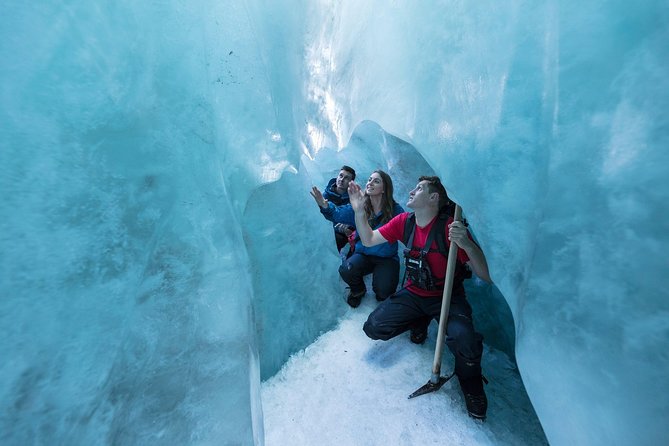
- Ice-cave and serac walking with a guided route on dramatic formations
- All equipment included, including Gore-tex kit, hats, gloves, and boots with crampons
- Small groups (11 max) for more hands-on help when the ice gets tricky
- Science plus Maori stories taught alongside real glaciology context
- Weather dependent landings, so build in flexibility in Franz Josef
Glacier country, a few more options
- Franz Josef Glacier Heli-Hike
★ 4.5 · 618 reviews - Heli Hike Fox Glacier
★ 5.0 · 563 reviews - Small-Group Kayak Adventure from Franz Josef Glacier
★ 5.0 · 393 reviews - Off Road Quad Bike Adventure Tour in Franz Josef
★ 5.0 · 285 reviews
Why this Heli-Hike feels different from a normal glacier visit
A glacier hike is one thing. A glacier hike that starts with a helicopter ride, lands you on the ice, and keeps you there for real walking, is another level. Franz Josef Glacier moves fast, so conditions and routes can feel different from one day to the next. That’s part of the thrill, and it also means you’re not doing a cookie-cutter walk.
I’m especially drawn to the mix of time on the glacier and how you get there. The helicopter is short, but it changes everything because you’re not trying to reach the glacier by road first. Once you’re on the ice, the views are close enough to make the geology lessons actually stick.
One more reason this tour stands out in a good way is the cap on group size. With a maximum of 11, you’re not lost in a crowd. It’s easier to hear instructions, easier to keep spacing, and easier for guides to notice who might need extra help on steeper bits.
Meeting at Te Ao Marama, 63 Cron Street: gear first, questions always
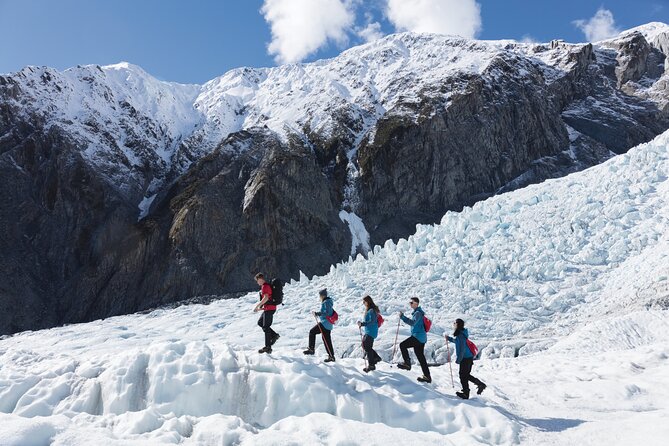
The tour meets at Franz Josef Glacier Guides, Te Ao Marama, Glacier Base, at 63 Cron Street in Franz Josef village. There’s no hotel pickup, so plan to get there on your own. The meeting point is near public transport, which helps if you’re not driving.
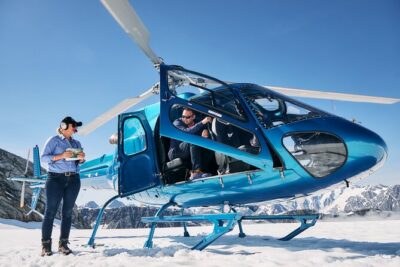
When you arrive, you’ll get a safety orientation and then get fitted with protective clothing and traction equipment. From what’s provided, the kit is not just a token jacket. You should expect Gore-tex outer layers, trousers, a woollen hat and gloves, and leather boots set up for crampons.
This gear fitting matters more than people think. Good glacier footwear and the right warm layers make the difference between enjoying the ice and feeling miserable by the halfway point. If you’re the type who normally underpacks for cold weather, this tour does a good job of covering the basics.
A small practical tip: arrive early enough to get settled and ask questions. Even if the process runs smoothly, you’ll feel calmer once your clothing is sorted and your boots are properly fitted.
The short helicopter flight over the Southern Alps
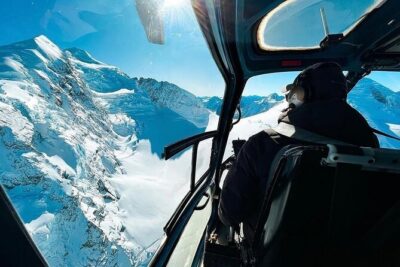
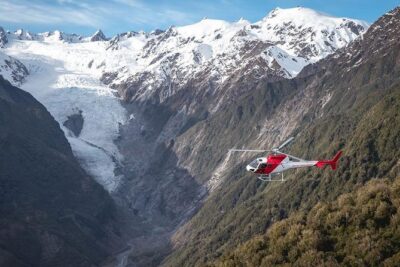
The helicopter flight time is listed as about 10 minutes, and that’s exactly the sweet spot. You get the wow factor of seeing the glacier region from above, without spending your whole day trapped in transit.
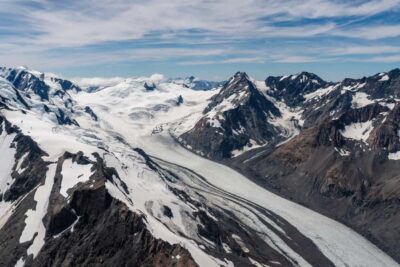
From the air, Franz Josef and the Southern Alps area look like a different planet. It also gives your brain a map for what you’ll see after landing. That sounds abstract, but it helps when your guide starts pointing out ice formations and how the glacier is shaped by forces underground and above ground.
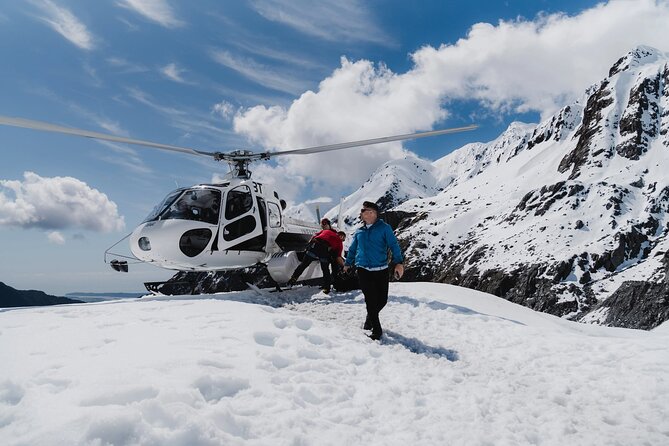
You’ll also appreciate that the operator builds the day around a controlled landing on the glacier. In glacier country, the weather can decide everything. When conditions are good, the landing feels smooth and efficient, and you’ll get right to the walk instead of waiting around.
Landing on the ice: what the walk actually looks like
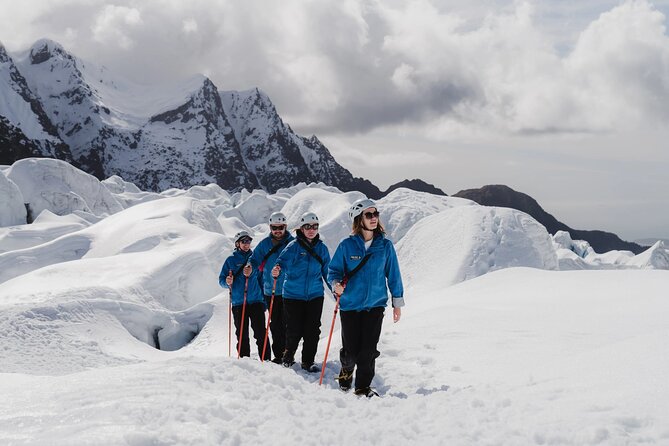
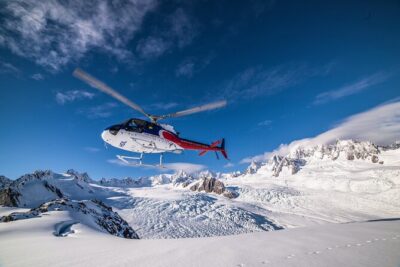
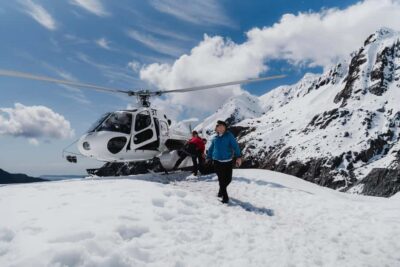
After a brief flight, you land atop the Franz Josef Glacier. Then the walking starts, with your guide leading the route and explaining what you’re looking at.
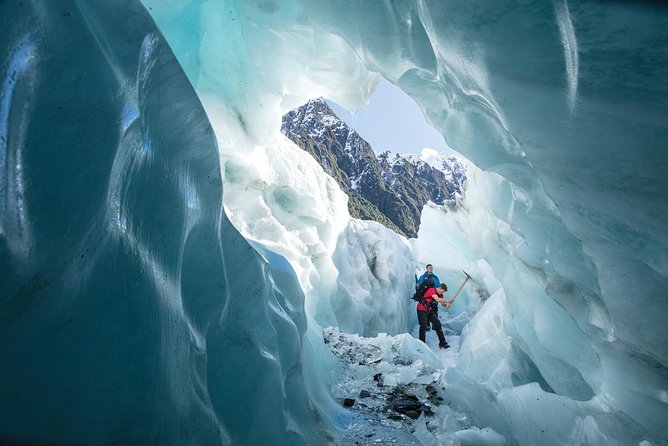
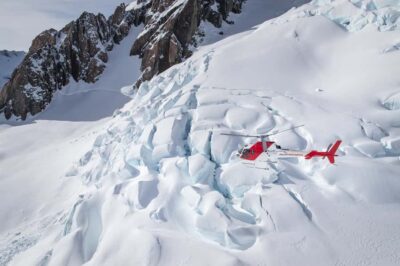
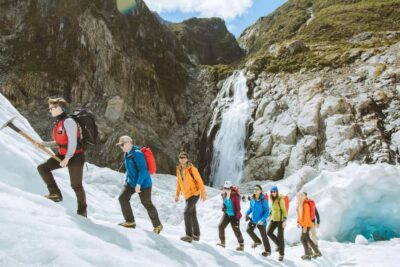
You’re walking past ice caves, pinnacles, and seracs, with crevasses and deep blue ice features along the way. This is not a flat, stroll-on-snow kind of experience. Even with a slow, guided pace, you’re moving over uneven terrain where footing and balance matter.
Expect the “moderately challenging” part to show up in small ways:
- more up and down than you’d get on an easy nature trail
- careful steps on textured ice surfaces
- sections that feel tight or technical when you pass through narrower formations
In one example from guide-led experiences, people reported sections where they had to move sideways through tight ice spaces. That’s not something I’d plan to enjoy, but it’s also not a surprise if you understand that glacier routes can get narrow. Bring a calm, flexible attitude, and you’ll handle it better.
Other ways onto the ice
Ice caves, crevasses, and the geology your brain can hold onto
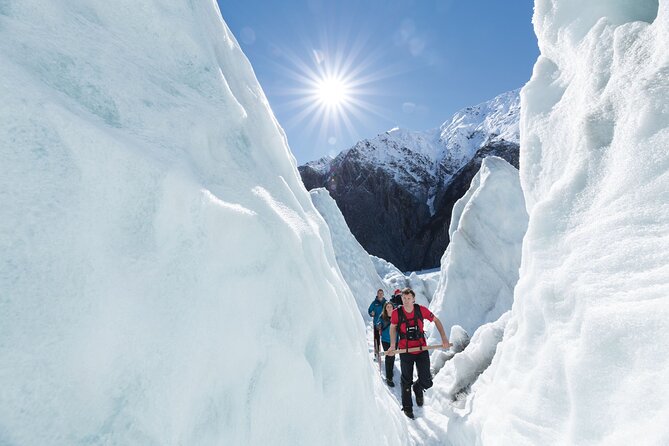
This tour is doing more than putting you on ice for photos. Your guide provides commentary about local region and glaciology, and the day also includes Maori stories tied to how the glacier formed. Guides such as Angus have been described as mixing science, including glaciology knowledge, with traditional story context.
Why that matters: when you learn what makes the ice look the way it does, you stop seeing it as just pretty blue and start noticing structure. You begin to track how ice fractures, how caves form, and why certain ice walls look the way they do.
You’ll see ice “architecture” up close. Deep crevasses and ice caves look different when you can hear your own steps and feel the cold air near the ice. And because the hike is guided, you’re less likely to rush or miss the important formations.
Also, this is where crampons earn their keep. With proper traction, the guide can focus on route safety and pacing instead of doing constant guesswork about slippery footing.
Guides, safety, and the small-group rhythm on the glacier
A lot of glacier fear comes from not knowing what’s happening. Here, the day is structured around briefings, equipment, and an experienced team.
In practical terms, you can expect your guide to:
- set a route that fits your group and conditions
- keep spacing and control where you step
- adjust the walk if the ice requires it
People specifically praised the safety precautions and professionalism, and that tracks with the way the tour is designed. It’s not a do-your-own-thing walk. You’re tethered to a plan, supported by experts, and equipped for the cold.
You may meet guides such as Kurt, Abby, Ruby, Henry, Heather, or Tom, and the common thread is clear communication plus a mix of education and story. Even when the hike is physically demanding, it tends to feel organized rather than chaotic.
One more bonus of the small group size is that your guide can notice when someone is tiring. In a couple experiences, people mentioned getting pulled aside earlier due to effort level, or having to take extra care through more intense sections. That’s exactly the kind of decision safety teams need to make quickly, and it’s easier when the group is small.
Pace and fitness: what moderately difficult means in real life
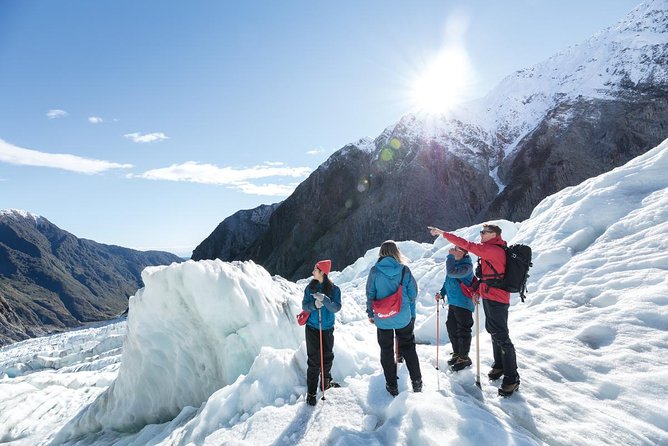
Moderately difficult here doesn’t mean easy. It means you’re not stuck for hours on a steep climb, but you do need real comfort walking on uneven ground while wearing heavy-ish gear.
You should plan for:
- stamina for about two hours on the ice during the guided walk
- balance and careful foot placement
- being okay with cold air and occasional wind
- handling technical sections, sometimes through tighter ice passages
People in their mid-60s have reported enjoying it, but the common message is still the same: you need to be fit enough for the terrain. If you’re used to only flat walks, practice on uneven ground before you come. Even short hikes on rocky trails at home make a difference.
Also check the limits in the fine print. Minimum age is 10 for the shorter trip and 14 for the longer option, and the guide can curtail or cancel participation if fitness isn’t appropriate for the day. That’s not just legal language. It’s tied to real safety.
Weather is the boss: how to plan so the day still works
This experience operates in most weather conditions, but it’s weather dependent. That’s the big reality in Franz Josef Glacier country. Cloud cover can affect helicopter landings, and rain can change conditions fast.
When conditions block the full landing, you might get delays or a shorter glacier encounter, and in some cases the tour can be canceled. The operator may offer a different date or a full refund if weather ruins the plan.
My advice is simple: build buffer time. Stay at least two nights if you can, so a reschedule is still possible. That’s how you protect your budget and protect your expectations. One day in a glacier region is never guaranteed, even when you do everything right.
What to wear and bring so you feel warm and steady
The tour provides a lot: Gore-tex jacket and trousers, wool hat and gloves, and leather boots with crampons. Still, you’ll want to dress smart for layered cold.
The provided guidance is clear on what helps most:
- 2 to 4 warm upper-body layers
- quick-drying trousers or shorts, no jeans
- hat and gloves (you’ll get gloves, but follow the layering idea)
- sunglasses, sunscreen
- a camera
I’d also add what I’d want on any ice day: bring your own sunglasses you can trust and consider a small snack plan. Some people recommend having snacks and water because you’re out there long enough that you might get hungry, especially if weather makes you wait longer between segments.
One more comfort tip: don’t wear anything that restricts circulation. Crampon boots and cold temps make it easier to lose comfort when you’re too constricted in your lower layers.
Logistics that matter more than you expect
A few details influence how smooth the day feels.
- No hotel pickup. You’re responsible for getting to the meeting point at Te Ao Marama, 63 Cron Street.
- Max group size is 11. That’s good for safety and communication, but it still means you should listen closely when gear and rules are explained.
- You’ll use a mobile ticket.
- Total passenger weight limits apply. Minimum weight is listed as 35 kg and maximum as 115 kg, and there’s also a total weight per passenger limit of 254 lbs.
There’s also a health note: pregnant women are unable to be guided for health and safety reasons. If that applies, ask early so you’re not stuck making assumptions at the last minute.
Price and value: is $506.01 worth it?
$506.01 per person is not cheap. But when you compare what you’re actually buying, the value story gets clearer.
You’re paying for:
- round-trip helicopter flights to the glacier area
- an extended time on the ice, with the guided glacier walk listed as about 2 hours 15 minutes
- expert ice-guides and on-ice commentary
- all hiking equipment, including insulated cold-weather layers and crampons
- exclusive access to the Franz Josef Glacier, described as only they can take you there
Most cheaper glacier experiences keep you at a distance or avoid crampons. Here, you’re on the glacier itself, in gear designed for traction and warmth, guided by people trained to handle ice. That’s the core value.
So ask yourself this: do you want a view, or do you want a real ice walk with equipment, training, and the chance to see ice caves and deep crevasses up close? If you want the second, the price starts to make more sense.
If budget is tight, I’d focus on timing more than cost. A rescheduled second attempt often matters more than trying to squeeze it into one slot and hoping for the best.
Who should book this heli-hike, and who should skip it
This is a great fit if you’re:
- active and comfortable walking for extended periods on uneven terrain
- excited by both science and story, and you like understanding how nature works
- traveling with a group size that stays small enough for personal attention
- okay with the weather reality and willing to plan buffer time
It may be the wrong fit if:
- you’re not comfortable with moderate physical effort on the ice
- you know you can’t handle cold well, even with supplied gear
- your mobility is limited in a way that would make tight ice passages a struggle
Also, keep the weight limits in mind. If you’re near the top end, confirm that your booking matches the stated constraints.
Finally, if you’re hoping for a gentle walk with zero technical bits, pick a different glacier experience. This one is real glacier travel.
Should you book the Franz Josef Glacier Heli-Hike?
If you want the most direct, hands-on Franz Josef experience, this is an excellent choice. You’re buying a short helicopter ride plus serious time on the ice, with gear provided and a guided route that prioritizes safety.
Book it if you can handle moderate challenge and you can give yourself flexibility for weather. If you only have one day and you can’t reschedule, the helicopter landing risk might make you regret the trip.
If you do have the time, go in with the right mindset: slow pace, careful steps, and a willingness to be guided. You’ll come back with glacier details in your head, not just glacier photos on your phone.
FAQ
How long is the Franz Josef Glacier Heli-Hike?
The tour is about 4 hours in total, with an on-glacier guided walk of around 2 hours 15 minutes.
How much helicopter time do you get?
The tour description lists about 10 minutes of flight time, as part of the round-trip helicopter flights to the glacier area.
What hiking equipment is included?
You get all hiking equipment, including Gore-tex jackets and trousers, woollen hats and gloves, leather boots fitted for crampons, and the gear needed for the glacier walk.
What do I need to bring for clothing?
Plan on layering with 2 to 4 warm upper-body layers. Wear quick-drying trousers or shorts (no jeans), and bring sunglasses, sunscreen, a camera, and follow the guide’s clothing guidance.
What fitness level is required?
You should have a moderate physical fitness level. Glacier walks are described as moderately difficult, and guides may curtail or cancel participation if your fitness level is not appropriate for safe participation on the day.
What is the minimum age?
The minimum age is 10 years old for the 2.5 hour trip, and 14 for the 5.5 hour trip.
How many people are in each group?
The experience has a maximum of 11 travelers.
Are there weight limits?
Yes. Minimum weight is listed as 35 kg and maximum as 115 kg, and there is also a total weight limit listed as 254 lbs per passenger.
What happens if weather cancels or delays the tour?
Glacier landings are weather dependent. If the experience is canceled due to poor weather, you will be offered a different date or a full refund. You can also cancel for a full refund up to 24 hours in advance of the experience start time.
Everything Else We Wrote Up in Franz Josef and Fox Glacier
More Ways Onto the Ice
Glacier Country, Continued
Just added to our Franz Josef and Fox Glacier notes
- Fox Glacier & Mount Cook 35-Minute Helicopter Flight★ 4.5 · 8 reviews
- From Christchurch: 2 day tour to Queenstown via Franz Josef★ 4.9 · 8 reviews
- Franz Josef to Queenstown Tour via Wānaka★ 5.0 · 8 reviews
- Mount Cook Spectacular Helicopter Flight from Fox Glacier★ 4.5 · 9 reviews
- Christchurch to Queenstown 2 Day Tour via Franz Josef★ 5.0 · 9 reviews
- Twin Glacier Fox and Franz, Snow Landing (allow 30 mins – departing Fox Glacier)★ 4.5 · 10 reviews
Franz Josef and Fox Glacier, compared.
 ★ 4.8Franz Josef Glacier: Helicopter Flight & Alpine LandingFrom $230619 reviews
 ★ 5.0Heli Hike Fox GlacierFrom $477563 reviews
 ★ 4.8Franz Josef: 35min Helicopter Trip over Two GlaciersFrom $289451 reviews
 ★ 5.0Small-Group Kayak Adventure from Franz Josef GlacierFrom $92393 reviews
 ★ 4.7Franz Josef & Fox Glaciers Helicopter Flight & Snow LandingFrom $289342 reviews
 ★ 4.7Franz Josef: 2.5 Hour Glacier Hike with Helicopter TransferFrom $475322 reviews
 ★ 4.9Fox Glacier: Up to 3 Hours Hike with Helicopter TransferFrom $448309 reviews
 ★ 5.0Off Road Quad Bike Adventure Tour in Franz JosefFrom $105285 reviews
Browse the lists this tour appears in