
REVIEW · STARGAZING AND DARK SKY TOURS
Star Safari Stargazing Experience, Martinborough
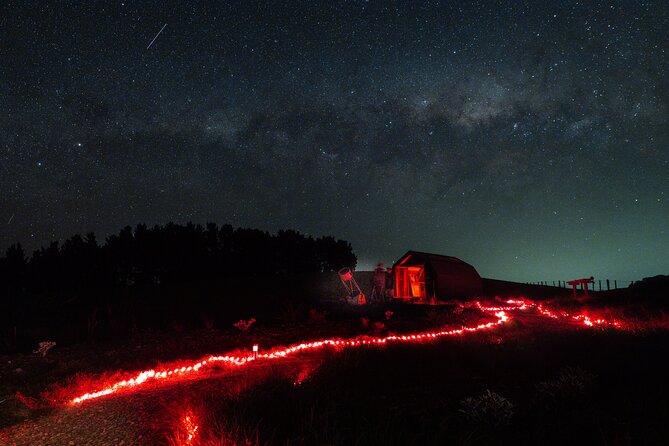
The night sky here feels close enough to touch. Star Safari in the Wairarapa International Dark Sky Reserve pairs a personal night-sky guide team, Hari and Sam, with powerful telescopes and a smart plan for bad weather, about 80km from Wellington Airport. It runs about 90 minutes and uses mobile tickets so you can spend more time looking up.
I love the small group size (max 10) and the hands-on telescope time, with multiple scopes and plenty of chances to ask questions. You get a real mix too, from the Milky Way to galaxies and clusters, plus practical help getting your bearings in the southern sky.
The one catch is that it’s weather-dependent. If the sky is cloudy, you still get a full program with planetarium software and virtual reality, but you may miss some telescope targets.
In This Review
- Key Star Safari Takeaways
- Why Wairarapa’s Dark-Sky Reserve Makes This Worth It
- From Ponatahi to the Moon Garden: What Your Evening Starts Like
- Telescopes, Milky Way Moments, and Saturn-Style Targets
- Hari and Sam: Astrobiology + Astrophysics With Real Q&A
- If the Sky Turns Cloudy: How the VR Backup Still Makes Sense
- Warm Drinks, Cold Nights: The Little Comforts That Help You Stay Out Longer
- Price and Value: Is $62.06 a Good Use of Your Night?
- Who Should Book This Star Safari in Martinborough?
- Practical Tips So You Actually Enjoy the Telescopes
- Should You Book Star Safari in Martinborough?
- FAQ
- How long is the Star Safari stargazing experience?
- Where does the experience meet?
- What happens if the sky is cloudy?
- Who will guide the stargazing and science questions?
- Is there a limit on group size?
- How many telescopes are available?
- Will there be time to see the Milky Way and other deep-sky objects?
- What should I wear for night viewing?
- Can I use my mobile ticket?
Key Star Safari Takeaways
- Dark-sky setting in Wairarapa: One of New Zealand’s darkest, clearest sky areas, close to Wellington.
- Hari and Sam guide the whole night: An astrobiologist plus an astrophysicist, with nonstop Q&A.
- Multiple telescopes, not one queue: Up to 3-4 telescopes on hand and time to actually look.
- Telescopes or VR, your night is still full: e-astronomy if conditions won’t cooperate.
- A guided approach for both beginners and advanced stargazers: You can bring an observing list or start from scratch.
Other nights under a dark sky
- Star Safari Stargazing Experience, Martinborough
★ 5.0 · 6 reviews
Why Wairarapa’s Dark-Sky Reserve Makes This Worth It
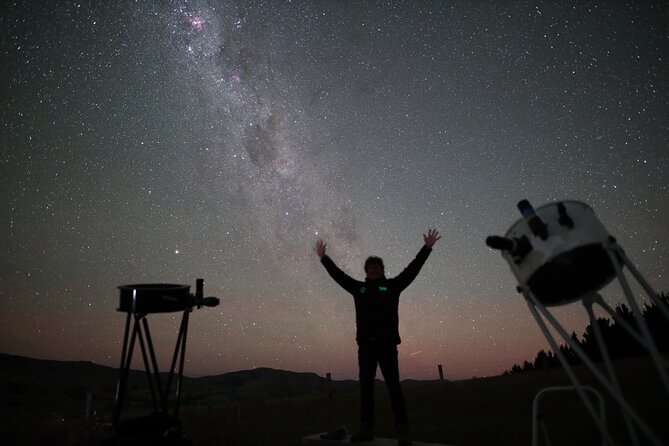
Star Safari is built around a simple idea: dark sky matters. In the Wairarapa International Dark Sky Reserve, the sky is known for being especially dark and clear, which makes stars and deep-sky objects easier to see and more satisfying to study. At around 80km from Wellington Airport, it’s also a realistic night-trip option when you still want a big “space” payoff.
What I like is that the experience does not treat stargazing like luck. The team clearly expects that some nights will be less than perfect, and they plan for that with an e-astronomy backup. That means you are not just paying to cross your fingers for clear skies. You’re paying for guided sky time, plus a full learning session either way.
You also get a personal science angle, not just facts. Hari focuses on astrobiology, which connects space to the big question of life beyond Earth. Sam brings astrophysics, turning what you see through the telescope into real-world explanations you can carry with you when you look up later on your own.
From Ponatahi to the Moon Garden: What Your Evening Starts Like
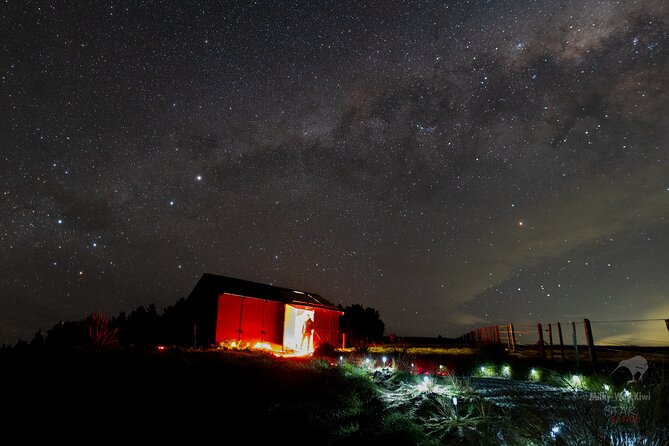
Your night begins at the meeting point in Ponatahi (VG48+C6). You’ll check in, then head to reception where you’ll grab a blanket or jacket. That detail matters because it gets cold fast after dark, and the experience is mostly outdoors around stargazing time.
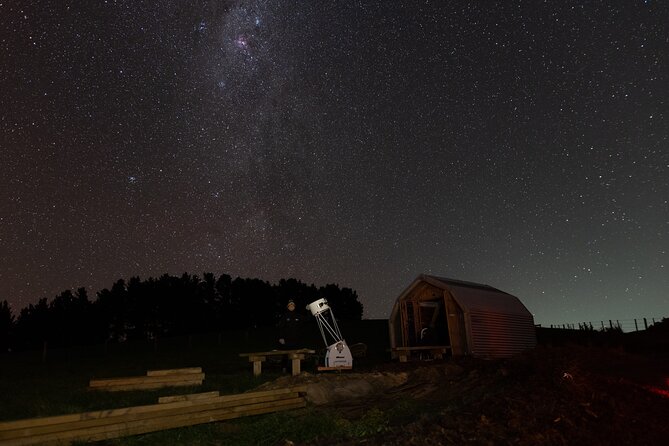
From there, the telescope viewing area is about 25 meters away, tucked inside the Moon Garden. It’s close, but it feels like a “stage change.” You move from arrival mode into observing mode, and that short walk helps you settle in, keep your body warm, and be ready when the sky is at its best.
The group size is intentionally small, with a maximum of 10 travelers, so you’re not stuck watching from the back row while someone else gets all the telescope time. With several scopes available (3-4), the guides can rotate you through and keep the pace relaxed instead of rushed.
One more thing that sets the tone: you’ll have constant chances to ask questions. That’s a big part of why this works even if you’re new. You don’t have to memorize astronomy terms. You can simply ask what you’re seeing and why it looks that way.
Telescopes, Milky Way Moments, and Saturn-Style Targets
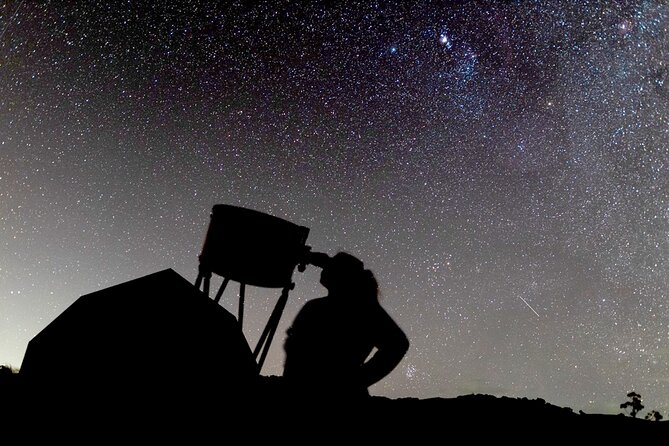
When stars are visible, you get 60 to 90 minutes of telescope observing. The focus is the southern sky, and the experience is designed to show deep-sky objects, not only bright point stars. You’ll be guided to look at things like galaxies, nebula clouds, and star clusters.
One highlight people love is Saturn, including its rings and moons when conditions and viewing alignment allow. Even if Saturn is not the only target, it’s a good example of what this night is trying to do: show you scale and detail, not just “a dot through glass.”
You’ll also likely spend time with binocluars while the telescopes are set up. That’s a smart move because binocular observing keeps the session interactive, and it helps your eyes adjust. It also makes you feel like you’re doing astronomy during the waiting, not just sitting there.
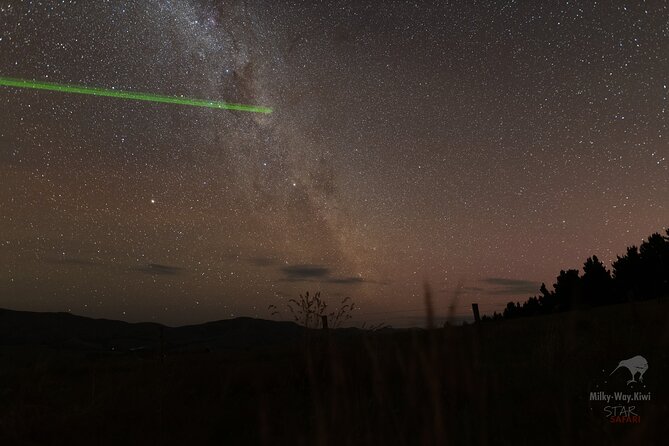
A small, practical advantage is the guides’ laser pointers, which are licensed for use. They help you connect what you’re seeing at the eyepiece with where to look next. If you’ve ever tried to re-find something you saw ten minutes earlier, you know how frustrating that can be. With a pointer and guidance, you can get your bearings fast.
Finally, the telescopes themselves are manual 16-inch scopes, and the guides emphasize learning your way around the night sky. For beginners, that means orientation help. For more advanced stargazers, it means there’s space for an observing list, not just a scripted tour.
Hari and Sam: Astrobiology + Astrophysics With Real Q&A
This is not a one-way lecture. You get nonstop Q&A during the observing section, led by Hari (astrobiologist) and Sam (astrophysicist). That pairing is a fun way to bridge two different kinds of curiosity: what’s out there, and what it might mean for life.
Hari’s astrobiology angle is especially useful if you like astronomy that connects to big questions. The experience includes virtual reality content tied to astrobiology, and they also have a unique collection of astrobiology-relevant rocks from across New Zealand. Those rocks connect to research themes related to the search for life on Mars, which gives the night sky a “why we care” layer.
Sam’s astrophysics side brings the objects to life. You’ll get explanations that connect planets, deep-sky objects, and even the way different stars look. In past sessions, people have walked away talking about seeing objects like red and blue stars, and learning what that color suggests rather than treating it as decoration.
A practical benefit of having both guides is that questions rarely fall through cracks. If you ask a space-science question about chemistry or habitability, Hari can take it. If you ask about how something works in terms of physics, Sam can answer. You don’t feel bounced around, and you don’t have to wait for the “end of the talk” to get answers.
The Wairarapa cellar doors, continued





If the Sky Turns Cloudy: How the VR Backup Still Makes Sense
Stargazing weather can change quickly, and Star Safari is built to keep your night productive. If conditions are not suitable for telescope viewing, you switch to an e-astronomy program.
That backup includes state-of-the-art planetarium software plus virtual reality. Instead of losing the whole experience, you still tour the Universe and focus on the Solar System. If you’re the type who wants to understand what you’re seeing, the software part helps you “place” objects in context, not just identify them.
The VR component also ties back to astrobiology. You explore the Solar System in a way connected to the idea of life beyond Earth, which matches Hari’s specialty. There’s also that collection of rocks mentioned earlier, which means the science theme is not only digital. It’s grounded.
Is it the same as looking through a telescope? No. Telescope light has a direct, physical reality that screens cannot replicate. But if clouds are thick, the VR program is a strong way to keep the evening from turning into an expensive weather-dependent disappointment.
And if you do get some clear moments, the team will still aim to stargaze when stars are visible. The night isn’t treated as an all-or-nothing event.
Warm Drinks, Cold Nights: The Little Comforts That Help You Stay Out Longer
You’ll get a complimentary hot drink during the experience, which is a well-established tradition. In practice, it’s more than a nice gesture. It gives you a moment to warm up between viewings, and it helps you stay comfortable enough to actually enjoy the full observing time.
This matters because the session runs into night temperatures, and the instruction is to dress like you would go hiking: warm layers, something you can move in, and enough protection for the cold. If you show up lightly dressed, you’ll lose time to body discomfort instead of using that time to learn the sky.
If you’re the kind of person who takes photos, remember the cold slows phone batteries too. Keep devices warm, or plan to rely more on your eyes and the guide explanations.
Price and Value: Is $62.06 a Good Use of Your Night?
At $62.06 per person, Star Safari sits in the “worth it when it clicks” category. Here’s why I think it offers fair value.
First, you get a full 90-minute format with guided Q&A. The science is not outsourced to a script that runs whether you’re there or not. You have access to Hari and Sam during the observing section.
Second, you are not fighting crowds for one telescope. With 3-4 telescopes available and a small max group size of 10, you should reasonably expect enough time at the eyepiece to feel you got your money’s worth. Telescope time is the product here, and this setup is designed to spread it around.
Third, the VR backup reduces the risk of paying for weather alone. Stargazing is always weather-dependent, but this experience tries to protect your time either way.
What could lower perceived value? If you expect a huge, all-day astronomy event with multiple stations and long wandering time, this is a focused, guided session. It’s a great night out, not a full itinerary day. If your goal is quick stargazing and immediate learning, it’s a strong match.
Who Should Book This Star Safari in Martinborough?
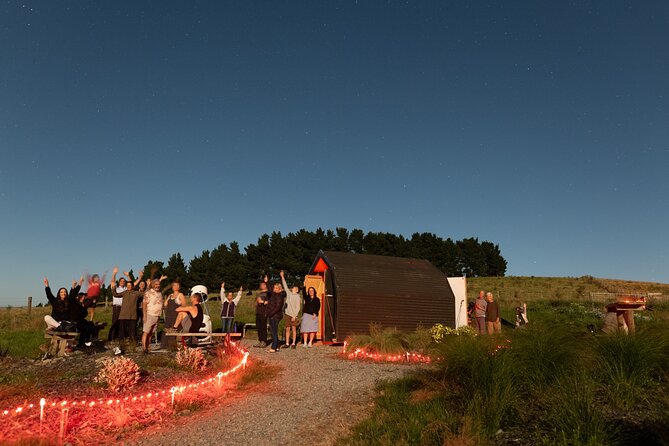
Star Safari works well for a wide mix of people because the team explicitly supports both ends of the experience spectrum.
- If you’re a beginner, you’ll get help finding your way in the sky and learning how to orient yourself. The manual telescope approach can be surprisingly teachable, and the laser pointers help you connect directions with objects.
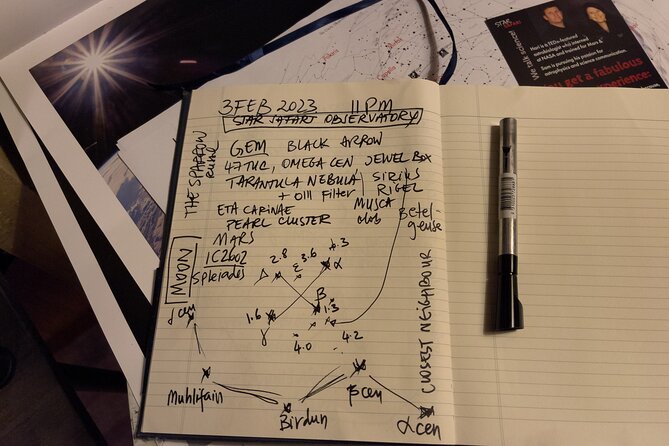
- If you’re more advanced, bring your observing list. The guides know their night sky and can work with what you want to see.
- If you’re traveling as a family, this kind of guided stargazing can be a win, especially with the kids getting attention during telescope rotations. In at least one family scenario, the youngest children were not charged, which is worth asking about when you book.
This tour also fits well if you want astronomy that has a meaning beyond spotting constellations. The astrobiology angle makes it feel less like a hobby demo and more like a science lesson.
Practical Tips So You Actually Enjoy the Telescopes
To get the best out of the night, plan like you’re hiking, not like you’re going to the theater.
Dress warmly in layers. Bring a warm hat and something for your hands. Even if you think you’re tough, your fingers will remind you you’re not.
Arrive on time so you’re ready to move into the Moon Garden area without rushing. Once the telescopes start, small delays can mean missing the early best viewing window.
If you have a question, write it down on your phone notes before you arrive. When you’re standing under lights at night, you’ll forget what you wanted to ask. A quick note helps you ask at the right moment, during the guides’ Q&A flow.
If you’re an advanced stargazer, bring an observing list. The manual scopes and the guided pointing make it easier to follow a plan instead of flying blind.
Should You Book Star Safari in Martinborough?
Book Star Safari if you want a short, high-quality astronomy night with real guidance, a small group, and time at multiple telescopes. I especially recommend it if you like asking questions, learning how to find objects, or you’re curious about the life-science side of space with Hari’s astrobiology focus.
Skip it only if you’re looking for a long, independent astronomy experience where you handle everything on your own, or if you’re the type who dislikes anything weather-related. The night sky can be unpredictable, even here, but the VR and planetarium backup helps protect your evening.
If you’re deciding between a basic stargazing pass and a guided science session, Star Safari leans toward the guided learning side, with enough telescope time to feel real.
FAQ
How long is the Star Safari stargazing experience?
The experience lasts about 90 minutes, approximately 1 hour 30 minutes.
Where does the experience meet?
The meeting point is in Ponatahi, listed as VG48+C6 Ponatahi, Wellington Region, New Zealand.
What happens if the sky is cloudy?
If the sky is not suitable for stargazing, you switch to an e-astronomy program using planetarium software and virtual reality.
Who will guide the stargazing and science questions?
The experience is guided by Hari (astrobiologist) and Sam (astrophysicist).
Is there a limit on group size?
Yes. The experience has a maximum of 10 travelers.
How many telescopes are available?
There are 3 to 4 telescopes available during the stargazing session.
Will there be time to see the Milky Way and other deep-sky objects?
Yes. When stars are visible, the session focuses on viewing deep-sky objects of the southern sky, with options that include the Milky Way.
What should I wear for night viewing?
Dress warm, like you would for hiking. It gets very cold at night.
Can I use my mobile ticket?
Yes. The tour uses a mobile ticket.
Everything Else We Wrote Up in Wellington




More Wairarapa Cellar Doors






More Nights Under Dark Sky
Just added to our Wellington notes
- Wellington: City Highlights Tour with Cable Car Ride★ 4.4 · 3 reviews
- Wētā Workshop Creative Workshop Intro to Scars and Scrapes★ 4.5 · 3 reviews
- Remutaka Rail Trail- Wellington eBike Cruise Ship Shore Excursion★ 4.5 · 3 reviews
- Private Wellington Craft Beer Full Day Tour★ 5.0 · 3 reviews
- Private Stargazing at Star Safari near Martinborough★ 5.0 · 3 reviews
- Private Lord of the Rings Tour Wellington with Lunch★ 5.0 · 3 reviews
Stargazing and Dark Sky Tours, compared.
 ★ 4.5Lake Tekapo: Alpine Stargazing Experience with a GuideFrom $59626 reviews
 ★ 4.9Lake Tekapo: Stargazing ExperienceFrom $71607 reviews
 ★ 5.0Chameleon Stargazing Shared TourFrom $74181 reviews
 ★ 4.5Lake Tekapo: Mountaintop Stargazing at Mount John SummitFrom $130176 reviews
 ★ 4.5Mount John Observatory Stargazing Experience, TekapoFrom $139160 reviews
 ★ 4.5Tekapo Star Gazing Tour – Soak in the StarsFrom $117109 reviews
 ★ 4.5Silver River Stargazing Experience in Lake TekapoFrom $61106 reviews
 ★ 4.0Stargazing Experience at Cowan’s Private ObservatoryFrom $8285 reviews
Browse the lists this tour appears in