
REVIEW · AORAKI MOUNT COOK AND LAKE TEKAPO
Lake Tekapo: Stargazing Experience at Cowan’s Observatory
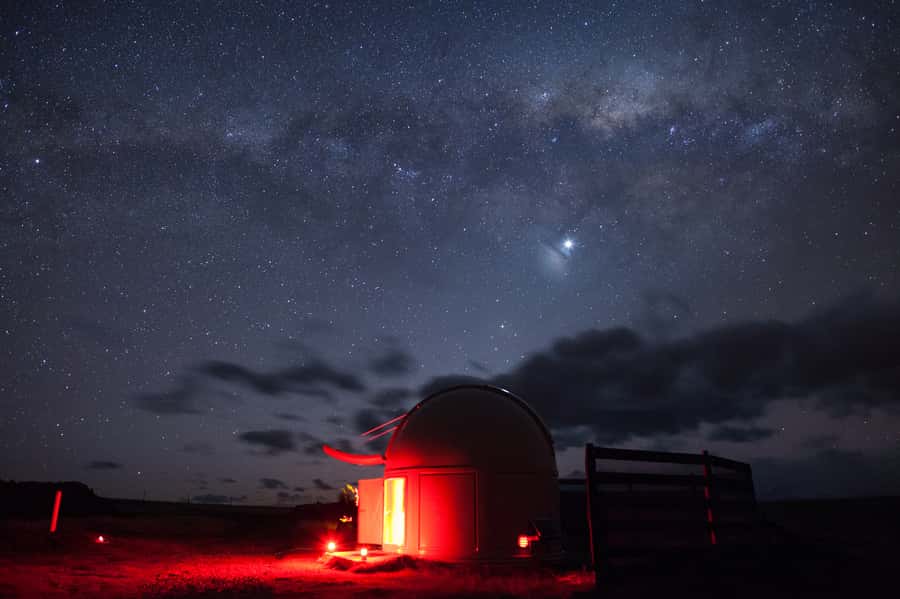
Southern skies after dark are pure magic. At Cowan’s Private Observatory near Lake Tekapo, you stargaze from wind-sheltered observation craters with an astronomer who teaches you what you are seeing. You also get return transport to the Dark Sky base, so you can focus on the sky, not logistics.
I especially like the way the experience stays practical. You start with naked-eye views of the Milky Way and southern galaxies, then move to powerful telescopes when conditions allow. Guides also adapt the plan to what is actually visible that night, not a rigid script.
The main thing to consider is value. One review called it expensive for what you experience, and if you mainly want bright planetary action like Jupiter, you might feel this is more about the southern sky than a “solar system hits list.”
In This Review
- Key things to know before you go
- Lake Tekapo’s Dark-Sky Night: What You’re Really Buying
- Entering the Observation Craters at Cowan’s Private Observatory
- Your Astronomer Guide: Customized Tonight, Not a Script
- Milky Way Moments and Southern-Sky Galaxies
- Why the Dark-Sky Reserve Matters (More Than You Think)
- Telescopes Without the Pressure: How the Night Unfolds
- Transportation, Timing, and What to Do Before You Leave
- Price and Value: Is $77 Worth It for 75 Minutes?
- Who Should Book, and Who Should Rethink It
- When Weather Changes the Plan
- Should You Book Cowan’s Observatory Stargazing Tonight?
- FAQ
- How long is the stargazing experience?
- What is the price per person?
- Where do I meet for the tour?
- Is food or drink included?
- What should I bring?
- Is flash photography allowed?
- Do you provide transportation?
- Are children allowed?
- What languages are offered for the live guide?
- What happens if the weather is bad?
Key things to know before you go
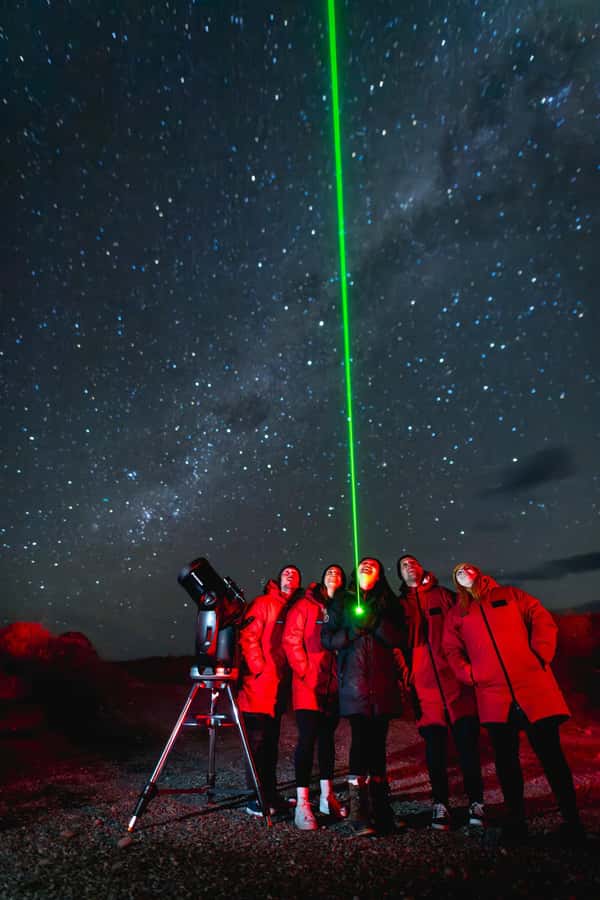
- Gold Standard International Dark Sky Reserve stargazing: You get star views from one of the world’s best dark-sky areas.
- Secluded observation craters: Built to reduce wind and light spill for steadier viewing.
- Expert guidance that adapts nightly: The guide customizes based on what is visible.
- Telescopes plus naked-eye learning: You learn the sky before you magnify it.
- Warmth matters: You will be outside, so bring the layers you actually trust.
- Most effective for first-timers and serious learners: It is an astronomy lesson, not just a quick look.
Higher up, around Aoraki and Tekapo
- Lake Tekapo: Alpine Stargazing Experience with a Guide
★ 4.5 · 626 reviews - Lake Tekapo: Stargazing Experience
★ 4.9 · 607 reviews - Tekapo Shuttle: Mt Cook Day Tour via Pukaki & Tasman Lake
★ 4.8 · 307 reviews - Lake Tekapo: Mountaintop Stargazing at Mount John Summit
★ 4.5 · 176 reviews
Lake Tekapo’s Dark-Sky Night: What You’re Really Buying
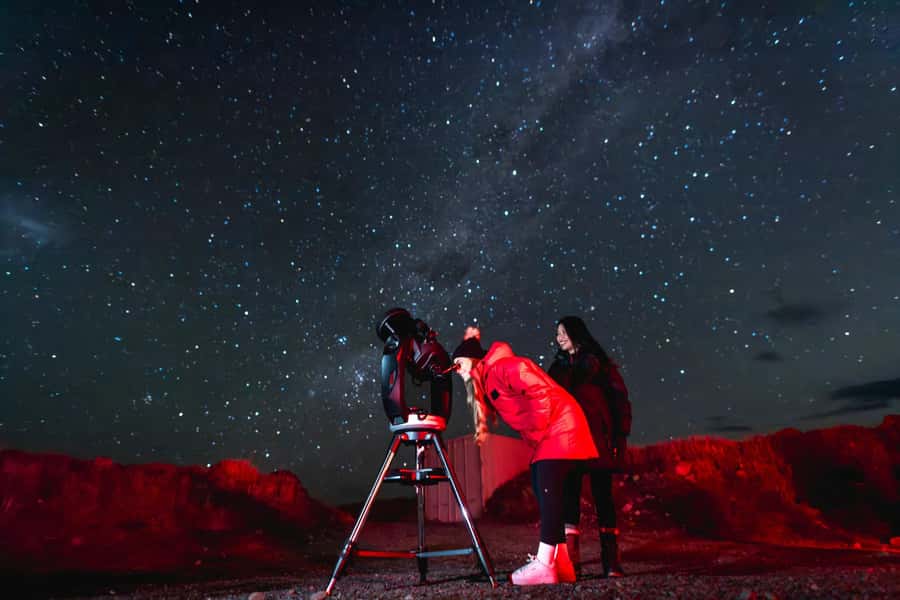
Lake Tekapo is famous for clear, dark nights, and this experience is built around that. You are not just standing somewhere with a view. You are going to Cowan’s Private Observatory, where the whole setup is designed for stargazing in a low-light environment.
The price, $77 per person, covers more than a seat. It includes an astronomy guide, telescopes, and return transport from the Dark Sky base building in Tekapo. For many people, the value here is that you are paying for interpretation, not just equipment. If you have ever looked up at the stars and thought, I can see them, but I do not know what I am looking at, this kind of guided night fixes that.
You do need to match the experience with the right attitude and clothing. Warm clothing is essential no matter the season. Think hat, scarf, and layers you can move in. The staff also note that flash photography is not allowed, which makes sense because it protects other people’s night vision and keeps the stargazing focused.
Entering the Observation Craters at Cowan’s Private Observatory
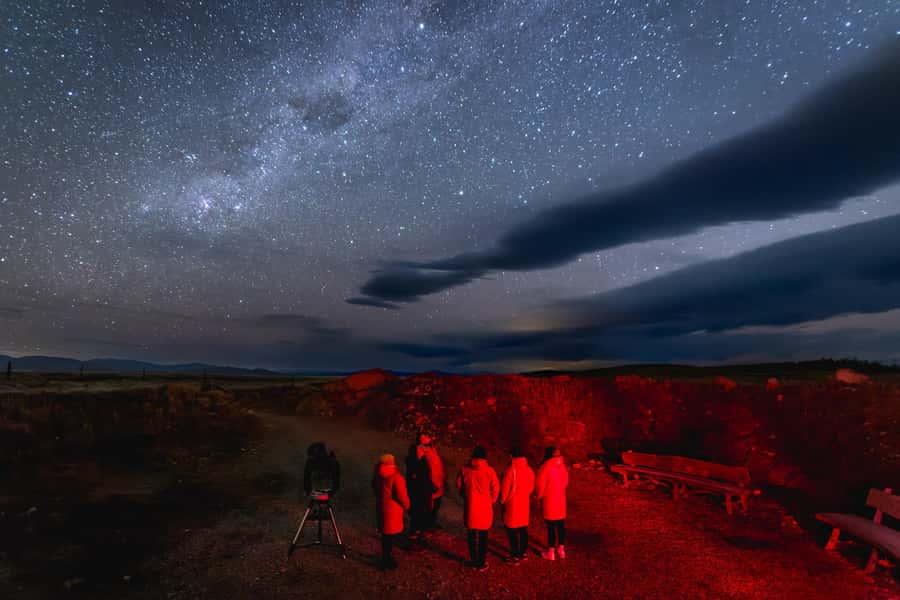
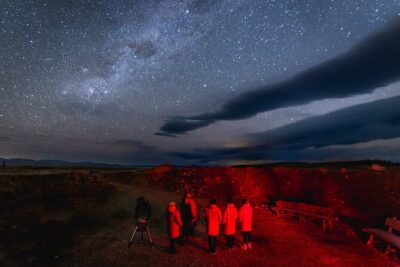
Here is the practical magic: you observe from purpose-built craters. These are sheltered from wind and light pollution, which matters more than most people expect. When you are stargazing, wind can shake your view and get you hurrying inside. Light pollution can wash out faint stars and soften what telescopes can show.
The craters also create a calmer experience. You feel separated from the usual brightness of towns. The tour description even frames it as you, the stars, and the southern sky. That matters for beginners, because it helps you concentrate on the sky instead of everything around it.
This part lasts the core of your visit, about 1 hour 15 minutes of stargazing time. During that window, the guide has time to walk you through what to look for with your eyes, then bring telescopes into the mix when it will help.
Your Astronomer Guide: Customized Tonight, Not a Script
This is the experience’s biggest strength: the guide is not just reading facts. They are adjusting to the night in front of you. The tour emphasizes that the experience is customized based on what’s visible each night, which is exactly what you want in astronomy.
I like this approach because the southern sky changes. Even if you have seen stars before, the best view on one night might not match the highlights on another. A guide who adapts helps you actually understand the sky you are experiencing, not a perfect version from a textbook.
You will also be talking with a real person, not only a talk inside a classroom. The guide language options are Chinese, English, and Japanese, which makes it more likely you can follow along without mentally translating the whole time.
And the reviews give clues about how the teaching style lands. One stargazer mentioned Vickey by name and said the explanations were very clear, with repetition that helped people follow. That is a big deal. Astronomy can be confusing if you miss one sentence. If a guide repeats key points, you get to build confidence instead of feeling lost.
Another review praised the fun explanations and friendly attitude. I take that as a signal that the tone tends to be approachable, not stiff or only for experts.
Milky Way Moments and Southern-Sky Galaxies
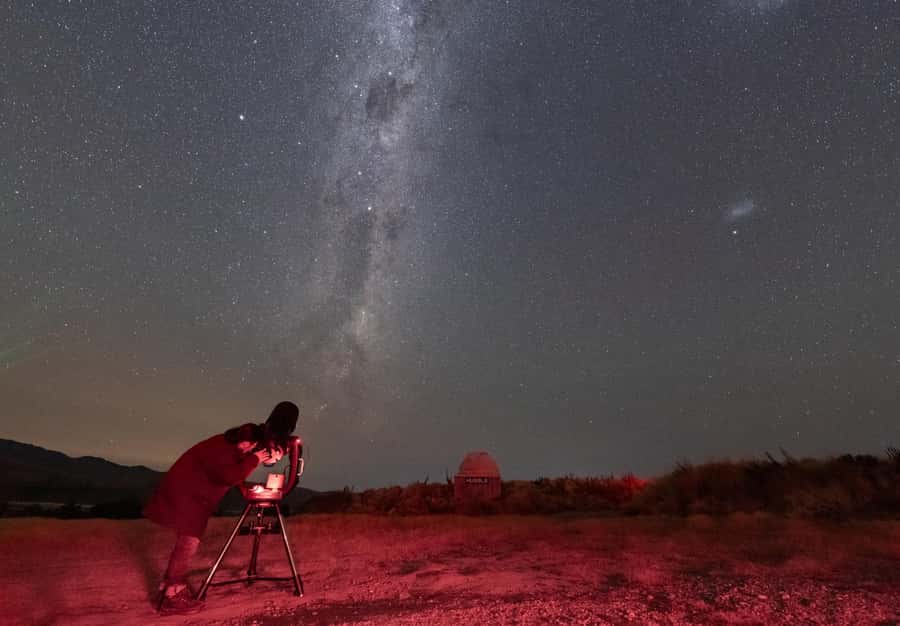
A good stargazing night has two layers. First, you need the “aha” moment when you learn how to see. Second, you need the “wow” moment when magnification reveals detail.
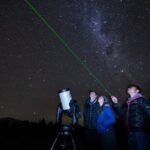
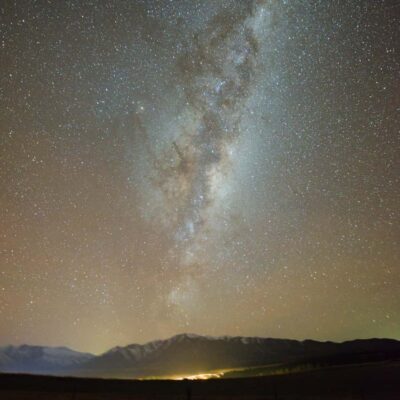
This tour aims at both. It starts with naked-eye stargazing of the southern sky, focusing on the Milky Way’s depth and the idea of endless Southern skies and galaxies. Then it pairs that with powerful telescopes for deeper looks.
You can think of it like this:
- With your eyes, you learn where the sky is and how your perception changes as you get adjusted to darkness.
- With telescopes, you learn what is faint, what is structured, and what that structure means.
That pairing is especially valuable for first-timers. It is easy to get dazzled by a telescope view and then forget what you were looking at. Here, the guide’s job is to connect what you see through the eyepiece back to the bigger pattern above you.
One caution from a review is worth hearing. If you have already seen very specific bright targets, like Jupiter moons, you might find the experience more about galaxies and the Milky Way than about dramatic planet action. That does not make it less impressive. It just means you should align your expectations with southern-sky astronomy.
Other nights under a dark sky
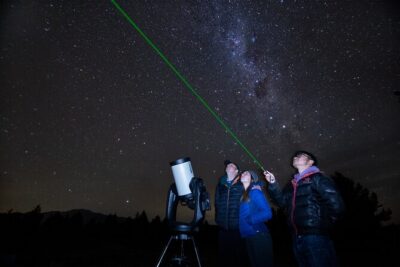
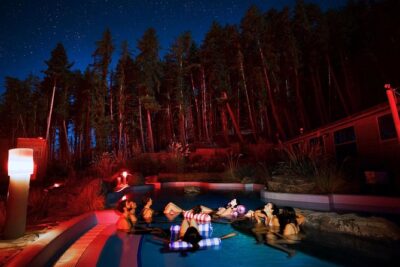
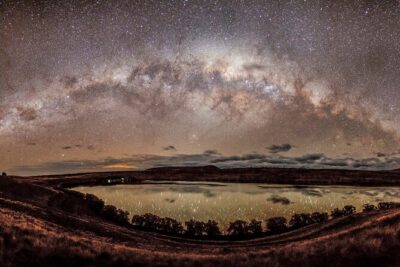
Why the Dark-Sky Reserve Matters (More Than You Think)
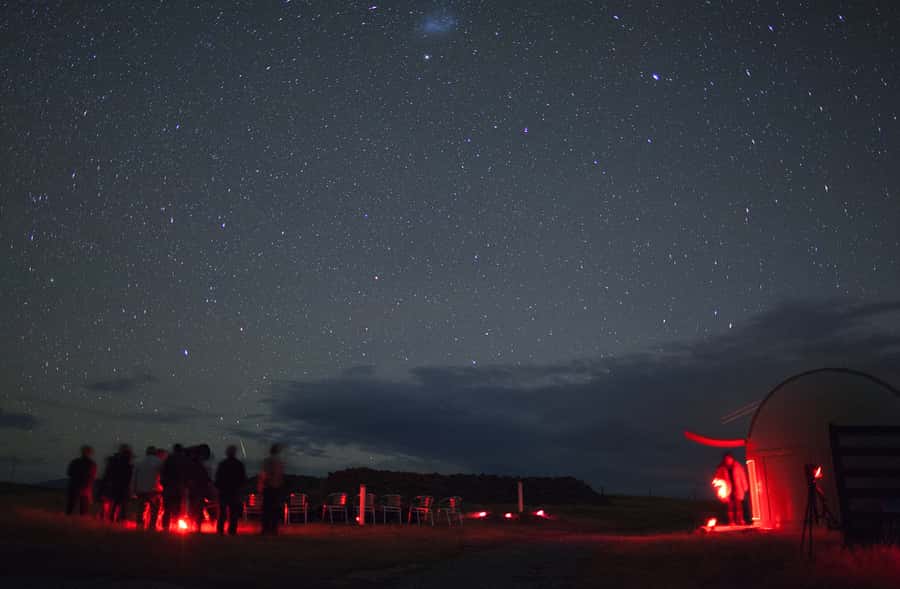
The highlights emphasize that this stargazing happens from the world’s largest Gold Standard International Dark Sky Reserve. Even if you have never heard that phrase before, the effect is straightforward: your stars should look better because the environment is built to reduce light interference.
Here is why that matters for you:
- You can see fainter stars with your eyes.
- Your night vision holds longer.
- Telescopes show more, because the background sky is darker.
A stargazing tour in a light-filled area often turns into “spot the brighter things.” In a Gold Standard reserve, the experience becomes more about structure and depth, including the Milky Way and galaxies.
The tour also reinforces this with the sheltered crater design. That combination, dark sky plus wind and light protection, is what lets the guide spend the night teaching rather than constantly battling conditions.
Telescopes Without the Pressure: How the Night Unfolds
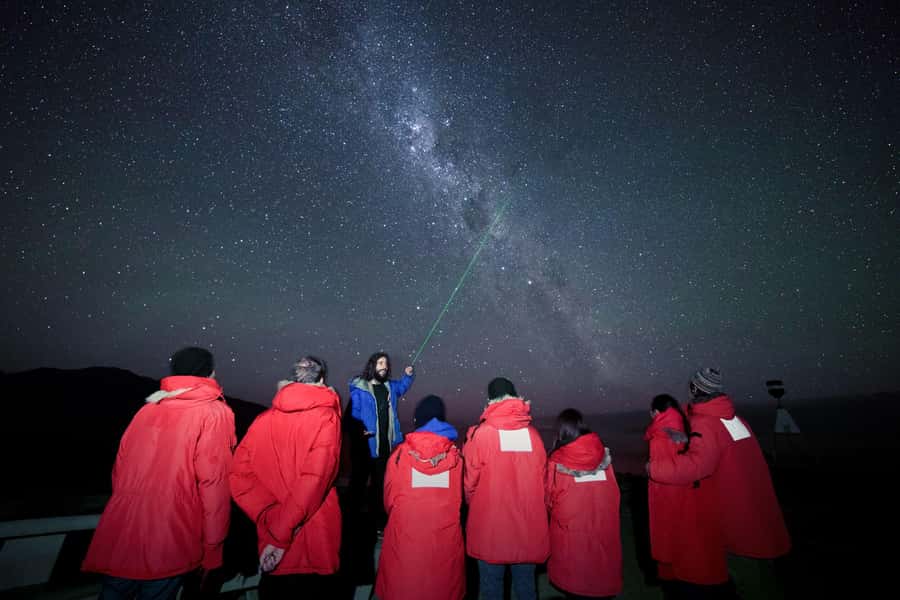
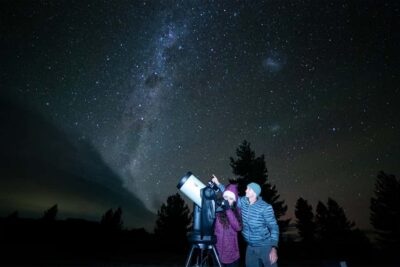
You are not handed a random telescope and told to figure it out. The tour includes use of powerful telescopes as part of the guided experience. That means the guide can aim, explain, and help you interpret what you are looking at.
From a practical standpoint, this reduces two common stargazing problems:
- You spend time hunting, not learning.
- You look, you see something, and then you cannot label what it is.
Because the guide customizes based on what is visible tonight, the telescope time can be used where it will make the biggest difference. Some nights, that might mean focusing on Milky Way richness. Other nights might shift depending on what is up and what the conditions allow.
If you are brand new to stargazing, this format helps you get your bearings fast. If you are more experienced, it still works because you get a teacher explaining how the targets relate to the larger southern sky.
Transportation, Timing, and What to Do Before You Leave
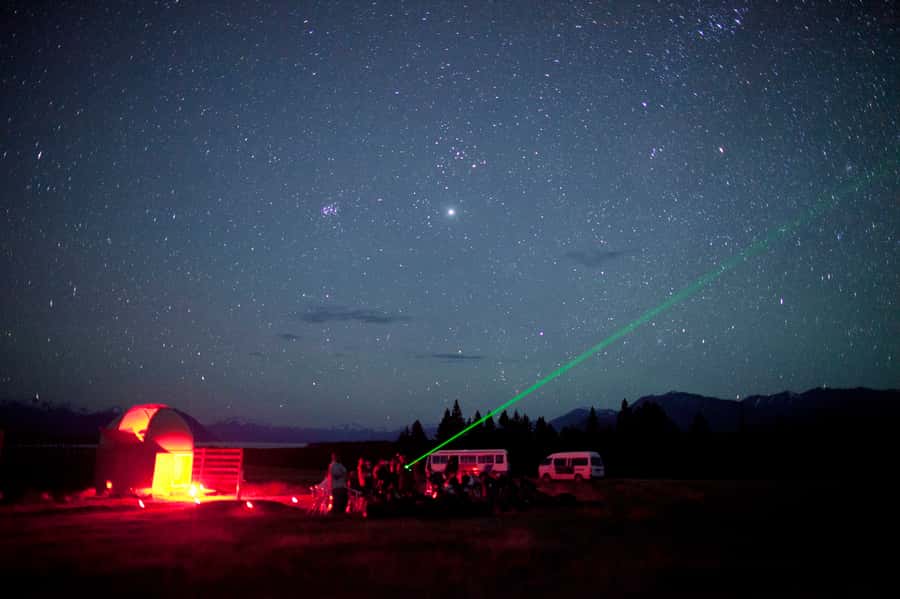
This one is simple, but it affects your comfort. The tour includes round-trip transportation from the Dark Sky base building in Tekapo. So you do not have to worry about finding the observatory after dark.
The total stargazing experience is 75 minutes. That is a good length for a stargazing session, because it is long enough to learn the sky and see different views, but not so long that everyone freezes or gets restless.
The meeting point is clearly stated: Dark Sky Project – Booking Office, 1 Motuariki Lane, Lake Tekapo 7999. If you are booking a time after midnight, the information specifically asks you to double-check the date you are booking. That is a small detail, but it can save you a headache.
What to do right now:
- Pack your warm clothing as your top priority.
- Bring a hat and scarf, not just a jacket.
- Skip flash photography. The tour states it is not allowed.
Price and Value: Is $77 Worth It for 75 Minutes?
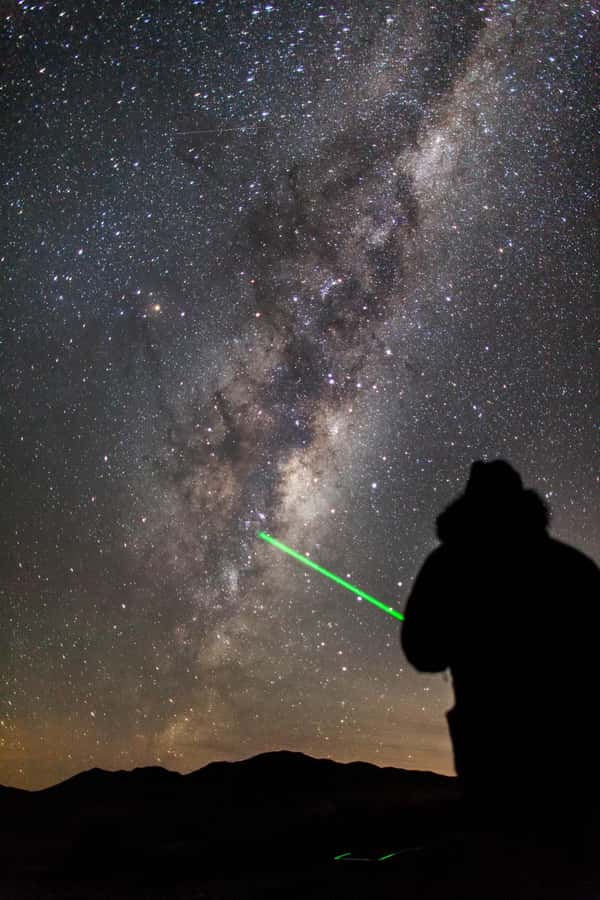
Let’s talk money like an adult. $77 for 75 minutes can sound steep if you think you are buying just time outside staring at stars.
You are not just paying for time. You are paying for:
- a guide who can interpret what you are seeing,
- telescope access,
- the night-sky conditions of the dark-sky reserve,
- and return transport.
If you are brand new, this is often a solid value because it turns an overwhelming sky into something understandable. The “lesson plus the view” formula is usually what makes these experiences worth it.
If you are already deep into astronomy, the value depends on your goal. If you want very specific planetary targets, you might not feel this matches your usual interests. One review called it expensive for what you experience and hinted it is best for beginners. I agree with that general vibe, even while still thinking the southern sky itself is a real treat.
So my practical takeaway: consider the $77 as paying for a guided gateway to a top-tier dark-sky environment, not as a budget astronomy rental.
Who Should Book, and Who Should Rethink It
This tour is described as accessible and engaging for first-time explorers, families, and seasoned stargazers. But there are two important filters.
First, children under 5 are not allowed. If you are traveling with younger kids, you’ll need a different option.
Second, check your expectations. If you want a night of southern Milky Way and galaxies, this should land well. If you only care about bright solar system moments, you may walk away wishing for different targets.
Who I think will be happiest:
- you want to learn the sky, not just look at it,
- you like astronomy explanations with patience and repetition,
- you want a high-quality dark-sky experience without doing the planning yourself.
Who might not love it:
- you are extremely budget-focused and only want a basic look,
- you are expecting a “planets only” kind of night.
When Weather Changes the Plan
Weather can turn stargazing upside down fast. The information says tours can be cancelled in bad weather, and an indoor alternate will be offered, or you can get a full refund.
That matters for your planning mindset. Treat this as a night-sky experience with weather as a variable. Bring your warm layers anyway, and keep your schedule flexible if you can.
Should You Book Cowan’s Observatory Stargazing Tonight?
Book it if you want a guided, comfortable introduction to the southern sky, in one of New Zealand’s best dark-sky settings. The combination of wind-sheltered observation craters, telescopes, and a guide who customizes the night based on what’s visible is exactly what helps you see more and understand more.
Skip it or adjust expectations if you mainly want quick, bright planetary targets. This is about the Milky Way, galaxies, and the Southern skies experience, not a checklist of solar system objects.
If you are the kind of person who enjoys learning as you look, and you are willing to dress for cold night air, this is the kind of $77 that can feel surprisingly reasonable.
FAQ
How long is the stargazing experience?
The stargazing experience lasts 1 hour 15 minutes.
What is the price per person?
The price is $77 per person.
Where do I meet for the tour?
You meet at Dark Sky Project – Booking Office, 1 Motuariki Lane, Lake Tekapo 7999.
Is food or drink included?
No, food or drink is not included.
What should I bring?
Bring warm clothing, a hat, and a scarf.
Is flash photography allowed?
No, flash photography is not allowed.
Do you provide transportation?
Yes, round-trip transportation is included from the Dark Sky base building in Tekapo.
Are children allowed?
Children under 5 years of age are not allowed to join this tour.
What languages are offered for the live guide?
The live tour guide language options are Chinese, English, and Japanese.
What happens if the weather is bad?
If the tour is cancelled due to bad weather, an indoor alternate is offered, or a full refund is provided.
Everything Else We Wrote Up in Lake Tekapo
More Nights Under Dark Sky
Aoraki and the Mackenzie
Just added to our Lake Tekapo notes
- Lake Tekapo: Virtual Stargazing and Astronomy Experience★ 4.5 · 8 reviews
- Mt Cook Day Tour From Tekapo (Small Group, Carbon Neutral)★ 4.5 · 11 reviews
- Lake Tekapo: 1.5-Hour Hot Pools & Stargazing Experience★ 4.6 · 11 reviews
- Lake Tekapo: Ultimate Stargazing Experience★ 4.3 · 12 reviews
- Lake Tekapo Scenic 4WD Cass Valley Wilderness Tour★ 4.9 · 13 reviews
- Lake Tekapo: Glaciers, Mountains, and Landscapes Scenic Tour★ 4.9 · 15 reviews
Aoraki Mount Cook and Lake Tekapo, compared.
 ★ 4.5Lake Tekapo: Alpine Stargazing Experience with a GuideFrom $59626 reviews
 ★ 4.9Lake Tekapo: Stargazing ExperienceFrom $71607 reviews
 ★ 4.9Mount Cook & Lake Tekapo Day Tour from ChristchurchFrom $146483 reviews
 ★ 4.8Mount Cook: Scenic Helicopter Flight with Alpine LandingFrom $226442 reviews
 ★ 5.0Mt Cook Small Group Scenic Day Tour from QueenstownFrom $164407 reviews
 ★ 5.0Mount Cook, Lake Tekapo and Tasman Glacier Tour from ChristchurchFrom $155353 reviews
 ★ 4.6From Christchurch: Mt Cook Day Tour & Lake TekapoFrom $175331 reviews
 ★ 4.8From Queenstown: Mt Cook & Tasman Glacier Viewpoint Day TourFrom $146329 reviews
Browse the lists this tour appears in