
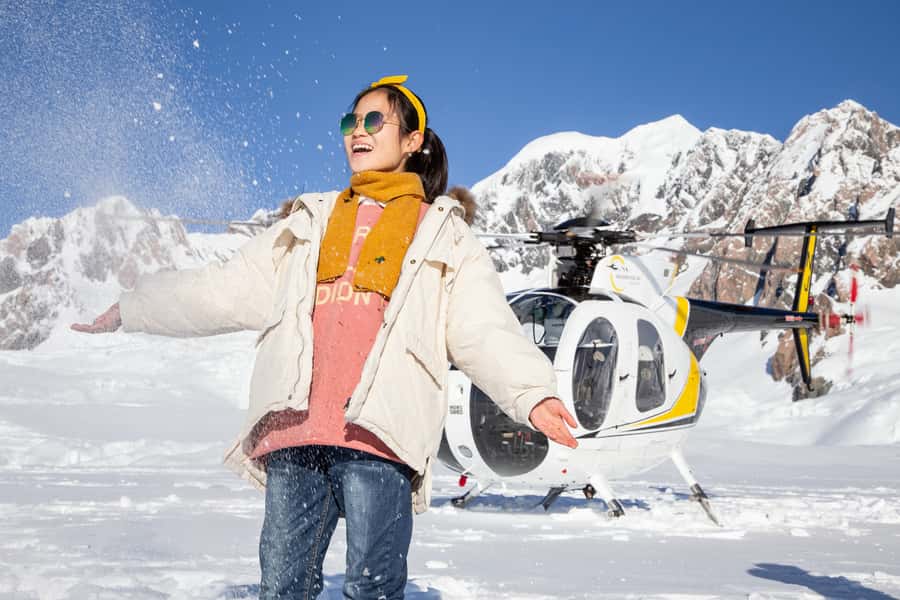
REVIEW · FRANZ JOSEF AND FOX GLACIER
Franz Josef: Twin Fox & Franz Josef Glaciers Helicopter Trip
Glacier hopping by helicopter beats the usual drive and walk for sheer wow factor. This 30 minute flight over the Twin Glacier Fox and Franz Josef glaciers gives you views of the Southern Alps, Mount Cook, and Mount Tasman, and you also get a snow landing on foot for photos. Two things I especially like are the close-up look at blue ice and the smooth, friendly professionalism you can expect from pilots such as Paul, Adrian, Ken, Jiorde, Jordy, or Mark. One consideration is that weather and visibility control whether you can do the exact route and snow landing.
You start in Franz Josef at the Alpine Adventure Centre, and the whole experience is built around keeping you in the air long enough to see the icefall shapes, then letting you step onto snow for a short window. I also like that you get commentary throughout, so the views come with real context, not just a seatbelt and silence.
At $263 per person, it is not a casual add-on. If you’re traveling on a tight budget or you hate any weather uncertainty, this is the kind of splurge that can feel pricey, even when it goes perfectly.
In This Review
- Key things that make this helicopter trip worth it
- Why this 30 minute helicopter flight feels bigger than it sounds
- From Alpine Adventure Centre in Franz Josef to the glacier zone
- Twin Glacier Fox: what the air gives you that the ground can’t
- Franz Josef Glacier: icefalls, blue depth, and the moment it clicks
- The scenic snow landing: short time on the ground, big payoff
- What the onboard commentary does for your eyes
- Weather reality check: why clear days help most
- What to wear and bring so the snow landing is comfy
- Who should book this, and who might think twice
- Price and value: what $263 buys you in real terms
- Should you book the Franz Josef and Twin Glacier Fox helicopter trip?
- FAQ
- Where is the meeting point for the helicopter trip?
- How long is the helicopter experience?
- Is hotel pickup included?
- How much time do you spend on the snow?
- What happens with the snow landing if the weather is not suitable?
- Do you get commentary during the flight?
- What language is the tour guide?
- What should I bring?
- Are infants allowed, and do they pay?
- Can I get a refund if plans change?
Key things that make this helicopter trip worth it
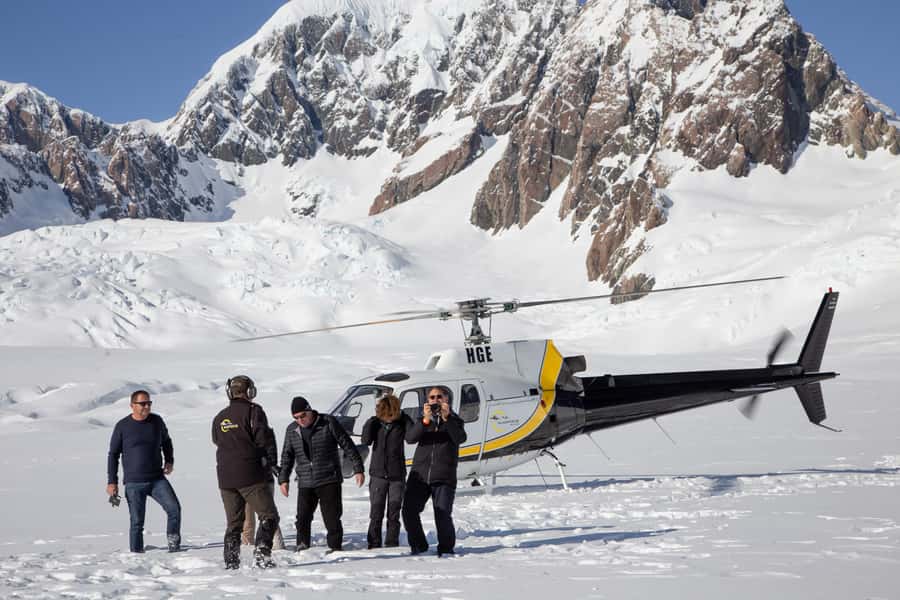
- Double glacier coverage in one flight: Twin Glacier Fox and Franz Josef Glacier, both from the air.
- The icefalls look unreal: that deep blue texture reads totally different up close.
- Mount Cook and Mount Tasman visibility: you are not only looking down at ice, you are also scanning major peaks.
- A short snow landing for photos: you get time on the ground rather than just flying past.
- A small aircraft feel: one note mentions six passenger seats, so windows matter and sightlines can vary.
- Weather decides the plan: routes and whether you land can shift based on conditions.
Glacier country, a few more options
- Fox Glacier: Up to 3 Hours Hike with Helicopter Transfer
★ 4.9 · 309 reviews - Fox Glacier: Scenic Helicopter Flight with Snow Landing
★ 4.7 · 107 reviews - Fox Glacier: Fox Glacier and Mount Cook Helicopter Flight
★ 4.6 · 26 reviews - Franz Josef: Grand Circle 60 Minute Scenic Flight
★ 4.1 · 12 reviews
Why this 30 minute helicopter flight feels bigger than it sounds
In Franz Josef, a lot of your time can go to waiting, driving, or walking to viewpoints. This trip flips that. In roughly half an hour, you jump from town air to glacier air, and you come back with images you cannot really recreate from the road.
The reason the flight lasts only 30 minutes is also why it works. Helicopters can only do so much before you run out of time, but here the operator aims that time at the two things that make glaciers special: the icefall geometry and the broad Southern Alps panorama. Even if you have seen glacier photos before, air-level viewing adds scale fast. The ice looks thick. It looks layered. And the shapes feel sculpted rather than random.
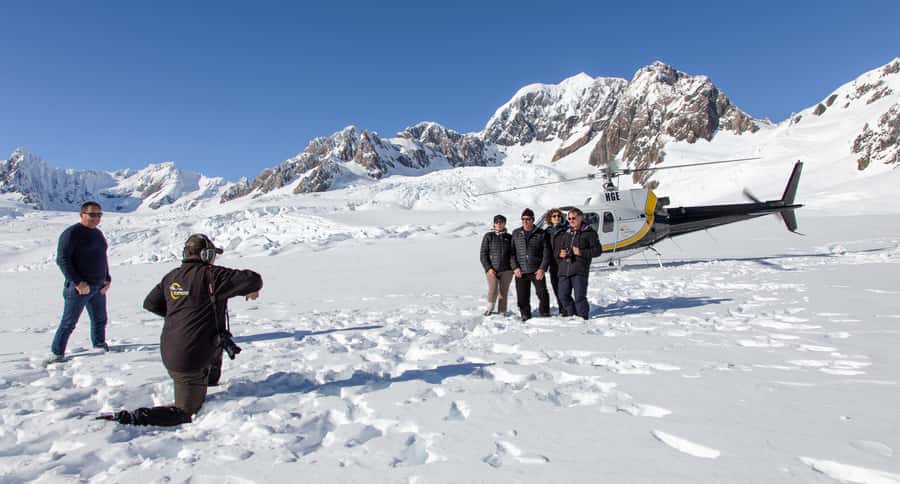
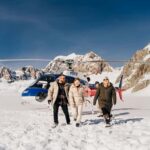
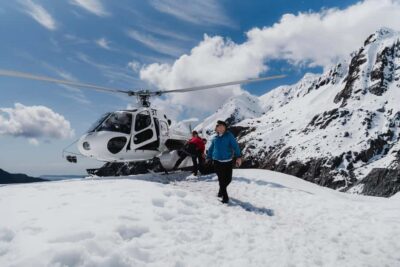
A snow landing changes the experience from spectator to participant. Ten minutes on snow is short, but it is long enough to take photos from a new angle, feel the ground under your boots, and look back at the glacier as something you visited, not something you watched.
Price-wise, $263 is steep for a 30 minute activity. But you are paying for access, not time. You are buying flight coverage over two glaciers, close passes, and permission to land on snow. If your South Island trip includes only a day or two in the glacier zone, this is a compact way to make it count.
From Alpine Adventure Centre in Franz Josef to the glacier zone
Your day begins at the Alpine Adventure Centre, 29 Main Road, Franz Josef. Plan to check in 30 minutes before departure, so you are not rushed during the pre-flight setup.
You do not get hotel pickup or drop-off. That is actually helpful if you are staying in town or already have a car, because you can keep your morning simple and avoid losing time to transfers. If you are relying on a bus or taxi, give yourself extra buffer so you arrive early, calm, and ready to go.
Once you’re onboard, the flight starts moving quickly. You rise from Franz Josef town and head toward the glacier area. The experience is structured so that you get that first big glacier view soon after takeoff, rather than spending most of the flight climbing and only then searching for something worth seeing.
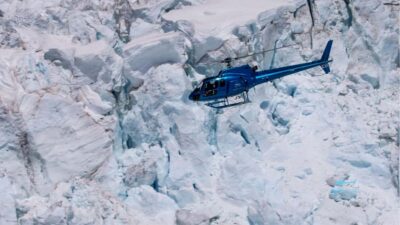
Most importantly, you are not just sightseeing from above. The aircraft passes over major glacier features like the icefall areas. Those are the sections where the ice breaks and flows in dramatic steps, which is exactly why it looks so “blue and deep” from the air.
Twin Glacier Fox: what the air gives you that the ground can’t
Twin Glacier Fox and Franz Josef Glacier are close enough to pair in a single flight, and that pairing is the value trick here. From the ground, you usually get a limited viewpoint with partial angles and a lot of distance between you and the ice. From the helicopter, the glacier fills your frame.
From above, you start to understand how the glacier moves. The ice does not just look like a frozen sheet. It shows structure, breaks, and flow patterns. Even if you are not a geology fan, those shapes translate into a clear visual story: ice changes, and it changes in a big, active way.
In clear weather, the views can also extend beyond ice. You can look past glacier valleys toward major peaks. That is where you get the Southern Alps context, including Mount Cook and Mount Tasman when conditions allow. This is one of the reasons I think this flight stands out versus shorter “scenic flight” options, even when the time seems similar.
One practical note: because you are in a small aircraft, your seat position affects your view. One report notes six passenger seats, with window seats mainly toward the front and some passengers seated in a row at the back. During the snow landing, passengers may be rotated depending on what the crew needs for safe handling and viewing. In practice, that means you should be ready to trade a bit of perfect window framing for the group experience.
Franz Josef Glacier: icefalls, blue depth, and the moment it clicks
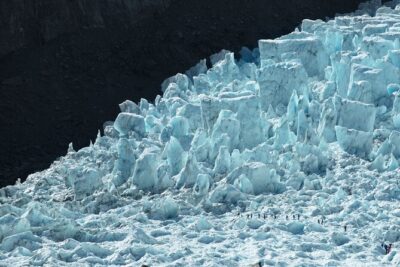
Franz Josef Glacier is the one most people picture. From the air, the glacier reads like an ecosystem of ice. You see where it flows, where it breaks, and where it forms those steep steps and crevasse-like textures that create the famous look people talk about.
The standout visual is the sheer blue depth of the icefalls. From ground viewpoints, that blue can look subtle, almost like a color cast. From above, it becomes part of the geometry. The contrast between pale ice and darker tones gives you a sense of volume and pressure, not just surface shimmer.
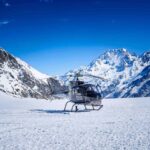
You also gain altitude during the flight. After initial passes, the helicopter ascends among the mountain tops for the snow landing. That step upward matters, because it changes your angle on the glacier and the surrounding ranges. You stop seeing only “ice below” and start seeing “ice within a system of valleys and peaks.”
This is also where pilot skill really shows. Your route and the exact vantage points depend on weather and visibility. In the best conditions, the aircraft can position you for those dramatic passes where you feel like the glacier is right there. In less-than-perfect weather, you may still see glaciers and peaks, just from different angles.
The scenic snow landing: short time on the ground, big payoff
The snow landing is the part many people book for, and rightly so. You get time on the snow, about ten minutes, which is long enough to breathe and look around without feeling rushed.
The flight plan includes landing after you rise toward higher mountain areas. Then you spend time on foot, with the crew guiding your movements so everyone can get photos safely. You should expect a smooth transfer from helicopter to snow and back, but keep your expectations grounded: you are stepping onto glacier snow, so it will be cold, and the ground may be uneven.
This is where your camera matters. Bring it. If you have extra lenses, use what you’ve got. Wide shots help show scale, and zoom shots can help capture texture patterns in the ice nearby.
Also, keep in mind that the snow landing is subject to suitable weather conditions and the pilot’s discretion. If clouds roll in or visibility drops, the crew may adjust the plan. That is frustrating when you have paid for snow-on-your-feet time, but it is also the safety logic behind the experience. In other words, the goal is to land only when it makes sense.
What the onboard commentary does for your eyes
A view becomes memorable faster when you understand what you are looking at. This trip includes commentary throughout the flight, in English.
I love this feature because it turns random visuals into a story you can keep. You learn how the glacier features relate to each other. You also get local context about the Southern Alps and the way these ice systems sit in the broader geography.
The best moments tend to happen when the pilot guides your attention before a pass or after you climb. You see the icefall, then the commentary helps your brain file it as something real, not just a pretty photo spot.
It also helps when visibility is limited. Clouds can soften details, but having a guide explain what you would normally see makes the trip feel less like flying blind.
Weather reality check: why clear days help most
This is one of those experiences where weather is not a footnote. It is the steering wheel. Flight departures, routes, and whether you get the snow landing depend on suitable conditions and the pilot’s discretion.
In clear, sunny visibility, you get what people dream about: bright snow, sharp glacier contrast, and a higher chance of seeing major peaks like Mount Cook and Mount Tasman. On cloudy days, you might still get stunning glacier viewing, just without the same level of “everything in focus” panorama.
Here’s how I suggest you plan around that: treat this as a flexible day activity. If you have options in your schedule, build in a little slack. If you only have one available day and weather turns, the experience can change fast.
The upside is that the operation is built for these conditions. Many flights are rerouted or adjusted rather than canceled outright when possibilities exist. Still, you should expect the day to be weather-dependent, not schedule-dependent.
What to wear and bring so the snow landing is comfy
Your packing list is simple, but it matters because this is a short trip with a cold component.
Bring:
- Comfortable shoes that work on snow
- Camera for the landing and glacier angles
Dress for cold. Even in warmer months, glacier snow can feel very chilly once you’re standing outside the helicopter. Wear layers so you can adjust as the temperature changes from airborne to on-foot.
If you are the type who likes to keep your hands free, choose a camera strap that you can manage quickly. You will want to move carefully on snow, and you will also want both hands when you’re doing quick photo framing.
Who should book this, and who might think twice
This is a great fit if:
- You have limited time in the West Coast glacier region
- You want glacier viewing that goes beyond the usual distant look
- You care about getting close to icefalls and seeing Mount Cook and Mount Tasman if conditions allow
- You like short, high-impact experiences
You might reconsider if:
- You dislike paying premium prices for a weather-dependent outcome
- You want a long hiking-style day, not a fast aerial hit
- You are very sensitive to changes in route if clouds limit the plan
If you are traveling with kids, the helicopter format can be perfect because it is short and exciting. If someone in your group is new to helicopters, it helps that the ground crew and pilots are consistently described as professional and friendly, and that passengers typically feel safe when buckled and guided.
Price and value: what $263 buys you in real terms
At $263 per person, this is a splurge. But the value comes from three things you cannot easily substitute with self-guided travel.
First, you are getting two glaciers in one go. Twin Glacier Fox and Franz Josef Glacier are not a “same viewpoint” story. The helicopter lets you see both while staying on schedule.
Second, you are getting the icefall look up close. Those dramatic blue steps and texture patterns are hard to see clearly from the ground.
Third, you get a snow landing. Ten minutes on the glacier turns this from sightseeing into a real memory. It is also one of the only ways most people will ever set foot near a glacier like this.
If you are comparing options, I would treat it as the day’s best photo and best access stop, not as just another scenic flight. If that matches how you like to spend your money while traveling, it will feel worth it. If you are counting every dollar, you may decide to put that money toward a longer West Coast itinerary.
Should you book the Franz Josef and Twin Glacier Fox helicopter trip?
Yes, if you want the most direct way to see the glaciers and you are okay with weather influencing the exact route and snow landing.
Book it if:
- You are in Franz Josef with limited time
- You want close-up glacier icefalls and aerial views of major peaks
- Snow landing time is a must-have for your trip
Skip or postpone it if:
- You have only one tight day and cannot tolerate the possibility of reduced visibility
- Your budget cannot handle premium experiences, even when everything goes right
If you do book, I would show up early, wear good shoes, and bring your camera. Then let the pilot and conditions do their work. When the day is clear, this is the kind of experience that turns the Southern Alps from background scenery into the main event.
FAQ
Where is the meeting point for the helicopter trip?
Meet at the Alpine Adventure Centre, 29 Main Road, Franz Josef. Check in 30 minutes prior to departure.
How long is the helicopter experience?
The total experience time is 30 minutes, including a scenic snow landing experience.
Is hotel pickup included?
No, hotel pickup or drop-off is not included.
How much time do you spend on the snow?
You get about 10 minutes during the snow landing experience.
What happens with the snow landing if the weather is not suitable?
Flight departures, routes, and the snow landing are subject to suitable weather conditions and at the pilot’s discretion.
Do you get commentary during the flight?
Yes, commentary is provided throughout the flight.
What language is the tour guide?
The live tour guide and commentary are in English.
What should I bring?
Bring comfortable shoes and a camera.
Are infants allowed, and do they pay?
Infants under 3 years weighing less than 15 kg fly for free and sit on an adult’s lap. Infants under 3 years weighing above 15 kg must be charged at the child fare.
Can I get a refund if plans change?
You can cancel up to 24 hours in advance for a full refund.
Rotor Time Over Fox Glacier
Everything Else We Wrote Up in Fox Glacier

Glacier Country, Continued
Just added to our Fox Glacier notes
- Franz Josef: Grand Circle 60 Minute Scenic Flight★ 4.1 · 12 reviews
- Fox Glacier: Fox Glacier and Mount Cook Helicopter Flight★ 4.6 · 26 reviews
- Mount Cook: Aoraki/Mt Cook & The Glaciers 55 Minute Flight★ 4.7 · 31 reviews
- Fox Glacier: Scenic Helicopter Flight with Snow Landing★ 4.7 · 107 reviews
- Franz Josef: Twin Fox & Franz Josef Glaciers Helicopter Trip★ 4.9 · 120 reviews
- Fox Glacier: Up to 3 Hours Hike with Helicopter Transfer★ 4.9 · 309 reviews
Franz Josef and Fox Glacier, compared.
 ★ 4.8Franz Josef Glacier: Helicopter Flight & Alpine LandingFrom $230619 reviews
 ★ 4.5Franz Josef Glacier Heli-HikeFrom $506618 reviews
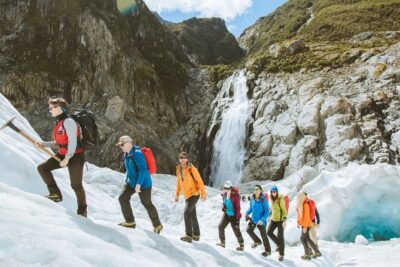 ★ 5.0Heli Hike Fox GlacierFrom $477563 reviews
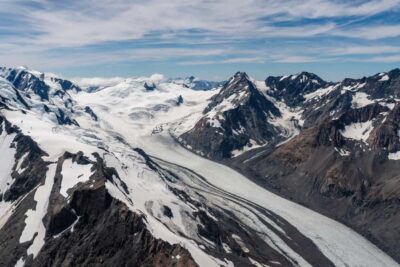 ★ 4.8Franz Josef: 35min Helicopter Trip over Two GlaciersFrom $289451 reviews
 ★ 5.0Small-Group Kayak Adventure from Franz Josef GlacierFrom $92393 reviews
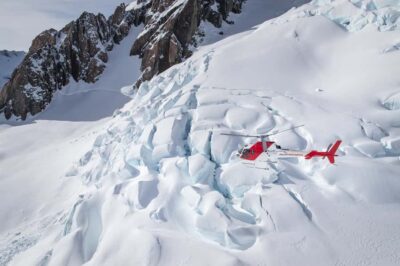 ★ 4.7Franz Josef & Fox Glaciers Helicopter Flight & Snow LandingFrom $289342 reviews
 ★ 4.7Franz Josef: 2.5 Hour Glacier Hike with Helicopter TransferFrom $475322 reviews
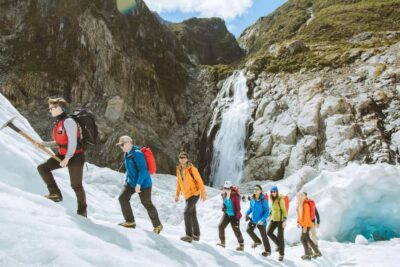 ★ 4.9Fox Glacier: Up to 3 Hours Hike with Helicopter TransferFrom $448309 reviews
Browse the lists this tour appears in