
REVIEW · ROTORUA GEOTHERMAL PARKS
Waimangu: Volcanic Valley Walk and Lake Rotomahana Cruise
Waimangu is where geothermal activity feels close enough to touch, and the walk plus Lake Rotomahana cruise is the only way to see it properly. I love how the self-guided Waimangu Volcanic Valley walk lets you move at your pace, and I love the skipper’s live storytelling on the Ariki Moana cruise, which turns scenery into real context. One drawback to plan for is the wind on the boat, plus the walking can be longer or more downhill depending on the track you pick.
You start with a well-signposted valley loop through steam vents, hot springs, and forest edges. Then you switch modes from foot to water, where key sights like Inferno Crater and the famous Frying Pan Lake make more sense, and you also get views you simply cannot get from land. If you dislike group pacing or you want minimal walking, you’ll need to use the internal shuttle and choose shorter trail options.
In This Review
- Key highlights worth the time and money
- Waimangu Volcanic Valley and Lake Rotomahana, why this combo works
- Starting at 587 Waimangu Road, what to do when you arrive
- The self-guided walk in Waimangu, 1.5 to 2 hours on trails 1.5km to 4.5km
- Choosing your track, the shuttle is there for a reason
- Inferno Crater, Frying Pan Lake, and the geothermal sights that anchor the walk
- Timing: how to fit at least 3 hours without rushing
- Boarding the Ariki Moana, 45 minutes on Lake Rotomahana
- What you’ll see from the water, Patiti Island to Starhill Crater
- Pink and White Terraces history, explained as you cruise over their resting place
- Returning to the visitor centre, shuttle or walk back
- Practicalities that matter: shoes, weather, toilets, and that old shuttle factor
- Price and value: is $107 per person worth it?
- Who should book this, and who might want a different plan
- Final call: should you book Waimangu plus Lake Rotomahana?
- FAQ
- Where is the meeting point for the Waimangu experience?
- How long does the tour take?
- How long is the Lake Rotomahana cruise?
- Is the Waimangu Volcanic Valley walk guided or self-guided?
- Do you provide maps or information to help you understand what you see?
- Is there a shuttle to help reduce walking inside the valley?
- What language is the skipper’s commentary on the boat?
- Are children allowed, and do they need to be with an adult?
- What should I wear for this experience?
Key highlights worth the time and money
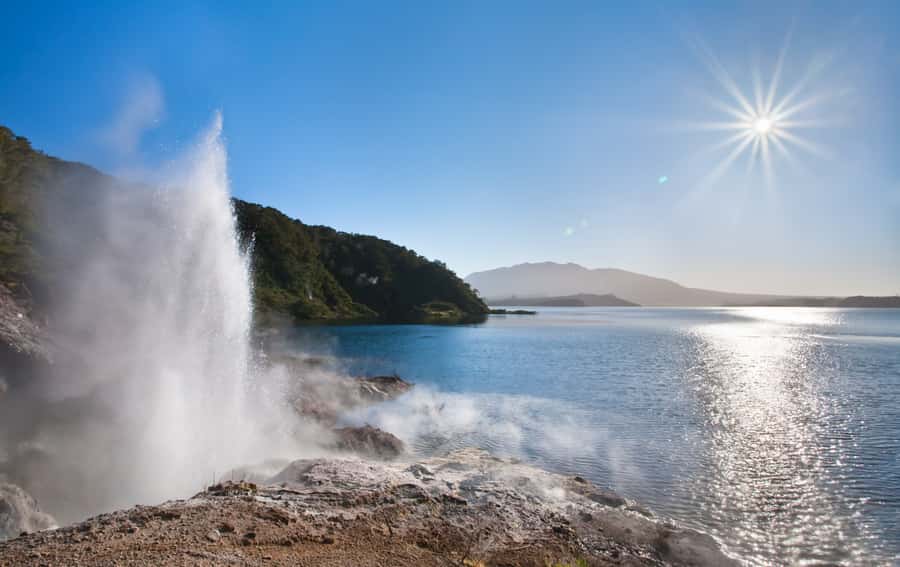
- Youngest geothermal system in the world, with steam, hot springs, and active vents you can actually follow on foot
- Inferno Crater and Frying Pan Lake up close, with clear ways to understand what you are seeing
- Lake Rotomahana from the water on the Ariki Moana, including live English commentary
- Patiti Island and Starhill Crater, plus abundant native birdlife spotting opportunities
- Pink and White Terraces history, explained as you cruise over their resting place
- Onsite shuttle support, so you can reduce walking distances inside the valley
More steam and silica around Rotorua
- Rotorua: Wai-O-Tapu Geothermal Park Entry Ticket
★ 4.6 · 2,601 reviews - Rotorua: Hell’s Gate Outdoor Mud Spa & Guided Walk
★ 4.7 · 1,140 reviews - Hell’s Gate Mud Bath & Spas
★ 4.5 · 475 reviews - Rotorua: Hells Gate Outdoor Mud Bath & Spa Experience
★ 4.6 · 398 reviews
Waimangu Volcanic Valley and Lake Rotomahana, why this combo works
Waimangu is not just a pretty geothermal park. It’s a living, active system that keeps changing, and the scale feels bigger than most people expect. The real win is that this experience does two different kinds of viewing: a self-guided walk for intimate ground-level details, then a cruise for the wide angles, and the boat-only vantage points.
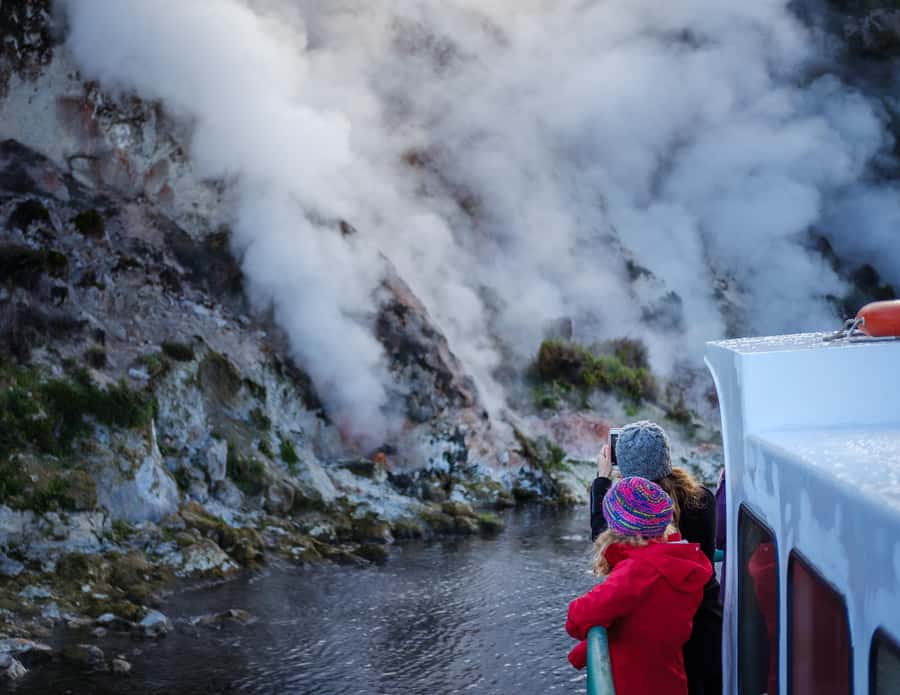
On land, you can see the steam, steam vents, and hot areas that sit right beside the trail. On the water, you get the geography that ties it together, including crater shapes and the way the lake sits in the volcanic terrain. If you care about understanding the place, not just photographing it, this is a strong match.
Starting at 587 Waimangu Road, what to do when you arrive
Most people hit Waimangu as a side trip from Rotorua or as part of a Rotorua-Taupo route. The valley is about a 20-minute drive south of Rotorua or roughly 40 minutes north of Taupo, so getting here is usually straightforward.
You’ll meet at the Waimangu Visitor Centre at 587 Waimangu Road. Expect a proper briefing, with safety guidance you can actually follow on the day you go. You’ll also get an information sheet and map, with guide materials available in multiple languages. That matters here because the geothermal features can look similar, and a little context makes your stops far more satisfying.
The self-guided walk in Waimangu, 1.5 to 2 hours on trails 1.5km to 4.5km
After you park your brain in visitor mode, you switch to self-guided walking. Your valley walk is typically 1.5 to 2 hours, and the trails can be as short as 1.5km or up to about 4.5km depending on how much you want to cover.
What I like about the self-guided setup is that it gives you control. If you want slower pace for photos, you can stop often. If you’re moving well, you can connect more of the geothermal highlights in the time you’ve got.
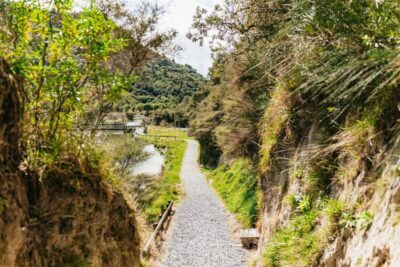
You are walking through a mix of native forest and grassland. That’s a nice change from geothermal parks that feel like straight-up open rock. It also helps because the trail surfaces and shade can vary, so you’re not stuck in the same conditions the whole way.
Choosing your track, the shuttle is there for a reason
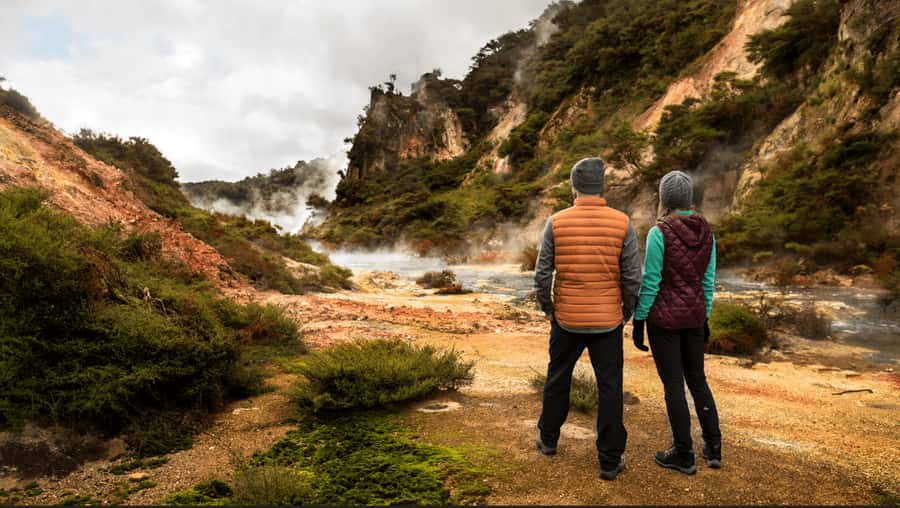
This isn’t a race, but it can feel more active than you’d guess before you walk it. A good tip is to plan around the fact that the route can include longer one-way effort. People who choose the longer or more direct sections may find parts feel like more work than a flat stroll, so adjust your plan early.
The experience includes an onsite shuttle bus that moves around the valley between stops. That is a big deal for value because it lets you trim walking distances without cutting the main sights. If you want to see a lot but you don’t want to be wiped out before your cruise, use the shuttle strategically rather than hoping you’ll feel fine later.
Also watch for the reality of nature and maintenance. Some paths may be closed on the day you visit, so keep an eye on what the staff mark or what the signage indicates when you arrive.
Other walks around Rotorua
Inferno Crater, Frying Pan Lake, and the geothermal sights that anchor the walk
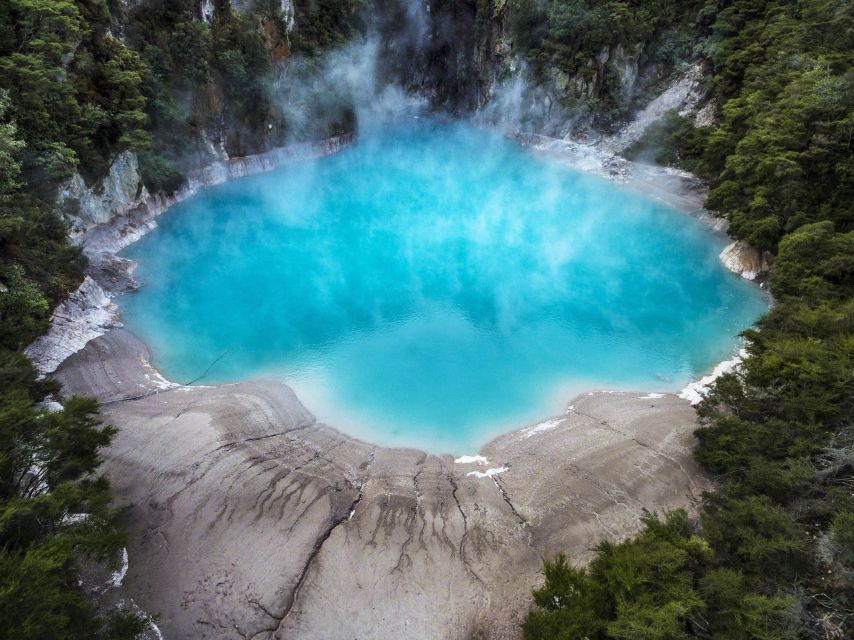
The walk’s anchor sights are easy to remember because they have big names. Frying Pan Lake is famous for a reason: it visually reads like a geothermal feature you would expect to see only in a documentary, and it’s close enough to make you slow down.
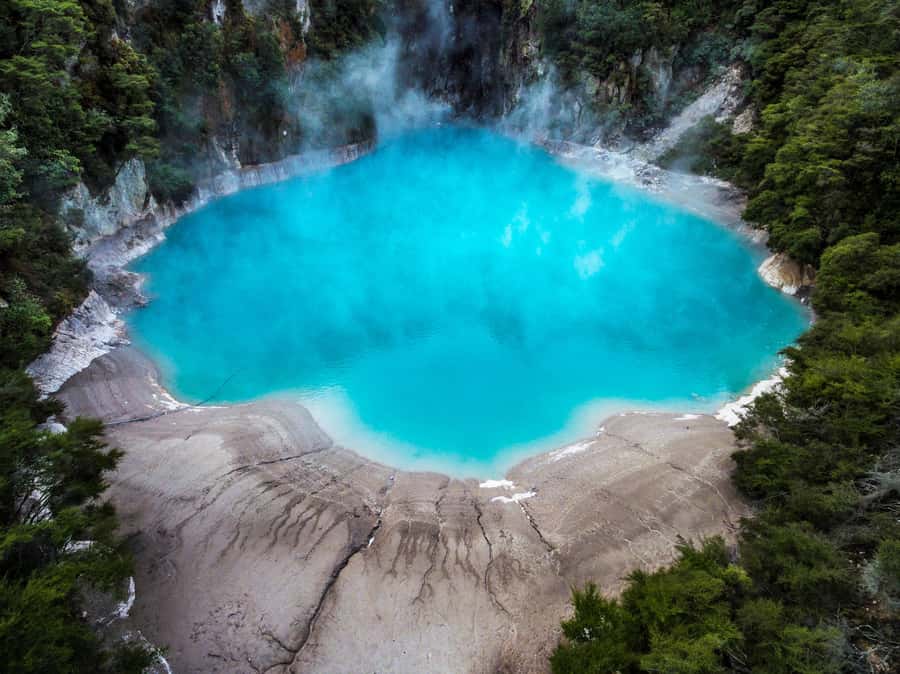
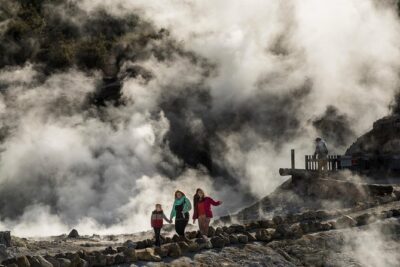
Then there’s Inferno Crater Lake, another standout where the geothermal energy feels more dramatic. You don’t just see steam, you see the way volcanic activity shapes the area, with steam vents and hot springs alongside the trail.
One small but useful detail is that you may also spot smaller geothermal activity close to the path. That’s helpful because not every highlight is a single big target. The best feeling is when you notice a steam signature near the trail, then later connect it to the bigger feature you’re aiming for.
Timing: how to fit at least 3 hours without rushing
A common mistake is arriving thinking you can squeeze it in. You really should allow at least 3 hours to complete the walk and enjoy the cruise at a comfortable pace. The whole activity is listed as around 5 hours, which includes transit between the valley and the cruise area.
That extra time matters because you’ll likely pause for map-reading, safety checks, and a few photo stops. If you arrive late or try to bolt through, you’ll miss the little moments that make Waimangu feel alive rather than just seen.
Boarding the Ariki Moana, 45 minutes on Lake Rotomahana
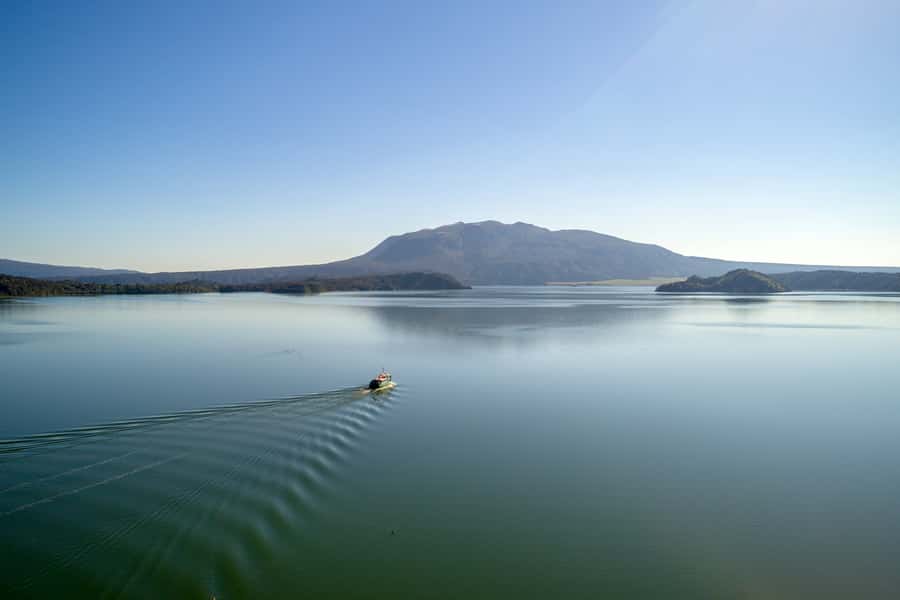
Now comes the shift that makes this experience special: the boat. You board the Ariki Moana for a 45-minute cruise across Lake Rotomahana.
The cruise is a real break, not a quick transfer. You can sit indoors or outside, which is great because weather can change on the lake. You’ll also hear live English commentary from the skipper. That part is one of the most praised elements of the day because it turns what you’re seeing into a story you can track.
Onboard, the skipper helps you connect features across the lake, explaining what you’re passing and what makes each geothermal sight different. If you like learning as you look, this is a big plus.
What you’ll see from the water, Patiti Island to Starhill Crater
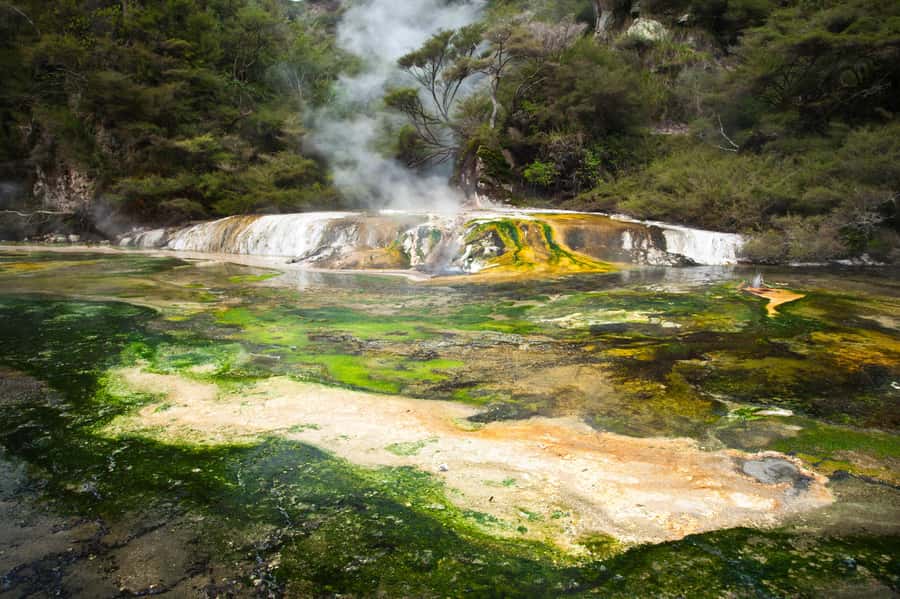
From the boat you cruise past Patiti Island and through areas around Starhill Crater. This is where the geothermal scenery starts to feel three-dimensional.
The cruise also gives you a chance to spot native birdlife around the lake. Even if bird spotting is not your hobby, it adds life and motion to the scenery, and it helps keep the cruise from feeling like a single long view with no variety.
And yes, wind is part of the deal. If you plan to sit outside, bring a layer you can stand to wear for a breezier ride. If you prefer comfort, you can always shift indoors.
Pink and White Terraces history, explained as you cruise over their resting place
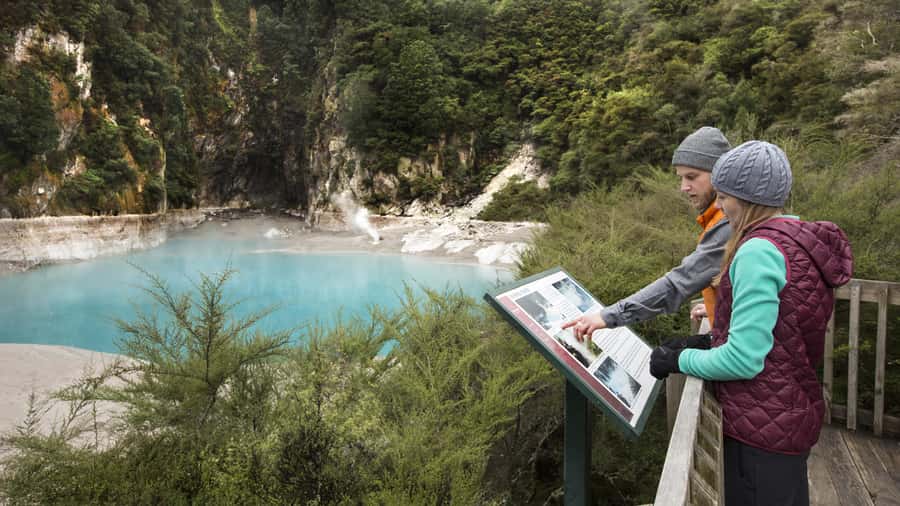
One of the most moving parts of this day is how the skipper connects the lake to what came before it. As you cruise, you learn about the Mount Tarawera eruption and you hear about the Pink and White Terraces, including references to their resting place beneath the water.
This is exactly the kind of context that makes natural sights feel meaningful. Without it, you might just see a dramatic volcanic setting. With it, you understand that this terrain is part of a much larger story, one that still shapes what the lake holds today.
Returning to the visitor centre, shuttle or walk back
After the cruise, you return to the reception area. You’ll have the option of a complimentary shuttle bus back to the visitor centre. If you’d rather keep moving, you can also take a return walk, possibly using a different track depending on what is available.
That flexibility is practical. It helps if your legs are feeling good after the cruise, or if you need to keep moving at a slower pace because you walked a bit hard earlier.
Practicalities that matter: shoes, weather, toilets, and that old shuttle factor
Comfort is the whole game here. Bring comfortable walking shoes and dress for the weather. Geothermal parks can swing from warm to cool, and the day can include sun, shade, and sudden breeze depending on conditions.
A rain layer is smart even if the forecast looks mild, and sunscreen is smart even if you expect clouds. The walk is outdoors for the better part of your morning or afternoon, and you don’t want to find out halfway through that your clothing choice limits you.
Toilets are available along the way, and they tend to be kept clean. That sounds like a minor detail, but on an outing that mixes walking and a cruise, it helps you stay comfortable instead of planning every stop around facilities.
One more practical point, based on real-world experience: the onsite shuttle bus may feel a bit dated. It still does the job, but don’t expect luxury comfort. If you get motion sick easily, use your best judgement for seating and timing.
Price and value: is $107 per person worth it?
At $107 per person, this is not a bargain. You’re paying for a combined experience: a geothermal valley admission plus a short cruise, including live skipper commentary and the transport that ties the two together.
Here’s why I think it can still be good value. Many geothermal experiences give you either a walk or a view from a single perspective. This one gives you two perspectives that complement each other. The boat time also adds an educational layer that makes the stops more than just scenery.
The cost feels more justified if you’re the type who likes to understand what you’re seeing. If you just want quick photos and minimal time, you might feel the price better spent elsewhere. But if you want to see signature features and then get boat-only viewpoints, this package can feel like a balanced deal for the time you get.
Also, since paths can close and walking lengths can feel tougher than expected, having shuttle options and a fixed cruise window helps you avoid scrambling for a less organized alternative.
Who should book this, and who might want a different plan
This tour fits best if you want:
- A self-guided walk where you can set your pace
- A guided-on-the-water learning component with live English commentary
- To see geothermal features that connect by story and geography, not just by name
It’s also a good fit for couples and solo travelers, and for anyone doing a Rotorua or Taupo route who wants a coherent half-day plan.
You might want to think twice if:
- You’re trying to keep walking to an absolute minimum, even with the shuttle
- Wind on the water would make your experience stressful, and you don’t plan to layer up
- Your group expects an ultra-basic day with no learning component
Final call: should you book Waimangu plus Lake Rotomahana?
I’d book it if you want the geothermal experience that combines ground-level exploration with a Lake Rotomahana cruise that actually explains what you’re seeing. The price is real, but you’re buying variety, boat-only viewpoints, and an informative skipper commentary that lifts the whole outing.
If you do the walk smart, use the shuttle when you need it, and come prepared for breeze and changing conditions, you’ll finish feeling you truly covered Waimangu, not just passed through it.
FAQ
Where is the meeting point for the Waimangu experience?
You meet at the Waimangu Visitor Centre, 587 Waimangu Rd, Rotorua, New Zealand.
How long does the tour take?
The activity is about 5 hours in total.
How long is the Lake Rotomahana cruise?
The cruise is 45 minutes.
Is the Waimangu Volcanic Valley walk guided or self-guided?
The walk is self-guided. You follow the trail at your own pace using the provided information sheet and map.
Do you provide maps or information to help you understand what you see?
Yes. You get an information sheet and map, and guide information is available in multiple languages.
Is there a shuttle to help reduce walking inside the valley?
Yes. There is an onsite shuttle bus to transfer between bus stops in the valley, and a courtesy shuttle regularly circles back to the visitor centre.
What language is the skipper’s commentary on the boat?
The cruise includes live English commentary from the skipper.
Are children allowed, and do they need to be with an adult?
Unaccompanied minors are not allowed. Children must be accompanied by a responsible adult.
What should I wear for this experience?
Wear comfortable walking shoes and weather-appropriate clothing. It’s smart to bring rain or sun protection depending on conditions.
On Foot Around Rotorua
Everything Else We Wrote Up in Rotorua

More Steam and Silica

Just added to our Rotorua notes
- Rotorua: Waimangu Valley Walk and Steaming Cliffs Kayak Tour★ 4.7 · 6 reviews
- Rotorua: Lake View Private Pools Experience★ 4.3 · 6 reviews
- Rotorua: Floatplane Flight with Orakei Korako Landing★ 5.0 · 6 reviews
- Rotorua: Evening Starlight Gourmet Kayak Tour with dinner★ 5.0 · 6 reviews
- Rangitaiki Rafting Grade 2★ 4.8 · 6 reviews
- One Day Birding Adventure★ 5.0 · 7 reviews
Rotorua Geothermal Parks, compared.
 ★ 4.6Rotorua: Wai-O-Tapu Geothermal Park Entry TicketFrom $282,601 reviews
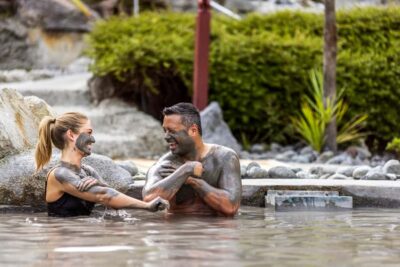 ★ 4.7Rotorua: Hell’s Gate Outdoor Mud Spa & Guided WalkFrom $681,140 reviews
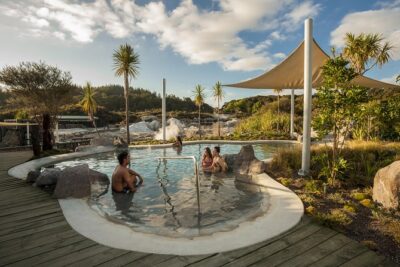 ★ 4.5Hell’s Gate Mud Bath & SpasFrom $55475 reviews
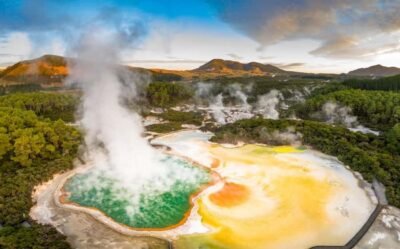 ★ 4.8Auckland: Hobbiton, Rotorua and Wai-O-Tapu Day TourFrom $256458 reviews
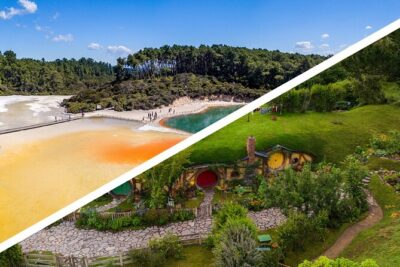 ★ 5.0Hobbiton & Rotorua including Wai-O-Tapu – Small Group Tour from AucklandFrom $266450 reviews
 ★ 4.6Rotorua: Hells Gate Outdoor Mud Bath & Spa ExperienceFrom $53398 reviews
 ★ 4.5Wai-O-Tapu Thermal Wonderland, Rotorua, New ZealandFrom $29379 reviews
 ★ 5.0Rotorua based Small Group Morning Tour Waimangu and Wai O TapuFrom $130347 reviews
Browse the lists this tour appears in