
REVIEW · ROTORUA GEOTHERMAL PARKS
Rotorua: Hell’s Gate Geothermal Walk
You’re walking through the earth’s hot plumbing system. Hell’s Gate is Rotorua’s most active geothermal park, with a self-guided route that lets you get close to bubbling mud, steaming fumaroles, hot water features, and erupting geothermal water.
I love the mix of hands-on sights and clear explanations. You can do it independently with an included map, then add a guided walk if you want a local guide to stitch the geology and the geothermal history into one story.
One drawback to plan for: the sulfur smell can be strong. If you have sensitive noses, wear jewelry you care about, or have mobility limitations, you’ll want to prep well before you go.
In This Review
- What I love, and what you should watch
- Key highlights at Hell’s Gate
- Entering Hell’s Gate, the “why” behind the walk
- Self-guided geothermal walk with an included map
- Guided tour timing, and why a live guide matters
- The main geothermal sights you’ll see up close
- Mud foot pool and Māori carving, when available
- Smell, jewelry, and safety habits that actually help
- What to wear: shoes, weather gear, and heat management
- When to go, and how to get the best photos
- Value and cost: is $26 the right kind of deal?
- Who should book Hell’s Gate?
- After the walk: take a break and reset
- Should you book Hell’s Gate Geothermal Walk?
- FAQ
- How long does the Hell’s Gate walk take?
- Are there guided tours, and when do they run?
- Can I do Hell’s Gate without a guide?
- What geothermal features will I see?
- Is the activity good in rainy weather?
- Is Māori carving included?
- What is the age requirement for Māori carving?
- What should I bring?
- What is not allowed at Hell’s Gate?
- Is Hell’s Gate accessible for people with mobility impairments?
- Where is Hell’s Gate located for pickup or directions?
What I love, and what you should watch
First, the scale of the geothermal features is the real headliner. Hell’s Gate includes New Zealand’s largest active mud volcano, and the site also highlights major hot water features like steaming fumaroles and hot waterfalls, plus sulfur crystals and deposits you can see up close (from safe areas).
Second, the experience feels personal. Even the self-walk is designed to make you stop, look longer, and understand what you’re seeing, and you can also choose a guided tour at set times (English guides, local storytelling, and a live guide who can answer questions). Guides I’ve heard praised include people named T, Liam, and Luke.
My main consideration is comfort and safety basics. It’s a hot, active geothermal zone with areas that can be dangerous if you step off the route, so good walking shoes and staying behind barriers matter, and the sulfur odor is a real part of the experience.
What else Rotorua puts on
- Rotorua Canopy Tours: 2.5Hour Native Forest Zipline Adventure
★ 5.0 · 4,563 reviews - Rotorua: Wai-O-Tapu Geothermal Park Entry Ticket
★ 4.6 · 2,601 reviews - Rotorua’s Ultimate Zipline: 6 ziplines, 400 m Tandem, Cliff Walk
★ 5.0 · 2,557 reviews - Rotorua Rafting: Kaituna River White Water Rafting & Free Sauna
★ 5.0 · 1,952 reviews
Key highlights at Hell’s Gate
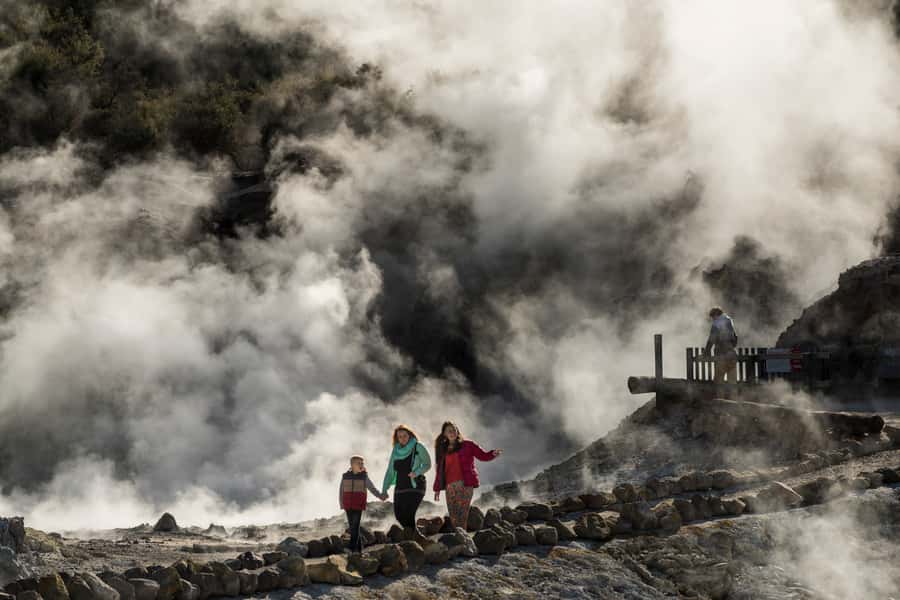
- Rotorua’s most active geothermal reserve, with a walk through active geothermal ground
- New Zealand’s largest active mud volcano and other high-energy geothermal features
- Close-up geothermal visuals like steaming fumaroles, hot water pools, and sulfur crystals
- Optional guided tour at specific times for faster context and better interpretation
- Mud foot pool and Māori carving can add hands-on value when available
- Rain-friendly experience, since the park can look its best in wet weather
Entering Hell’s Gate, the “why” behind the walk
Hell’s Gate is one of those places where “science” stops being a class and becomes real life. You’re surrounded by geothermal activity, including boiling hot pools and erupting waters that can reach temperatures over 100°C. That’s the kind of power you can’t fake with a souvenir photo.
What makes the site genuinely worth your time is how walkable it is. You’re not just looking at distant steam. You follow a marked geothermal route, using an included map (or a guided tour if you’re there during scheduled times), to understand what each feature is and why it happens.
If you like geology, you’ll appreciate that this isn’t just a pretty yard of steam. The park is built around interpretive points, including fumaroles and sulfur deposits, so you come away with a clearer mental model of the system.
Self-guided geothermal walk with an included map
You can keep this simple: arrive, grab your map, and do the route at your own pace. The geothermal walking route takes about 1 hour to complete, which makes it easy to fit into a Rotorua day without feeling rushed.
This is the best format for you if you enjoy wandering slowly and pausing often. One of the strongest advantages of a self-walk here is control. You can spend extra minutes where you’re seeing something new, like sulfur formations or steaming vents, and skip parts where you’ve already got the gist.
I also like that the self-guided approach still feels structured. The included map and descriptions help you understand what you’re looking at, so it doesn’t become just a circuit of “steam here, steam there.”
Keep in mind one practical point: not every experience component is guaranteed. Mud foot pool and the guided add-ons (including Māori carving) are described as subject to availability, so the self-walk gives you the core geothermal value either way.
Guided tour timing, and why a live guide matters
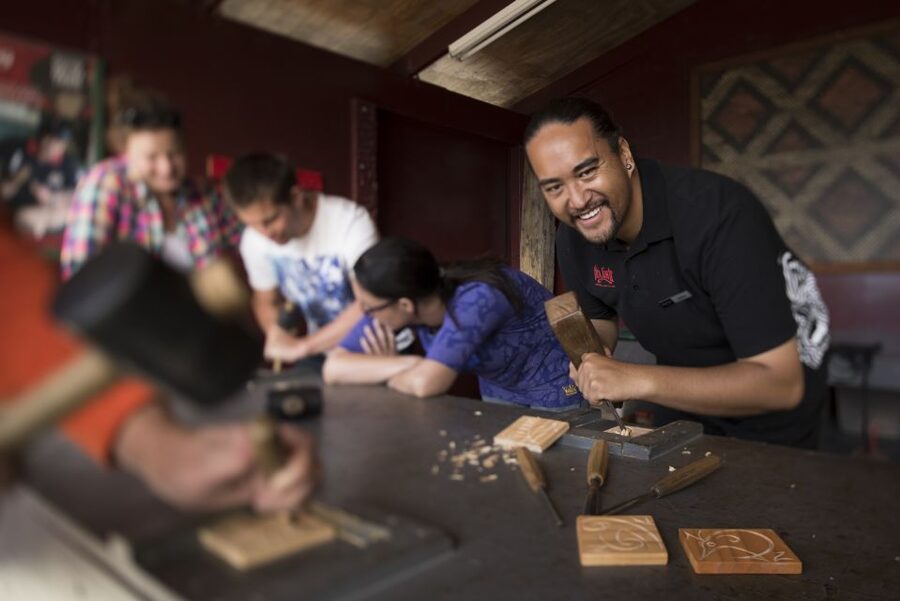
Hell’s Gate offers guided walking tours at 10:30 AM and 2:30 PM (English). These are a great choice when you want your questions answered on the spot and when you’d rather not work out the geothermal clues alone.
Even though the walk itself is straightforward, a guide adds speed and meaning. A good guide can help you connect fumaroles, hot water features, and sulfur deposits into one story, and that can make you notice more details as you go.
I especially like the guided format for two types of travelers. If you’re short on time, a guide can help you hit the big features efficiently. If you’re traveling with someone who prefers explanations, a live guide makes the experience feel more like a shared activity, not a solo observation session.
One consideration: guided tours run at specific times, so if you arrive outside those windows, your plan should be the self-guided walk. That keeps you from feeling stuck waiting for a later start.
More steam and silica around Rotorua
The main geothermal sights you’ll see up close
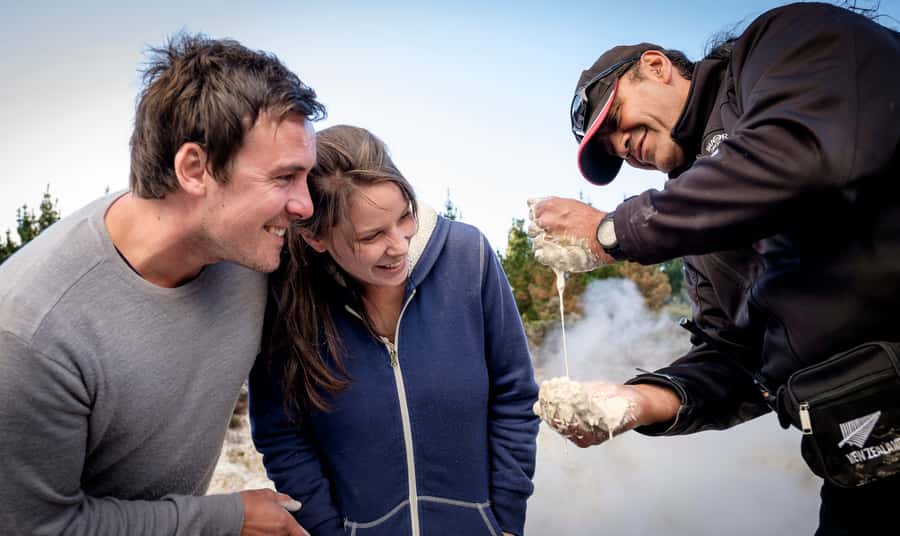
This is not a passive viewing experience. Hell’s Gate is an active field with geothermal features that look, smell, and behave differently across the route.
Here are the core sights that define the walk:
Steaming fumaroles and hot water pools
You’ll see fumaroles (venting steam) and hot water areas as part of the route. These features often create a constant visual rhythm, steam rising and shifting as the geothermal energy keeps moving.
Boiling pools and erupting waters
The park describes erupting waters with temperatures exceeding 100°C. That matters because it explains why you feel like you’re near something alive. You’re not seeing a museum display. You’re seeing a live geothermal system.
Sulfur crystals and deposits
Sulfur crystals and deposits are a big part of the visual experience. They also connect to the smell factor. When you smell that rotten-egg sulfur scent, you’re basically catching a clue to what you’re looking at.
New Zealand’s largest active mud volcano
This is a signature attraction. The mud volcano is exactly what it sounds like: geothermal action pushing mud activity into view, and it’s one of the reasons this reserve feels more intense than many other Rotorua geothermal stops.
Southern Hemisphere hot waterfalls
The site also highlights major hot waterfalls. Even if you’re not a “waterfall person,” the hot water element makes the whole park feel more energetic. It’s an extra category of geothermal motion.
Examples of land coral
Land coral is one of the more surprising mentions. It’s a reminder that geothermal zones create strange mineral growth and shapes, not just steam.
For me, the best part is that the route helps you look at these features as related phenomena. You start noticing patterns in where steam appears, where minerals collect, and why the ground changes from one area to another.
Mud foot pool and Māori carving, when available
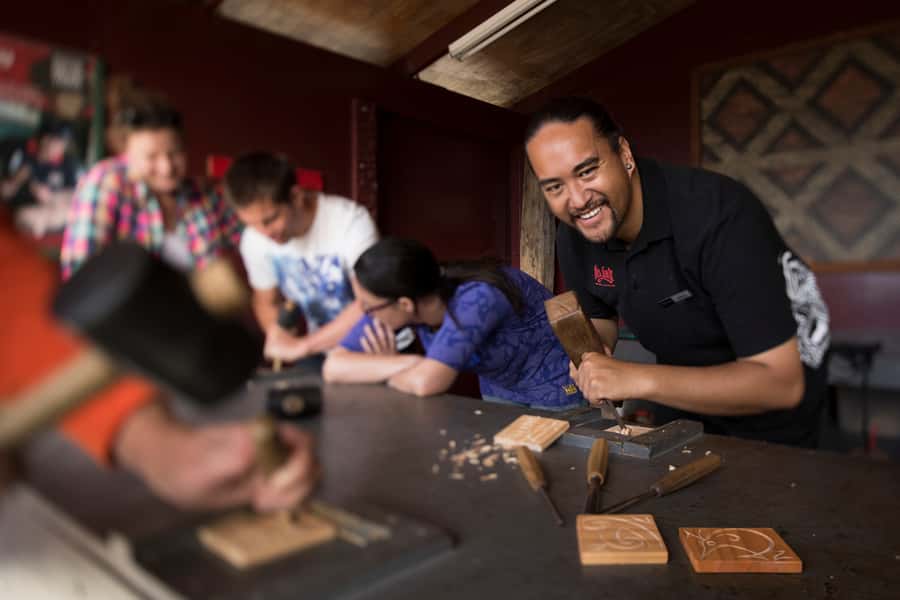
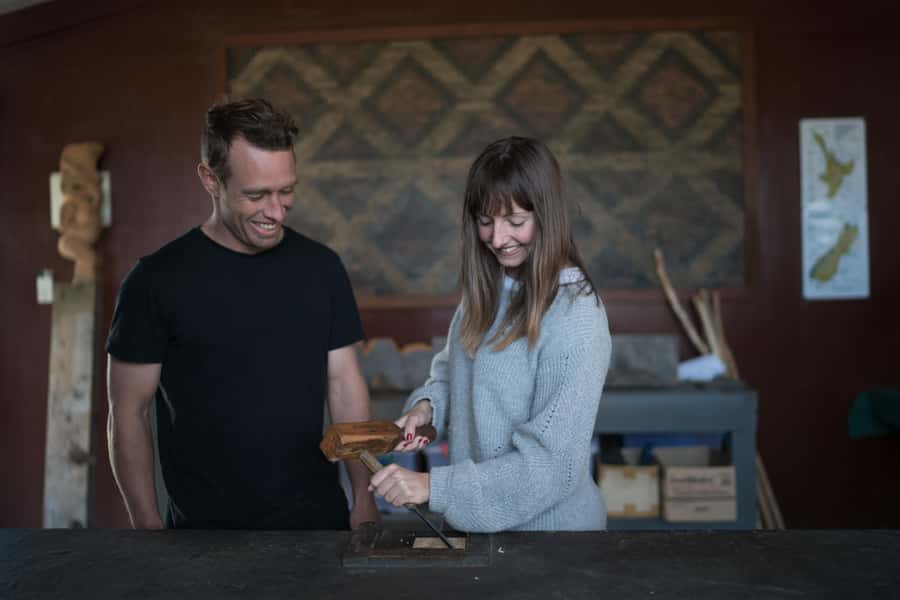
Hell’s Gate adds value beyond the walk itself. There’s Māori carving included as a complimentary activity, and there’s also a mud foot pool mentioned as part of what’s available on site (subject to availability).
Māori carving is a fun cultural add-on because it’s active and small-scale, not just watching someone demonstrate. It also gives you something to take home mentally, a craft experience that connects local culture to the place.
Age note matters for planning. The carving is restricted to children aged 12 and over. If you’re traveling as a family and you have younger kids, you can still enjoy the geothermal walk, but the carving experience may not be for everyone in the group.
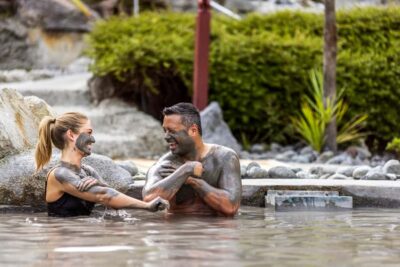
The mud foot pool can be a highlight if you enjoy hands-on nature experiences. Just remember, geothermal mud is hot and messy by nature, so wear appropriate clothing and expect that your experience will feel more like participation than sightseeing.
Smell, jewelry, and safety habits that actually help
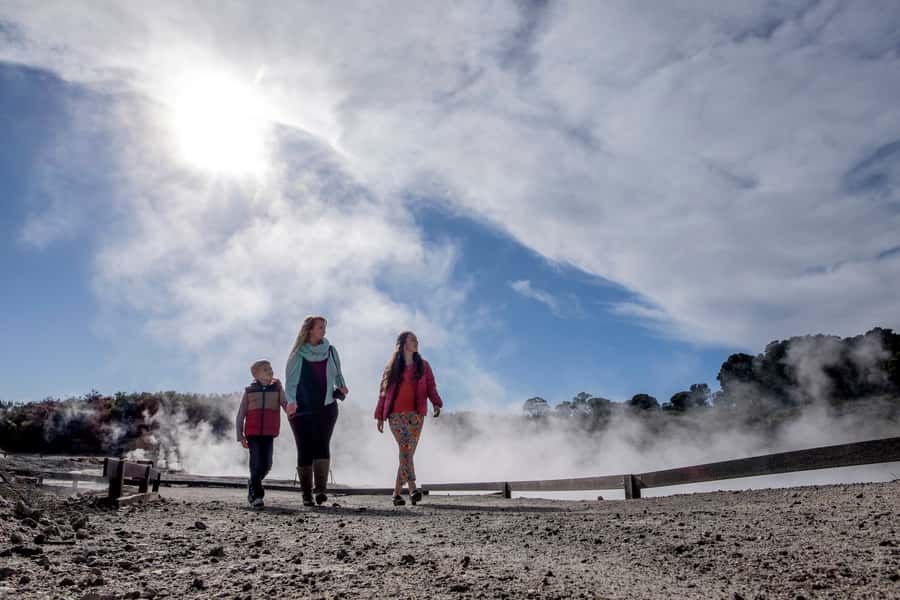
Let’s talk about the part nobody can skip: sulfur smell. The park can smell strongly like rotten eggs, and it’s simply part of the geothermal package. You’ll notice it more when the air is still, and you’ll likely smell it around the most active areas.
This also affects things you care about. One traveler noted that gold and silver jewelry became tarnished. If you wear jewelry regularly and you don’t want it affected, take it off before you go, or keep it minimal.
Safety is straightforward, but you need to treat it like real rules, not suggestions. The experience is in an active geothermal field with boiling mud zones, so you should stay on the marked route and follow staff instructions. Keep your distance from any edge or barrier, and don’t test the ground with curiosity.
If you have sensitive skin, consider wearing weather-appropriate clothing that still covers you. If your clothes get stained by geothermal mud, that’s not a surprise. Plan for that reality.
What to wear: shoes, weather gear, and heat management
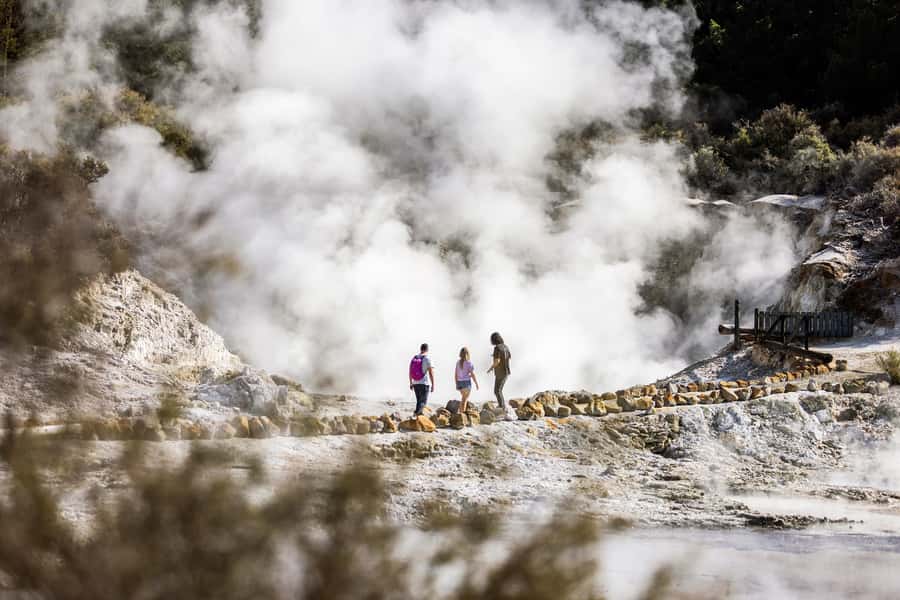
Wear comfortable shoes with good grip. Even though the walking route is described as about an hour, the ground can be uneven and the environment is active. You want stable footing.
Bring water, sunglasses, and sunscreen. Rotorua’s weather can change fast, and sun can still hit between clouds, especially if you’re walking through open areas.
Clothing should match the weather, because this is an all-weather activity. In fact, the geothermal park can be at its best when it’s raining. Wet conditions often make steam and steam plume visuals more dramatic.
There’s also a practical item to know: a rain cape is available to purchase onsite. If you hate carrying gear, you can buy it there and keep moving.
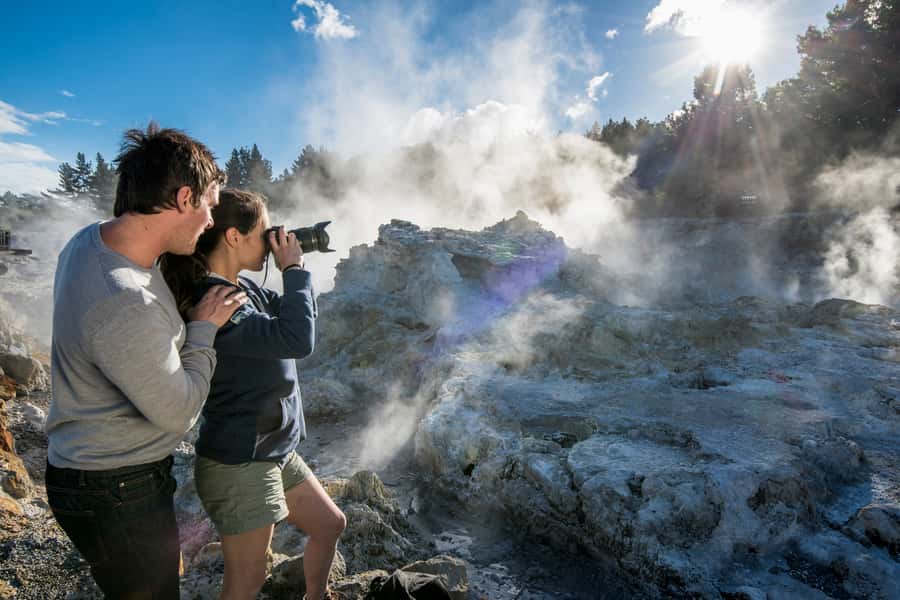
When to go, and how to get the best photos
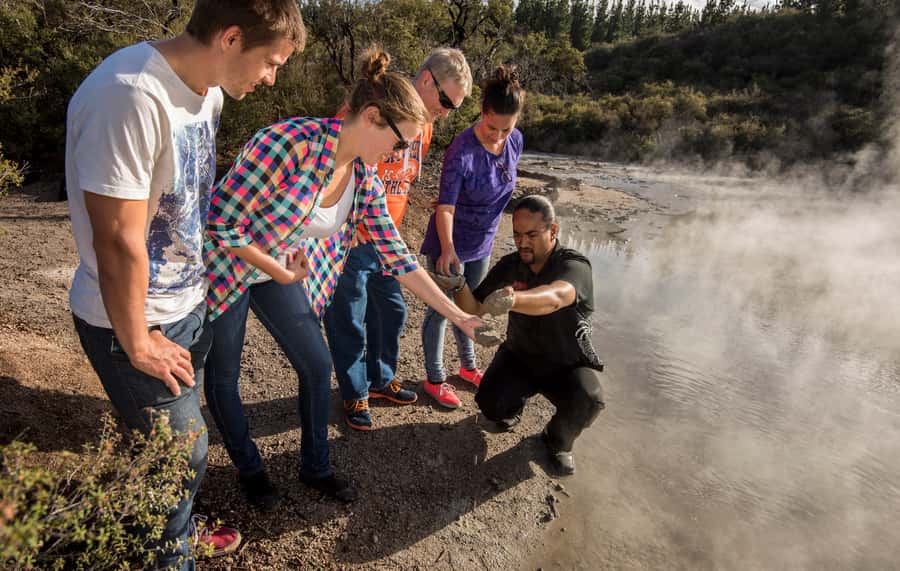
You can go in different weather conditions, and the park’s own guidance leans into rain. The best tip for photo lovers is to plan for changing light.
When it’s wet, steam tends to stand out more against darker backgrounds. When it’s dry, the visuals can look cleaner and you might get clearer sightlines into the mineral areas.
Go early in your day if you want fewer time pressures. If you’re choosing the guided tour, remember the fixed times (10:30 AM and 2:30 PM), so your schedule needs to match your start.
Also, if your goal is photos, bring a phone-friendly strategy for sulfur conditions. The smell won’t ruin your camera, but your fingers will be near vents, and you’ll want to keep your hands clean so you do not smear lenses or get mineral residue where you don’t want it.
Value and cost: is $26 the right kind of deal?
The price shown is $26 per person, and for many people, it’s a reasonable way to see one of Rotorua’s most active geothermal sites without turning it into a full-day production.
Here’s the value logic I’d use:
- You get a self-guided geothermal walk experience using an included map, and that is already the main event.
- You can optionally choose guided time slots, which tends to improve understanding for people who want context, not just visuals.
- You also get complimentary Māori carving, which adds cultural value beyond the geology.
One key caution: the information you provided says an entry ticket is not included. That means your final total could be higher than the base rate shown, depending on how the on-site pricing is structured. Before you pay, check what your ticket covers so you don’t get surprised at the door.
If you’re the type who likes to learn while you walk, the guide option can be especially good value. If you just want the geothermal views and you’re comfortable reading interpretive info, the self-guided format can be a strong deal.
Who should book Hell’s Gate?
Book this if you want a close-up geothermal walk that you can control. It’s ideal for:
- Couples and friends who like nature sights with explanations
- Solo travelers who enjoy self-guided routes with a safety net (the map and marked walk)
- Travelers who want a guided tour for context, especially during the set start times
- People who don’t mind the sulfur smell, or who see it as part of the real deal
It’s less ideal if you have mobility impairments, since the walking route and terrain are not described as suitable for that need. If that’s you, you’ll want to choose a different Rotorua activity better matched to accessibility.
Also consider the cultural add-on. The Māori carving is available, with a child age guideline of 12 and over for participation, so plan family days with that in mind.
After the walk: take a break and reset
The experience ends with a practical reset option: there’s a cafe on site. One traveler specifically called out good food options and coffee after the walk, which is a real help when you’re dealing with weather and that sulfur smell.
I like planning a comfortable finish. You walk through hot geothermal air, get muddy or sweaty in wet weather, and then you need something normal. A cafe makes that easy.
Should you book Hell’s Gate Geothermal Walk?
Yes, if your goal is an hour-long, close-up look at Rotorua’s most active geothermal activity, with the option of guided interpretation and a cultural activity. The included map makes it work even if you skip the guided slot, and the included Māori carving adds value beyond the geology.
Book with caution if sulfur smell is a dealbreaker for you, if you care about jewelry tarnishing, or if mobility is an issue. The park is active, so wear proper shoes, stick to the route, and treat safety rules like non-negotiables.
If you time it right for 10:30 AM or 2:30 PM, you’ll also get the best of both worlds: geothermal sights plus a guide who can help you read what’s happening under your feet.
FAQ
How long does the Hell’s Gate walk take?
The geothermal walking route takes about 1 hour to complete.
Are there guided tours, and when do they run?
Yes. Guided walking tours are available at 10:30 AM and 2:30 PM (English).
Can I do Hell’s Gate without a guide?
Yes. You can explore independently using an included map, or you can join a guided walk if available.
What geothermal features will I see?
Expect to see steaming fumaroles, hot water lakes or pools, sulfur crystals and deposits, boiling hot pools, and erupting waters, plus New Zealand’s largest active mud volcano and the Southern Hemisphere’s largest hot waterfalls.
Is the activity good in rainy weather?
Yes. It’s an all-weather activity, and the park is described as being at its best when it is raining.
Is Māori carving included?
Yes, complimentary Māori carving is included, but it is subject to availability.
What is the age requirement for Māori carving?
Children must be aged 12 and over to participate in the carving.
What should I bring?
Bring comfortable shoes, sunglasses, sunscreen, and water. Wear weather-appropriate clothing.
What is not allowed at Hell’s Gate?
Smoking and drones are not allowed.
Is Hell’s Gate accessible for people with mobility impairments?
It is not suitable for people with mobility impairments.
Where is Hell’s Gate located for pickup or directions?
Hell’s Gate is about a 15-minute drive from central Rotorua. From Rotorua, travel east on SH30, about 5 minutes past the airport turn right toward Whakatane, and the site is about 3 km down this road.
Everything Else We Wrote Up in Rotorua





More Steam and Silica


Rotorua, Three More Ways


Just added to our Rotorua notes
- Rotorua: Waimangu Valley Walk and Steaming Cliffs Kayak Tour★ 4.7 · 6 reviews
- Rotorua: Lake View Private Pools Experience★ 4.3 · 6 reviews
- Rotorua: Floatplane Flight with Orakei Korako Landing★ 5.0 · 6 reviews
- Rotorua: Evening Starlight Gourmet Kayak Tour with dinner★ 5.0 · 6 reviews
- Rangitaiki Rafting Grade 2★ 4.8 · 6 reviews
- One Day Birding Adventure★ 5.0 · 7 reviews
Rotorua Geothermal Parks, compared.
 ★ 4.6Rotorua: Wai-O-Tapu Geothermal Park Entry TicketFrom $282,601 reviews
 ★ 4.7Rotorua: Hell’s Gate Outdoor Mud Spa & Guided WalkFrom $681,140 reviews
 ★ 4.5Hell’s Gate Mud Bath & SpasFrom $55475 reviews
 ★ 4.8Auckland: Hobbiton, Rotorua and Wai-O-Tapu Day TourFrom $256458 reviews
 ★ 5.0Hobbiton & Rotorua including Wai-O-Tapu – Small Group Tour from AucklandFrom $266450 reviews
 ★ 4.6Rotorua: Hells Gate Outdoor Mud Bath & Spa ExperienceFrom $53398 reviews
 ★ 4.5Wai-O-Tapu Thermal Wonderland, Rotorua, New ZealandFrom $29379 reviews
 ★ 5.0Rotorua based Small Group Morning Tour Waimangu and Wai O TapuFrom $130347 reviews
Browse the lists this tour appears in