
REVIEW · TAUPO AND HUKA FALLS
Mount Tarawera/Orakei Korako “Thermal Explorer” Dual Landing
Two landings, one geothermal thrill.
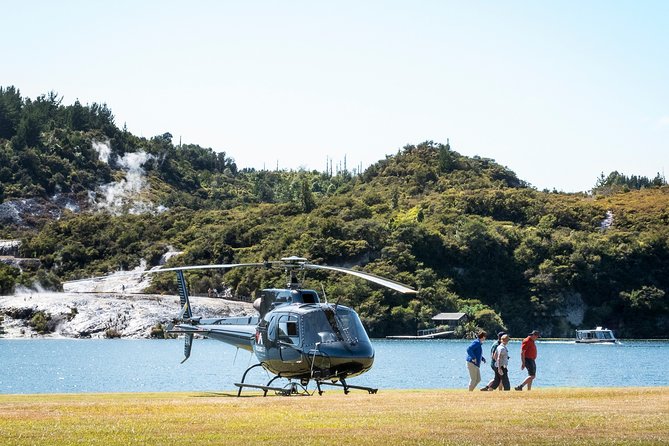
This Thermal Explorer pairs a scenic helicopter hop over the Central North Island with a walk through two of Rotorua’s most jaw-dropping geothermal areas, including a landing on Mt Tarawera and time at Orakei Korako.
I especially liked the combination of serious flying skill and real ground time. Volcanic Air’s pilots (Tracy, Tim, and Brian show up in the praise) get credit for smooth, safe handling, and the plan gives you quick hits: about 20 minutes on Mt Tarawera, then roughly 1.5 hours at Orakei Korako where the thermal walk is set up with boardwalks and you can choose how far to go (up to about an hour).
One thing to plan around: this trip is weather dependent. If conditions are not good, your flight may be changed or refunded, and that can affect your Rotorua schedule.
In This Review
- Key things that make this Thermal Explorer work
- The big idea: why two landings beat a long day
- Rotorua to geothermal highlights from above
- Mt Tarawera landing: 1886 eruption views in about 20 minutes
- Orakei Korako Cave and Thermal Park: geysers, mud pools, and boardwalk pacing
- What you pay for: $961.89 per person and why it can still make sense
- Group size, meeting point, and the kind of day it creates
- Who this fits best in Rotorua (and who should skip it)
- Weather reality and how to plan your day around it
- Should you book the Mt Tarawera and Orakei Korako Thermal Explorer?
- FAQ
- How long is the Thermal Explorer dual landing tour?
- How much helicopter flight time is included?
- Where does the tour start and end?
- Which stops are included?
- Are admission tickets included?
- What is the maximum group size?
- What weather requirements apply?
- Is there a weight limit?
Key things that make this Thermal Explorer work
- Dual landing on Mt Tarawera, then Orakei Korako, so you see more than just flying views
- Short, efficient timing for people who want geothermal without losing a whole day
- Aerial geothermal highlights, including Frying Pan Lake and Inferno Crater in the flight route
- Orakei Korako’s boardwalk-style walking, with enough flexibility to match your energy level
- Small group size (max 6), which helps the experience feel personal
- Admissions are included at both Mt Tarawera and Orakei Korako, so you avoid extra ticket hunting
What else Rotorua puts on
- Rotorua Canopy Tours: 2.5Hour Native Forest Zipline Adventure
★ 5.0 · 4,563 reviews - Rotorua: Wai-O-Tapu Geothermal Park Entry Ticket
★ 4.6 · 2,601 reviews - Rotorua’s Ultimate Zipline: 6 ziplines, 400 m Tandem, Cliff Walk
★ 5.0 · 2,557 reviews - Rotorua Rafting: Kaituna River White Water Rafting & Free Sauna
★ 5.0 · 1,952 reviews
The big idea: why two landings beat a long day
Rotorua is famous for geothermal energy, but it can be tricky to see the best stuff efficiently. Driving means time in traffic and lots of stops that are spread out. This tour flips that equation with a helicopter. You get airborne views first, then you land where the action is, including on Mt Tarawera.
The value is not just speed. Landing on a volcano gives you a different sense of scale than looking at it from a distance. And Orakei Korako is one of those geothermal parks where being on foot matters because you can see the bubbling mud pools, colorful hot springs, and geysers up close rather than as background scenery.
You should also know the experience is built for momentum. The whole program is about 3 hours, with a flight time of 1 hour 20 minutes. That’s ideal if you like concentrated sightseeing. If you want slow, unhurried wandering, you might find the time at each stop tight, even though the Orakei Korako walk gives you some choice.
Rotorua to geothermal highlights from above
The day starts with a flight that is doing real work for you, not just checking a sightseeing box. From the air, you’ll get sweeping views over the Central North Island and several geothermal landmarks along the way.
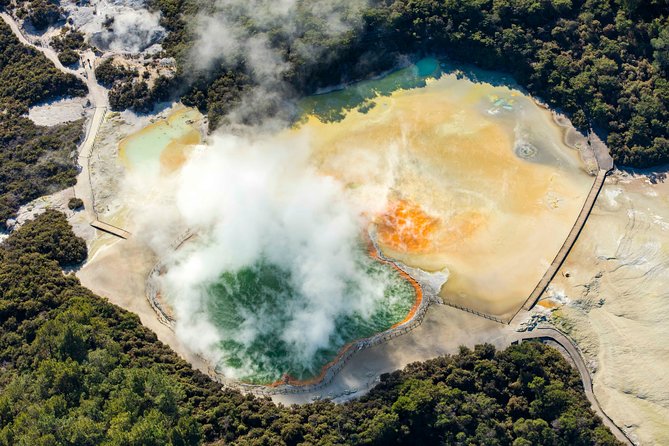
A key aerial moment is Waimangu Valley, home to the Frying Pan Lake, one of the world’s largest hot springs. Another visible feature on the route is the Inferno Crater, a striking teal-blue lake that rises and falls up to 12 meters. Seeing that kind of geothermal motion from above is hard to replicate on the ground because access and viewpoints are limited.
You’ll also fly over Wai O Tapu, which is known for color-rich geothermal features. You likely won’t stand on Wai O Tapu during this tour, but the aerial pass still helps you connect what you see later on at Orakei Korako. It’s like the flight is giving you a map for the geothermal world you’re about to walk through.
If you’re the type of traveler who loves photos, this flight leg will feel like your best camera time. If you’re more of a quiet observer, it still has value because aerial perspectives make patterns stand out, especially with craters, crater lakes, and geothermal areas scattered across the region.
Mt Tarawera landing: 1886 eruption views in about 20 minutes
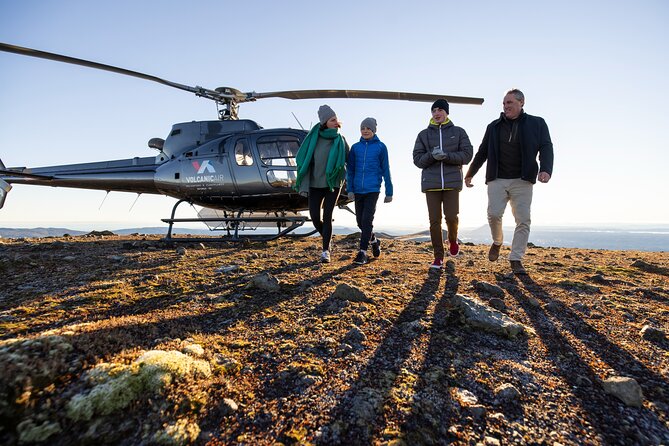
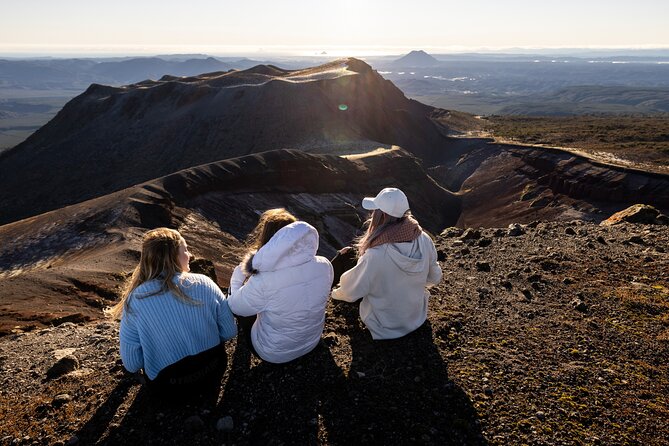
Mt Tarawera is one of New Zealand’s culturally significant volcanoes, and the plan makes sure you actually stand on it. You get about 20 minutes at the mountain, with admission included. That short window is not a problem if your goal is a powerful taste of the volcano rather than a long hike.
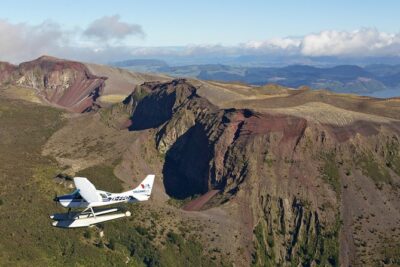
On the ground, you’ll see craters and domes formed by the 1886 eruption. Even from a brief visit, that detail matters because it turns the volcano from a general background feature into something with specific history and shape. You’re not just looking at rock and steam. You’re looking at a particular moment in time, written into the terrain.
What I like about this stop is how it respects your time. A 20-minute volcano moment can feel rushed if you expect a full guided walk, but it’s honestly well matched to the overall 3-hour tour format. It also pairs nicely with Orakei Korako, because both stops are about the geothermal story, just from different angles.
One practical note: this is the kind of stop where you’ll want to be ready to look up and around quickly. You’re not getting a long buffer for photos and exploring every corner. The payoff is that you’ll keep momentum while still getting that rare experience of landing on Mt Tarawera itself.
Orakei Korako Cave and Thermal Park: geysers, mud pools, and boardwalk pacing
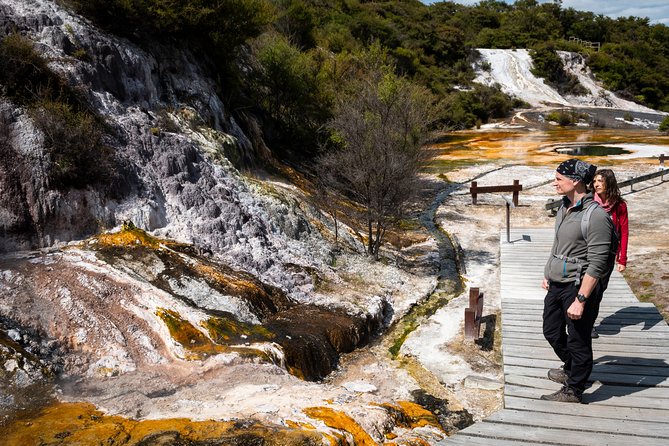
After the volcano landing, you shift into a geothermal park built for walking. Orakei Korako is described as New Zealand’s largest geyser park, and the time there is about 1 hour 30 minutes with admission included. This is where the tour turns from aerial viewing into hands-on seeing.
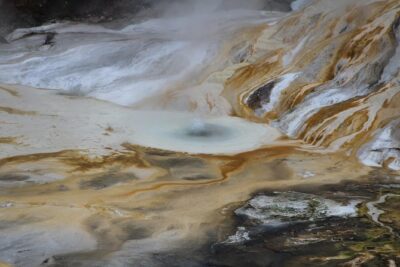
You can expect bubbling mud pools, colorful hot springs, and geysers. The wording here matters because it signals what the park is like: not one single attraction, but a whole geothermal system. That matters for your enjoyment because you’re not spending the majority of your walk waiting for one big moment. Instead, you get multiple sights that show different geothermal processes close together.
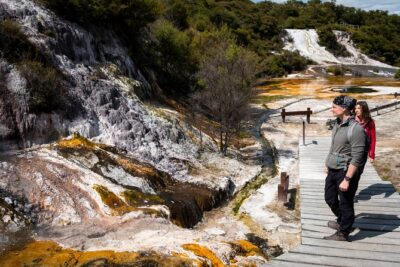
The best practical detail is how the walking is set up. The thermal walk is nicely board-walked, which makes it easier to stay focused on the geothermal features rather than worrying about your footing. You can do as little or as much as you want, up to about an hour inside the park, which is a great match for mixed groups.
If you’re traveling with people who have different stamina, this stop helps you avoid a mismatch. One person can move faster for the key points, while another can take their time. Both still get the core sights, because the park routing is built around the geothermal terrain.
This is also the stop where sound and smell become part of the experience. Steam, boiling water energy, and mineral-scented air are all part of why geothermal parks feel alive. From the air, it’s visual. On foot, it becomes physical, which is what makes Orakei Korako such a strong companion to a volcano landing.
Lake Taupo, a few other ways in
What you pay for: $961.89 per person and why it can still make sense
Let’s talk money plainly. At $961.89 per person, this is not a budget day out. It’s a premium experience, and you are paying for helicopter time plus admissions and the structured stops.
Here’s the value logic I’d use when deciding if it fits you. First, your flight time is 1 hour 20 minutes, and you’re using that time to see multiple geothermal areas from above. That aerial view is hard to replicate with driving, especially when your route includes features like Frying Pan Lake and Inferno Crater.
Second, you’re paying for two landings or, more accurately, one landing on Mt Tarawera plus one dedicated geothermal park visit at Orakei Korako. Many Rotorua experiences are either a drive-and-walk day or a flight that leaves you stuck at the same distance from everything. This one mixes both, so your helicopter money turns into ground access.
Third, admissions are included at both major stops, which reduces the hidden costs that often show up after the fact. You also get a small group experience, with a maximum of 6 travelers. That matters because it usually means less chaos at the landing and a calmer walk through the thermal park.
Finally, consider timing value. The tour runs about 3 hours, which means you can pair it with other Rotorua activities the same day. If you’re only in town briefly, that time efficiency can make the premium price feel more reasonable.
Your biggest cost tradeoff is simple: if you want to spend a full day hiking and exploring repeatedly, you’ll probably get more hours for less money elsewhere. But if you want the best seen from the sky and the best seen on foot, this is built for that exact goal.
Group size, meeting point, and the kind of day it creates
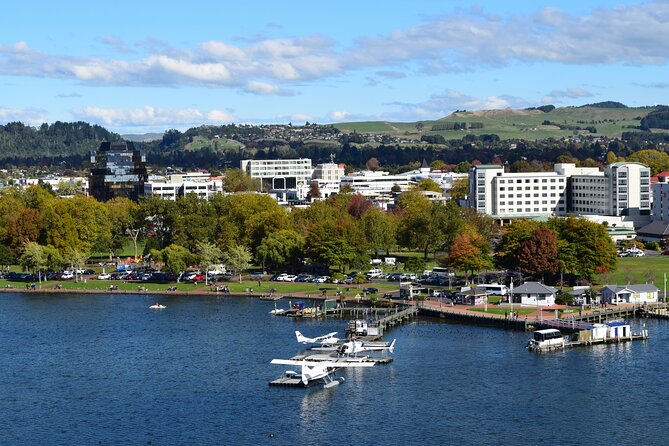
The tour starts at Lakefront Drive, Ohinemutu, Rotorua 3010, New Zealand, and ends back at the same meeting point. That loop is convenient, especially because it reduces how many different pickups and dropoffs you have to manage.
It also runs like a tight little operation. The maximum group size is 6 travelers. I like that because it tends to keep everyone organized during the transition from flight to walking. It also makes the pilot’s instructions easier to follow, since there are fewer people to crowd into the same small space.
The tour is described as near public transportation and marked as a mobile ticket experience. Those two points are helpful if you’re planning to coordinate with the rest of your trip instead of relying only on private transport.
On pace: you’ll be looking at a mix of aerial time and short ground time. The Mt Tarawera stop is about 20 minutes, and Orakei Korako is about 1 hour 30 minutes. Expect to keep moving. This is not the kind of day where you drift, sip coffee for an hour, and wait for the best light.
Accessibility note based on the provided details: most travelers can participate, but there is a weight limit of 287 lbs per passenger. If you’re near that limit, confirm before booking so you don’t waste time planning around something that cannot run for you.
Who this fits best in Rotorua (and who should skip it)

This Thermal Explorer is strongest for travelers who want a high-impact geothermal day without sacrificing hours to logistics. If you love volcano views and also want to walk through hot-spring terrain, you’ll likely enjoy the blend of aerial geothermal landmarks plus real walking time at Orakei Korako.
It’s also a great fit if you’re short on time in Rotorua. A 3-hour program means you can slot it between other activities, and you’re not stuck doing geothermal sightseeing only from the car window. If you’re the type who hates repeating the same kind of viewpoint at three different stops, the dual landing format keeps the day varied.
Who should think twice? If you’re sensitive to the idea of helicopter travel, this tour is still helicopter first. You’ll want to decide whether you feel comfortable with that upfront, because the flight time is part of the core package. Also, because this is weather dependent, you should avoid booking it as your only chance to see geothermal if your schedule is rigid.
If your ideal vacation is long hikes, extensive guided interpretation at each site, and lots of downtime, this might feel too fast. The experience gives you a strong hit list, but it does not promise hours and hours of wandering.
On the positive side, the park time at Orakei Korako is designed to be flexible. You can do less or more, up to about an hour. That makes it easier to manage your own pace during the walking portion.
Weather reality and how to plan your day around it
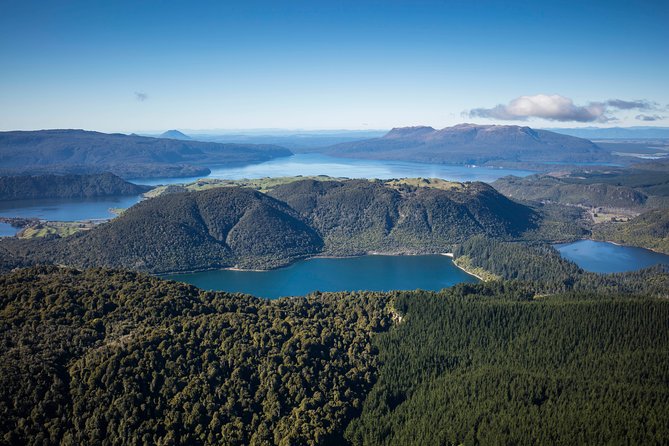
Helicopter tours are weather sensitive for a reason: conditions matter for safe flight. This experience explicitly requires good weather. If it’s canceled because of poor weather, you’ll be offered a different date or a full refund.
So how do you plan around that without losing your mind? Keep your Rotorua schedule flexible on the day you book, if you can. If you have only one day, consider putting other geothermal activities behind it, so you’re not left scrambling.
Also, because the total tour time is about 3 hours, any change affects less of your day than it would for a half-day or full-day hike. That’s a real advantage. You won’t have to give up an entire day of travel if the helicopter shifts.
One more practical consideration: you’ll want to dress for outdoor walking around geothermal areas. That means comfortable walking shoes, and layers, since New Zealand weather can change quickly. You’ll also want to keep your hands free for cameras, since you’re going to want quick access for those aircraft window views and the park walk.
Should you book the Mt Tarawera and Orakei Korako Thermal Explorer?
Book it if you want the best of Rotorua in a concentrated way: helicopter views over Waimangu Valley and Inferno Crater, a real landing on Mt Tarawera, then a walk through Orakei Korako’s geysers, mud pools, and hot springs. The small group size and the boardwalk-style park experience are both big reasons this works as a premium, low-stress day.
Skip it or think twice if you’re on a tight budget, because at $961.89 per person it’s a splurge. Also think twice if you cannot handle schedule changes due to weather, since the flight portion requires good conditions.
If you’re celebrating something, want something different from the typical Rotorua drive-and-walk day, or you simply love seeing geothermal power from both the sky and the ground, this is the kind of tour that delivers a clear, memorable payoff.
FAQ
How long is the Thermal Explorer dual landing tour?
The total experience time is about 3 hours.
How much helicopter flight time is included?
Flight time is about 1 hour 20 minutes.
Where does the tour start and end?
It starts at Lakefront Drive, Ohinemutu, Rotorua 3010, New Zealand, and ends back at the same meeting point.
Which stops are included?
You land at Mt Tarawera and then visit Orakei Korako Cave and Thermal Park. The flight route also includes aerial views over Waimangu Valley and Wai O Tapu.
Are admission tickets included?
Yes. Admission tickets are included for both Mt Tarawera and Orakei Korako Cave and Thermal Park.
What is the maximum group size?
The tour has a maximum of 6 travelers.
What weather requirements apply?
The experience requires good weather. If it is canceled due to poor weather, you will be offered a different date or a full refund.
Is there a weight limit?
Yes. The total weight per passenger is listed as 287 lbs.
Everything Else We Wrote Up in Rotorua


Lake Taupo, Other Ways In
Rotorua, Three More Ways


Just added to our Rotorua notes
- Rotorua: Waimangu Valley Walk and Steaming Cliffs Kayak Tour★ 4.7 · 6 reviews
- Rotorua: Lake View Private Pools Experience★ 4.3 · 6 reviews
- Rotorua: Floatplane Flight with Orakei Korako Landing★ 5.0 · 6 reviews
- Rotorua: Evening Starlight Gourmet Kayak Tour with dinner★ 5.0 · 6 reviews
- Rangitaiki Rafting Grade 2★ 4.8 · 6 reviews
- One Day Birding Adventure★ 5.0 · 7 reviews
Taupo and Huka Falls, compared.
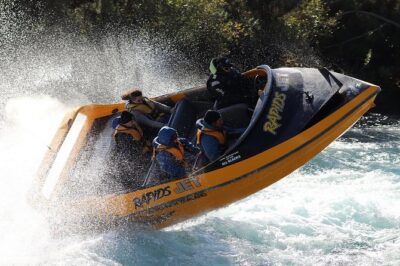 ★ 5.0Waikato River Jet Boat Ride from TaupoFrom $891,441 reviews
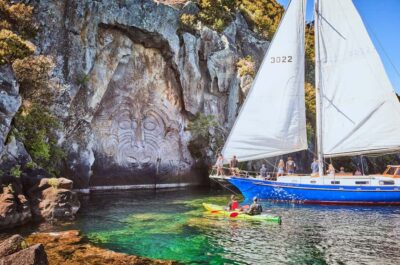 ★ 4.8Lake Taupo: Sailboat Trip to the Maori Rock CarvingsFrom $35972 reviews
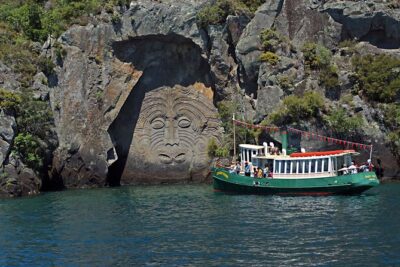 ★ 4.5Lake Taupō Māori Rock Carvings Scenic Cruise aboard Ernest KempFrom $31901 reviews
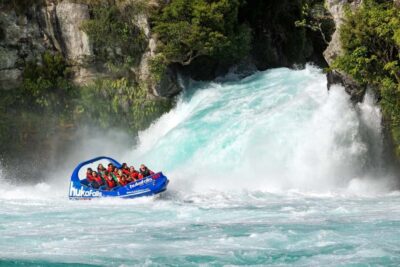 ★ 4.8Taupō: Huka Falls 30-Minute Jet Boat ExperienceFrom $89759 reviews
 ★ 5.0Maori Rock Carvings Eco Sailing TaupoFrom $33758 reviews
 ★ 5.0Hukafalls Jet Boat Ride in TaupoFrom $94658 reviews
 ★ 4.6Lake Taupo: Maori Rock Carvings 10.30 AM 1.5-Hour CruiseFrom $35633 reviews
 ★ 4.5Daily Scenic Maori Rock Carving Cruise TaupoFrom $36575 reviews
Browse the lists this tour appears in