
REVIEW · MAORI CULTURAL EXPERIENCES
Guided Māori History and Culture Tour to Rotorua and Tauranga
You can feel the history in the details. This 6-hour guided cultural day links Tauranga Bay of Plenty stories back to 925AD with real places you can stand on, then rolls into Rotorua for a thermal village performance and a visit to a local marae. It’s run by a Māori family business and led by the guide Les (also known as Wereta), a storyteller with an educator mindset.
I like how the day is built for conversation, not just photo stops. Two things I especially love are the small van group (max 9), which makes it easier to ask questions, and the way Les connects each location to people, values, and practical cultural context.
One consideration: the route includes walking of 20 minutes or more at some points, so if you prefer minimal walking, you might want to plan around that.
In This Review
- Key highlights at a glance
- A small-group Māori history day that actually explains the why
- Price and value, especially if you care about real interpretation
- Pickup and timing: where the day starts and why that matters
- In the van with Les: what kind of day you’re really booking
- Mount Maunganui: seeing the ancestral mountain from the roadside
- Tauranga: the arrival story and a navigational compass
- Gate Pa Memorial Reserve: 1864 conflict, explained on site
- Tauranga Crossing lunch: a pie break with real local hype
- Rotorua at Whakarewarewa: the living village and performance
- Tahuwhakatiki Marae: community connections beyond a show
- Who this tour suits best, and who should think twice
- What makes Les and this family-run approach stand out
- Should you book this guided Māori history tour?
- FAQ
- What is the duration of the guided Māori history and culture tour?
- Where does the tour start, and what time does it begin?
- Is pickup included?
- How big is the group?
- Are there any admission fees included?
- What if I have limited mobility?
Key highlights at a glance
- Small-group van ride (max 9) that keeps the day personal and question-friendly
- Les (Wereta) as the guide, bringing stories and context, plus maps and images
- Tauranga stops focused on arrival and local meaning, including a navigational compass reference
- Gate Pa Memorial Reserve for 1864 conflict context, explained on-site
- Whakarewarewa Living Māori Village in Rotorua with performance in a thermal valley setting
- Lunch at Tauranga Crossing with an iconic, award-winning-style pie stop
What else Rotorua puts on
- Tauranga Shore Excursion: Rotorua Highlights
★ 4.5 · 427 reviews - 6.5 hour Small-Group Rotorua Naturally Shore Excursion – Tauranga
★ 4.5 · 283 reviews - Rotorua Geothermal Living Maori Village Tour Whakarewarewa 6.5hours Tour
★ 4.5 · 145 reviews - Rotorua Geothermal Wonderland Tour – Departs Tauranga
★ 5.0 · 123 reviews
A small-group Māori history day that actually explains the why
If you’re doing Rotorua and Tauranga, it’s easy to end up with a checklist. This tour aims at something better: understanding how the past lives in the land and the people.
You get a guide who tells the story from an insider viewpoint. It is not about generic facts, it is about meaning. The day starts in Tauranga and then shifts toward Rotorua, with stops that build on each other. The pacing also matters. The driving time is included in the total 6 hours, so you are not left guessing how much of your day will be spent in transit.
The group size is a quiet win. With a maximum of 9 travelers, you’re less likely to be stuck in the back listening to someone else’s headphones. In practice, this also means you can follow the stories better, because Les can slow down when the group needs it.
Price and value, especially if you care about real interpretation
At $148.39 per person for about 6 hours, this sits in the mid-range for a guided day tour that includes cultural access and food. What makes the price feel more fair is how much is bundled into the day:
- You get a guided drive with multiple culturally significant stops.
- You are included for the Whakarewarewa Living Māori Village admission (explicitly listed as included).
- Lunch is built in with a stop at Tauranga Crossing for an iconic pie, and Patrick’s Pies are described as award-winning over many years.
- Other admissions in the itinerary are listed as free.
So you are not paying extra for every stop. You are paying for interpretation plus access. That matters, because the strongest part of this experience is the storytelling and context provided by the Māori guide.
Pickup and timing: where the day starts and why that matters
The tour starts at 9:00am at the Port of Tauranga (2 Salisbury Avenue, Mount Maunganui 3116). Pickup is offered, which is a huge convenience if you are staying nearby. The meeting point location is practical if you’re arriving by cruise or want an easy start without complicated shuttles.
The total duration is listed as approximately 6 hours, and the travel time is included in that number. That means you can plan the rest of your day with more confidence. It ends back at the meeting point, so you do not have to worry about getting yourself across town at the end.
One more practical note: your ticket is mobile, and confirmation happens within 48 hours of booking (subject to availability). That usually makes check-in simple.
In the van with Les: what kind of day you’re really booking
This is a guided tour with a storytelling style. Les is described as passionate about his Māori ancestry and as an educator. In multiple accounts, people highlight that he does more than summarize history. He shares personal and family-linked perspectives, and he uses maps and pictures to help the group follow along.
That teaching approach is why this works even if you do not know much Māori history going in. The day is structured so each stop adds a layer: where people came from, how they arrived, what battles meant, and what community still looks like today.
Also, the “small van” format matters for comfort. A Toyota van is mentioned by one reviewer, and the group can be small enough that it feels like a true conversation, not a lecture. This is one of those days where you might find yourself chatting more than you expected.
Other Maori-led experiences we have reviewed

Mount Maunganui: seeing the ancestral mountain from the roadside
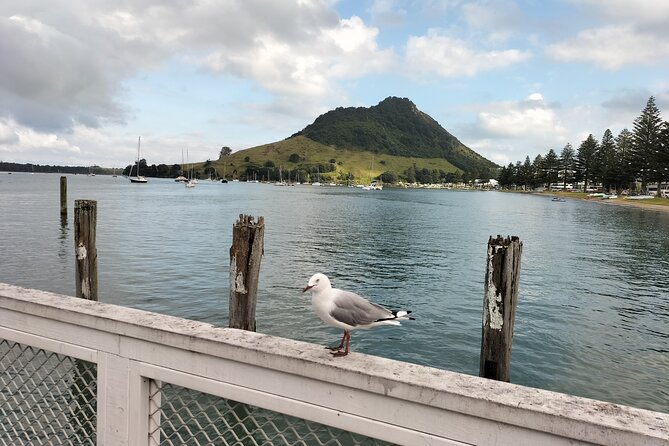
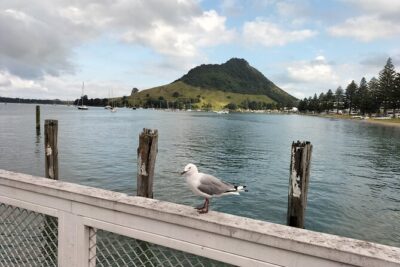
Stop one is Mount Maunganui. You may not go inside a building here, but you will get stories tied to the mountain as you drive by. That matters because Mount Maunganui is not treated like a random viewpoint. In this tour, it functions as an anchor for older narratives, the kind that help you understand why landforms carry identity.
Then you shift toward Tauranga while you take in beach views. There is a simple beauty to the approach. Even if you are not the type who loves beaches, this is a good opening because it sets a calm tone before the day moves into deeper topics.
Admission at this stop is listed as free, so you’re paying for guidance and context, not entry fees.
Tauranga: the arrival story and a navigational compass
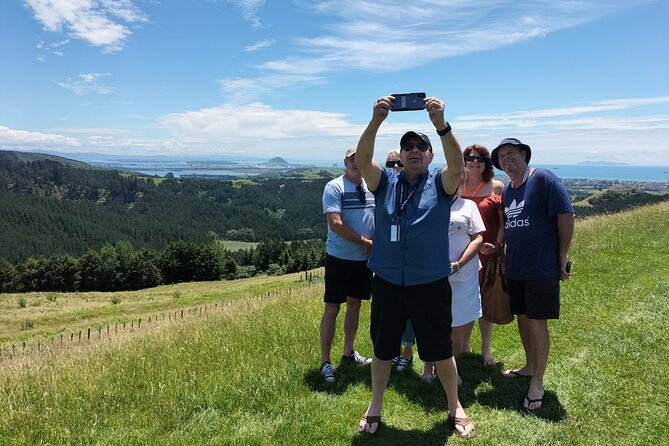
The second stop is Tauranga, with a focus on an ancient navigational compass and stories of Māori arrivals from 925AD. This is the kind of start that changes how you interpret everything after it. Instead of treating Māori history as a timeline you read once, you learn why navigation and settlement mattered so much.
What you’re likely to remember from this part is the sense of place plus direction. The tour is set up so you connect early movement and settlement to what later communities built. Even if you’ve heard broad statements before, the compass framing gives it a more human feel.
Again, admission is listed as free here. That’s a strong value point.
Gate Pa Memorial Reserve: 1864 conflict, explained on site
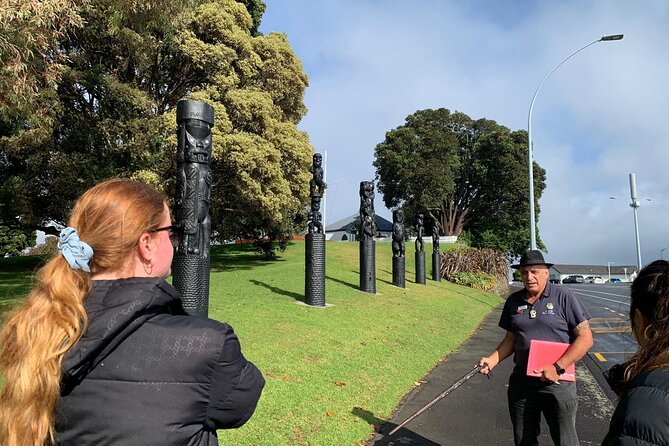
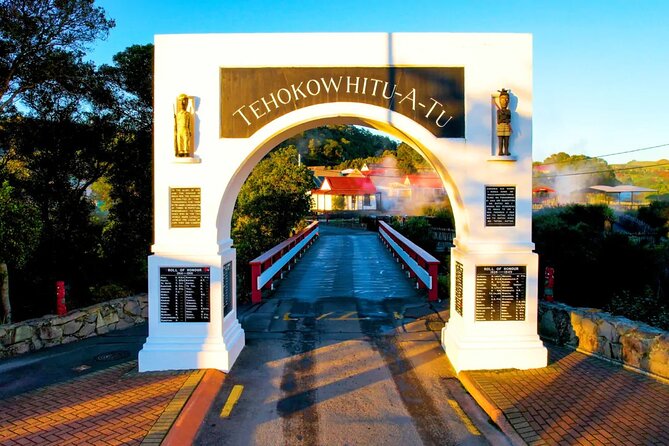
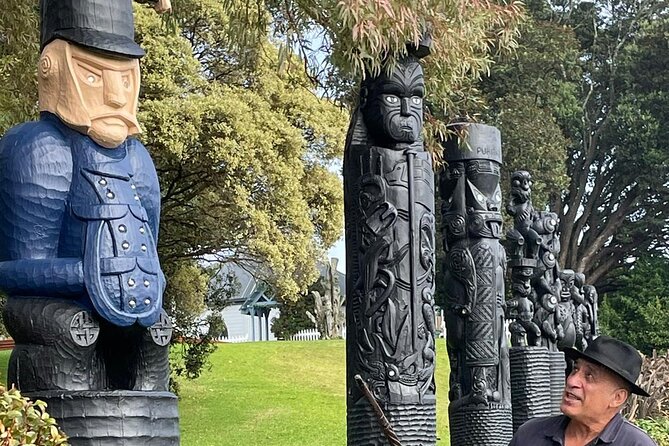
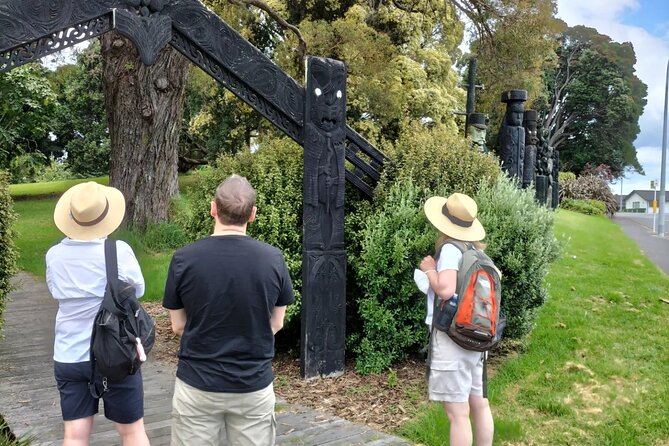
Next up is Gate Pa Memorial Reserve. This is a walking stop where you learn about the 1864 battle between colonial troops and local Māori tribes. The tour also points you toward carvings and the significance of what happened there.
This kind of location-based history can be heavy, but it is also where good guiding matters most. If the explanation is right, you can walk away understanding not only the conflict, but why the site still holds meaning.
The visit lasts about 30 minutes, so it is not a quick glance and move on. You’re given time to absorb what you’re seeing and to make sense of the story you’re being told.
One practical consideration: the tour note says the day could be challenging for people who find walking of 20 minutes or more difficult. Gate Pa is the kind of stop that can include uneven ground or short stretches. If mobility is an issue, you’ll want to go into the day ready to move slowly and ask for pacing.
Tauranga Crossing lunch: a pie break with real local hype
At Tauranga Crossing, lunch is served. You get the chance to enjoy an iconic New Zealand pie, and the tour details specifically mention Patrick’s Pies, with awards over many years.
This is not just a food stop. It functions as a reset point between the Tauranga history portion and the Rotorua thermal valley experience. You can recharge, talk with your group, and get your head ready for what comes next.
If you’re the type who likes to plan meals, this helps. You do not have to hunt for food while you’re trying to keep up with a tour timeline.
Rotorua at Whakarewarewa: the living village and performance
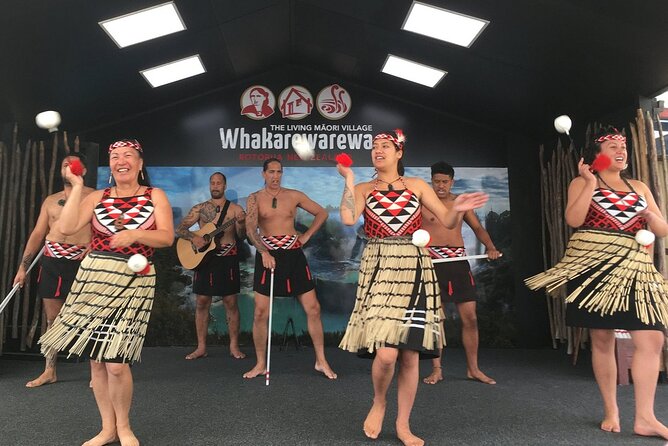
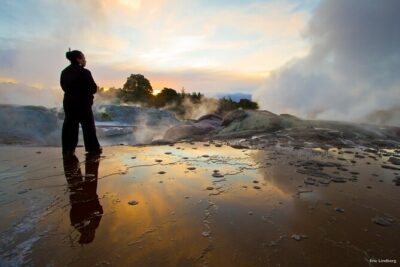
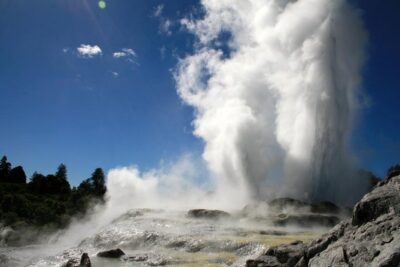
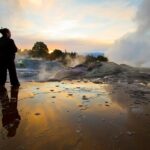
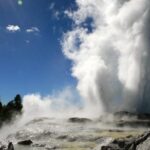
The biggest “wow moment” on the route is Whakarewarewa, The Living Māori Village. You travel to Rotorua via the forests, and then you reach the thermal valley.
From a value standpoint, the timing is smart. You’re seeing the culture in a place where it is not a museum piece. The tour lists an hour at Whakarewarewa, with cultural stories and a performance described as part of the experience.
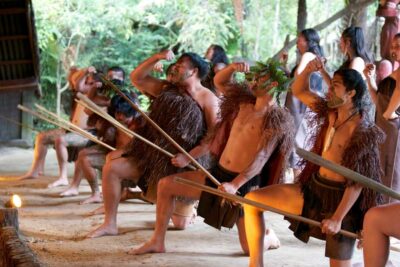
Multiple accounts highlight the performance and specifically mention haka as a highlight. Even if you’ve seen a haka before, this kind of setting usually changes the experience because the guide’s context and the environment work together.
One practical angle: you’ll want to wear comfortable shoes. Even when your schedule says an hour, villages can include standing, walking paths, and shifting viewpoints for the show.
Admission is included at Whakarewarewa, which makes this stop feel like it does not eat into your budget separately.
Tahuwhakatiki Marae: community connections beyond a show
The final stop is Tahuwhakatiki Marae. This is where the day shifts from performance to relationship.
You get to experience a local traditional marae and learn about connections and stories tied to community life. The tour description frames it as an immersion into local traditions, with the goal that you leave with a greater understanding of Māori culture and a sense of community.
The time here is about 30 minutes. That’s enough to learn something real, without turning the stop into a long sit-through. The best part of a marae visit is how it gives you a different lens. It is not just history, it’s living social values.
If you only do one cultural activity in Rotorua and Tauranga, a marae stop like this is the one that tends to stay with people. It’s harder to forget the feeling of being welcomed and taught community roles, compared to a generic attraction.
Who this tour suits best, and who should think twice
This tour fits you well if you want a Māori-guided, story-first day and you like learning from an educator who can explain what you’re seeing.
You’ll likely enjoy it if:
- you prefer small-group tours over large buses
- you want both Tauranga and Rotorua highlights in one go
- you care about understanding meaning, not just collecting views
Think twice or plan carefully if:
- walking 20 minutes or more is tough for you
- you want a lot of free time for shopping or independent wandering, because this is a guided route with scheduled stops
The tour also requires a minimum number of travelers for it to proceed. If it gets cancelled because the minimum isn’t met, you’ll be offered another date/experience or a full refund.
What makes Les and this family-run approach stand out
This experience is strongly praised for one core reason: the guide.
Les is described again and again as passionate, knowledgeable, and naturally good at explaining. People also highlight that he takes you to places that other tours may not reach. There is even mention of an extended tour length in at least one case, where the day ran longer to show more.
Even beyond personality, the structure supports good guiding. You are not stuck in one place. You move from natural landmarks to navigational stories to conflict history to a living village to a marae visit. That makes the day feel like a path with logic, not random stops.
Add in the educator element and you get a day where you can actually remember details. That is often the difference between a tour you enjoy and a tour you keep talking about later.
Should you book this guided Māori history tour?
Book it if you want a guided cultural day with context, not a sightseeing-only outing. The combination of a small group, a guide like Les (Wereta) who teaches with stories and visuals, and access to both Whakarewarewa and a local marae gives you good value for your time.
Skip it or choose a different style if you need very low walking, or if you prefer content that is more scripted and less conversational. This day is designed for interaction, so it’s best when you’re ready to ask questions and listen.
If you’re visiting Tauranga and Rotorua and want to understand the land through the voices of the people connected to it, this is one of the more meaningful ways to spend a half-day.
FAQ
What is the duration of the guided Māori history and culture tour?
The tour runs for about 6 hours total.
Where does the tour start, and what time does it begin?
It starts at the Port of Tauranga, 2 Salisbury Avenue, Mount Maunganui, at 9:00am.
Is pickup included?
Pickup is offered.
How big is the group?
The maximum group size is 9 travelers.
Are there any admission fees included?
Whakarewarewa (The Living Māori Village) admission is included. Other stops listed are free.
What if I have limited mobility?
The tour notes that it could be challenging for travelers who find walking for 20 minutes or more difficult.
Around the Bay of Plenty

Other Maori-Led Experiences


Rotorua, Three More Ways
Just added to our Tauranga notes
- Katikati Gourmet Avocado Tasting★ 5.0 · 10 reviews
- 7 Hours Te Puia Rotorua Tour from Tauranga with Concert★ 3.5 · 10 reviews
- Katikati Avocado Adventure★ 5.0 · 10 reviews
- Rotorua Highlights Tour★ 4.0 · 13 reviews
- Mount Maunganui: Hot Ocean Water Pools Entry Ticket★ 4.5 · 13 reviews
- 4hr Tauranga Scenic History and Tasting Tour FREE Kiwifruit Tasting★ 5.0 · 14 reviews
Maori Cultural Experiences, compared.
 ★ 4.7Mitai Maori Village: Cultural Experience and Dinner BuffetFrom $1013,575 reviews
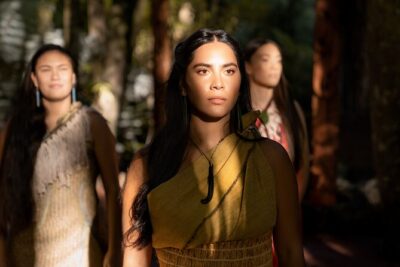 ★ 5.0Cultural Experience & Seasonal Māori Cuisine at Te Pā TūFrom $1671,546 reviews
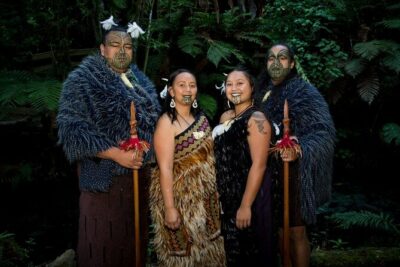 ★ 4.5Mitai Maori Village Cultural Experience in RotoruaFrom $1041,294 reviews
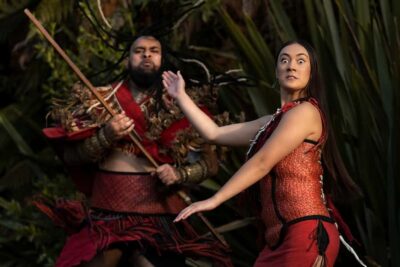 ★ 4.8Rotorua: Te Pa Tu Māori Cultural Experience with DinnerFrom $1671,193 reviews
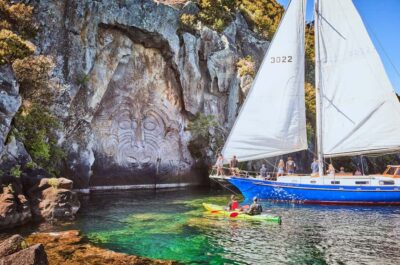 ★ 4.8Lake Taupo: Sailboat Trip to the Maori Rock CarvingsFrom $35972 reviews
 ★ 4.5Lake Taupō Māori Rock Carvings Scenic Cruise aboard Ernest KempFrom $31901 reviews
 ★ 5.0Maori Rock Carvings Eco Sailing TaupoFrom $33758 reviews
 ★ 4.5Waitomo Caves & Rotorua – Te Puia Small-Group Tour from AucklandFrom $253681 reviews
Browse the lists this tour appears in