
REVIEW · AUCKLAND TOURS AND DAY TRIPS
Auckland Walking Tour: Small-Group History & Culture Experience
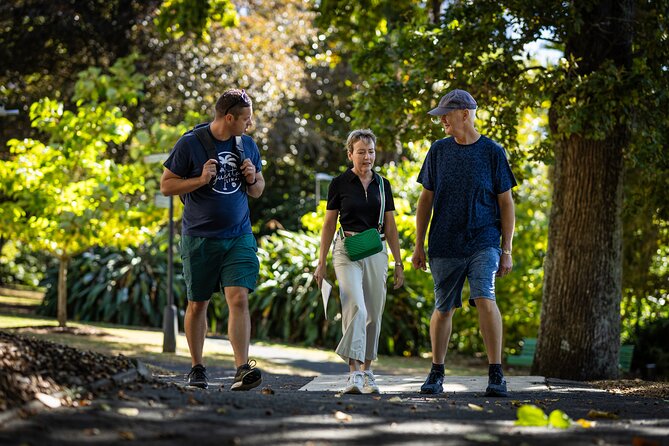
Auckland feels personal on this walk. You’ll follow a tight route through central Auckland while hearing stories that connect volcano origins, Māori legends, and key events that shaped Tāmaki Makaurau. Two things I really like are the small group size (max 6) and the way the guide ties each stop to a bigger idea, not just dates. One watch-out: it’s still a 3-hour walk, so you’ll want comfy shoes and a good walking pace for lots of short stops.
This tour works because it balances big icons with street-level details. You’ll wind through places like Albert Park and the University of Auckland clock tower area, then head toward Britomart public art and the waterfront, ending with Waitemata Harbour views. A refreshment break plus practical tips for food, drink, and shopping make it feel like you’re finishing with local guidance, not just sightseeing.
For the price of $73.23 per person, you’re paying for guided storytelling, a focused route through major sights, and a plan that avoids long lines. You’ll also get a mobile ticket and a small-group format that’s much easier to ask questions in. If you’re looking for a tour that’s mostly hands-on museum time, this one is more about the walking, the people, and the city’s layers.
In This Review
- Key things I’d zero in on before you book
- Why this 3-hour Auckland walk feels more like a conversation
- The route you follow, from Albert Park to the harbor end
- Albert Park: getting your bearings in green and stone
- University of Auckland grounds and the Clock Tower area
- Old Government House: a quick lesson in how power shaped the city
- Emily Place Reserve and the Lord Freyberg statue: small pauses, big meaning
- Women’s Suffrage Memorial and the art of learning as you walk
- Britomart and the public art stops: modern Auckland with a story
- Sky Tower at a distance and the pull of the skyline
- Queens Wharf and the Waitemata Harbour finish
- Value for money: what $73.23 buys you in real terms
- What you should bring (so you enjoy every stop)
- Who this Auckland walk is best for
- Should you book Auckland Walking Tour: Small-Group History & Culture?
- FAQ
- How long is the Auckland walking tour?
- What does the tour cost?
- Where does the tour start and end?
- What is the group size?
- What sights do we see during the walk?
- Is there a refreshment break?
- Is a mobile ticket used?
- Is the tour suitable for most travelers?
- What is the cancellation policy?
Key things I’d zero in on before you book
- Max 6 people keeps the pace human and questions easy to ask
- Paula-style storytelling connects landmarks to Māori legends and early pioneer life
- A stop-and-explain route fits a 3-hour window without rushing you off your feet
- Central Auckland highlights like Sky Tower views, Britomart, and Queens Wharf are included
- Local food and shopping tips come with a real break for refreshments
More ways to fill a day out of Auckland
- Hobbiton & Waitomo Caves Guided Day Trip from Auckland incl lunch
★ 5.0 · 2,677 reviews - From Auckland: Hobbiton & Waitomo Caves Day Trip with Lunch
★ 4.9 · 2,505 reviews - Auckland Dolphin and Whale Watching Eco-Safari Cruise
★ 4.5 · 1,790 reviews - Auckland: Hobbiton Movie Set Day Trip with Festive Lunch
★ 4.8 · 1,431 reviews
Why this 3-hour Auckland walk feels more like a conversation
Auckland can be confusing fast. The city looks modern in a hurry, and it’s easy to miss how many layers sit under your feet. This small-group format helps because you’re not stuck in a big crowd, and the guide can slow down when questions pop up.
I like that the tour is built around connections. You’re not just moving from landmark to landmark, you’re learning how the place got its shape, who was here first, and why certain buildings and memorials matter. In the feedback, people specifically praised how the guide stayed extremely informative and adjusted the pace so guests felt comfortable. That matters. A great city walk is half route planning, half human pacing.
The route is also designed for first-timers. You start in central Auckland, then you gradually move toward the harbor. Along the way, you get recognizable anchors like the Sky Tower at a short distance, plus Britomart and the Viaduct Harbour area, so your brain gets a map of the city as you go.
One practical note: this is a walking tour with brief stops. That’s not a bad thing, but it means you’ll get snapshots rather than long, inside-only experiences. If you love deep museum time, you can always tack that on afterward using the guide’s food and shop tips.
The route you follow, from Albert Park to the harbor end
The tour starts at Khartoum Place in Auckland Central, near major hotels and right in the core of things. The ending point is 143 Quay Street, also in Auckland Central, near the waterfront. That layout is smart, because you start where it’s easy to find and finish where you’ll want to linger for photos and views.
You’ll spend about 10 minutes at each of several key stops, plus a handful of shorter visits. The overall rhythm is: walk, short stop, explanation, then move on. There’s also time built in for a refreshment break and insider recommendations, which makes the whole thing feel less like a sprint.
Because the group is capped at 6, you won’t feel like you’re fighting for space around points of interest. You can actually hear the guide, and you can catch up if you pause for a photo. That’s especially helpful in city centers where foot traffic can get busy.
Albert Park: getting your bearings in green and stone
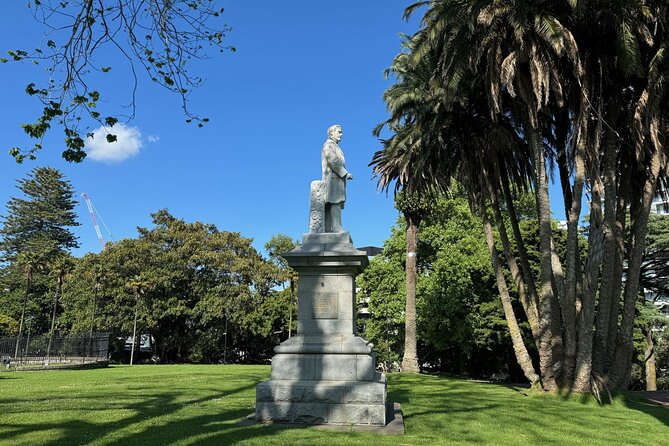
Albert Park is one of those Auckland spots that helps you reset your senses. You’re still in the city, but the park gives you room to breathe, and it’s a natural place to start because you can orient yourself before heading into denser blocks.
You’ll wind through the park and learn how the area fits into the story of Auckland’s development. The guide’s focus is usually on why places like this matter, not just what they look like. That approach makes your first minutes feel purposeful, instead of like you’re simply stretching your legs.
A possible drawback here is that parks can be weather-dependent. If it’s raining, you’ll still walk through, but the tour pace should help you stay comfortable. Bring a light layer, even in mild weather, because Auckland days can change.
University of Auckland grounds and the Clock Tower area
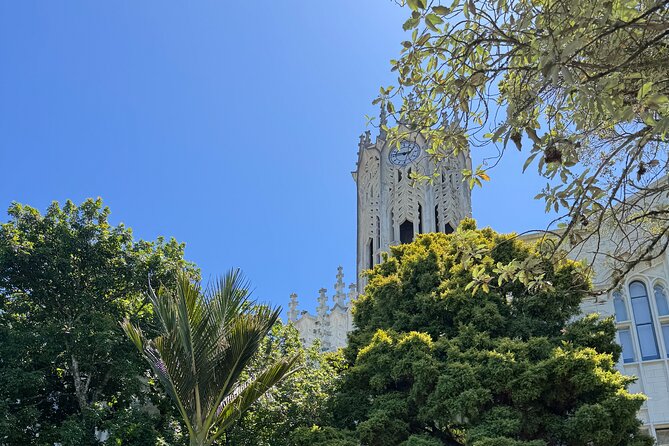
One of the most memorable moments in the tour is the walk through the University of Auckland grounds and the stop to see the clock tower. This is exactly the type of landmark that helps you understand how Auckland balances youth and history. The university setting also gives the guide room to talk about civic identity, not just old buildings.
You’re only there briefly, but the point is to connect the clock tower and the campus setting to the bigger picture of how Auckland grew into the place it is today. If you like architecture and landmarks, this is a high-value stop because it gives you a strong visual reference for later as you move toward the waterfront.
Other walks around Auckland


Old Government House: a quick lesson in how power shaped the city
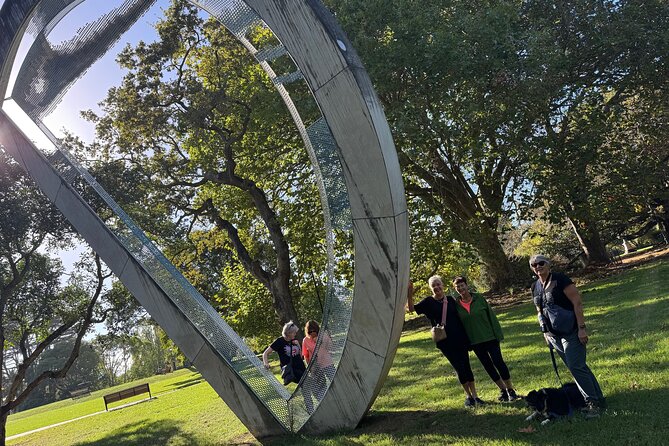
Old Government House is a short stop, around 5 minutes, but it’s the kind of place that adds weight to the walk. Government buildings often become the “anchors” of a city’s story, because they reflect who had authority and what priorities were in play.
Even in a brief visit, you’ll get enough context to understand why this site matters. This is also where the tour’s storytelling style pays off. The guide tends to keep the facts moving, then ties them into human stories, including references to early life and the patterns that affected how Auckland functioned.
If you prefer longer, inside-only tours, you may want to follow up later by returning to this area on your own. On the walk, it’s a snapshot, but it’s a strong snapshot.
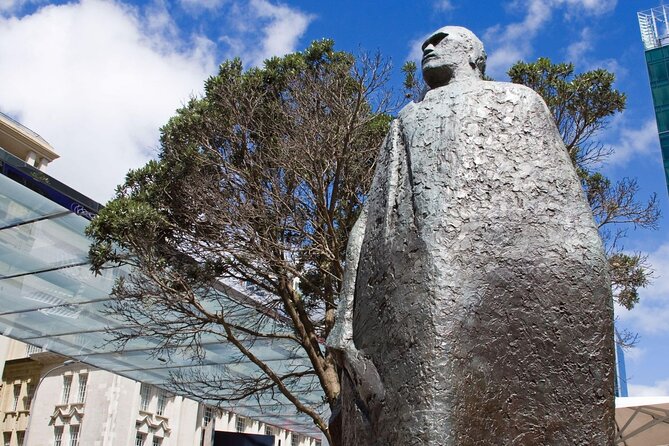
Emily Place Reserve and the Lord Freyberg statue: small pauses, big meaning
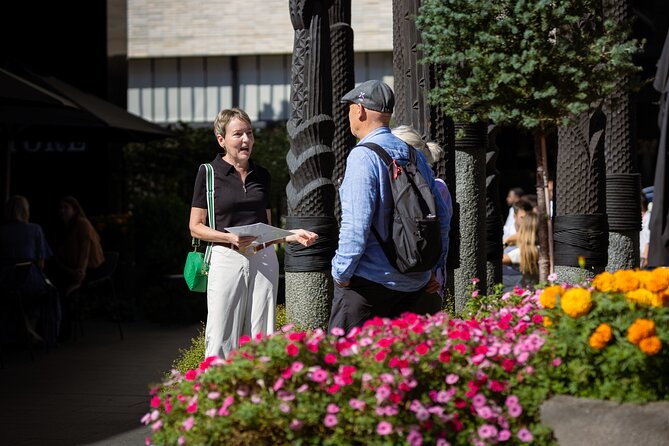
Two quick stops make this part of the tour feel intentionally varied. You’ll visit Emily Place Reserve for a brief look, then stop near the Lord Freyberg statue for a short explanation.
Why I like this segment: it proves the tour isn’t only about the famous postcard places. You get to see how public memory works in Auckland, where memorials and reserve spaces quietly communicate what a city values. These stops also add variety to the walking route. After the bigger civic landmarks, these smaller sites feel calmer and easier to take in.
The time is brief at both stops, so you’ll get guided context rather than a long on-site experience. If you like to linger, you can always circle back later, but you won’t waste time here.
Women’s Suffrage Memorial and the art of learning as you walk
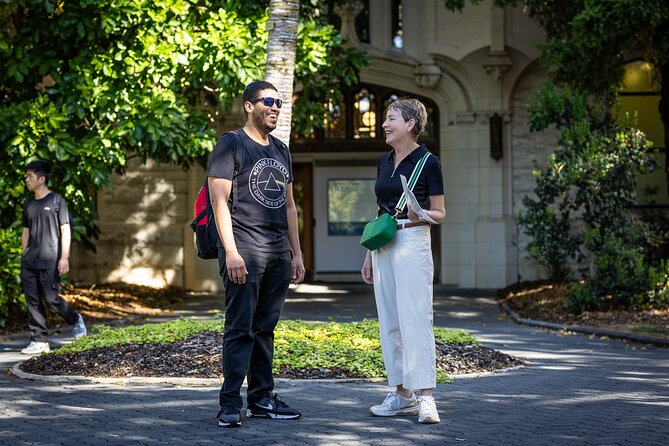
The tour also includes mention of the Women’s Suffrage Memorial. This kind of stop is important because it shifts the story from politics and pioneers into social change. Auckland is more than shipping and skyline views. It has public spaces that mark shifts in rights and lived experience.
I find memorial stops like this make a walking tour feel more grounded. You’re not just collecting sights, you’re learning how people argued, organized, and pushed for change, then how those efforts got remembered in the city’s shared spaces.
If you’re the type who likes to read plaques and details slowly, plan for a few minutes of quiet attention here. Even if the guided stop is brief, you can add your own pace by stepping aside after the explanation.
Britomart and the public art stops: modern Auckland with a story
Britomart is one of the tour’s practical highlights. It’s central, it’s easy to navigate, and it gives you a sense of how Auckland has shaped transport, culture, and public space in one compact area.
You’ll spend time around Britomart and enjoy public art displays. This is where the tour starts to feel very “you are in the city now,” not just looking at historic remnants. The art details help you notice textures that you’d likely miss if you were rushing on your own.
This is also a good location to ask questions. If you want recommendations for what to do next, the guide’s ability to give insider tips tends to shine around neighborhoods like this, where you’re close to cafes, shops, and easy walking connections.
Sky Tower at a distance and the pull of the skyline
You’ll see the Sky Tower at a short distance. That small sighting is more than a photo moment. It gives you an orientation marker for the whole downtown area, so you can mentally stitch together where you are as you move toward the harbor.
If you’re the kind of traveler who enjoys skyline views, you’ll probably find yourself planning where to stand for photos later. The guide’s route makes it easy to get an angle without detouring.
Because it’s a quick view, this is not a Sky Tower ticket tour. If you want to go up, you’ll need to add that separately.
Queens Wharf and the Waitemata Harbour finish
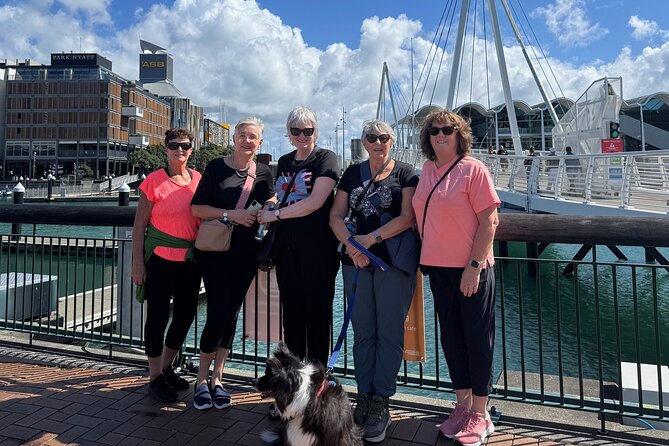
The tour’s ending portion is built around one of Auckland’s best rewards: water views. You’ll reach Queens Wharf with time to take in Waitemata Harbour. From there, the tour ends at the waterfront, right where you can keep enjoying the views on your own after the guided portion wraps.
I like harbor endings because they let you exhale. After hours of city blocks, the water gives you space for photos and a sense of scale. It also ties together the earlier parts of the tour. Stories about origins and early life feel more believable when you can see the natural geography that helped Auckland grow.
There’s also a practical advantage here. Since the tour ends near 143 Quay Street, it’s easy to continue your evening with dinner, a casual drink, or a stroll along the waterfront.
Value for money: what $73.23 buys you in real terms
At $73.23 per person for about 3 hours, you’re paying for three things that matter: guided context, efficient route planning, and small-group attention.
If you tried to do this solo, you’d likely piece together information from multiple sources and still miss the connective tissue, like how the park, civic buildings, memorials, and waterfront all fit into one story. The tour gives you that thread as you walk, so you get more understanding per minute than you would with a self-guided wander.
The small group size is another big part of the value. When you’re maxed at 6, your questions don’t get swallowed. The guide can also adjust pacing, and that human pacing showed up in feedback, where people specifically noted comfort breaks.
You do still cover your own food and drinks unless a purchase is part of what you choose during the refreshment break. The key thing is that the tour builds in time to reset, so you can keep enjoying the rest of the walk.
What you should bring (so you enjoy every stop)
This is a central-city walking route with multiple short stops, so plan like you’re doing a half-day stroll. I’d bring:
- Comfortable walking shoes with good grip
- A light jacket or layer for changing Auckland conditions
- A phone with enough battery for photos and navigation, since you’ll have a mobile ticket
Also, go in ready to ask questions. With a small group and a guide like Paula, you’ll likely get answers that make later parts of the walk click.
Who this Auckland walk is best for
This tour is ideal if you:
- Want an orientation to central Auckland without guessing your way around
- Like stories that connect landmarks to people, including Māori legends and historic events
- Enjoy short stops and practical context over long museum time
It’s also a good choice for couples and small groups, since max 6 keeps it personal. If you’re traveling solo, you’ll still get interaction with the guide and others, and the pacing tends to feel comfortable.
If you hate walking, you may find the 3-hour duration challenging. If you love deep dives into one museum or one neighborhood, you might want to pair this with separate self-guided time afterward.
Should you book Auckland Walking Tour: Small-Group History & Culture?
I’d book it if you want a well-paced central Auckland route with real human storytelling and an ending that finishes at the water. The biggest strengths are the small-group setup, the guide’s ability to connect each stop to the city’s bigger story, and the mix of places, from parks and civic landmarks to Britomart public art and Waitemata Harbour views.
Skip it if you only want long, inside experiences, or if you dislike walking through city blocks for three hours. Also, if you’re the type who likes to control every minute and read at your own speed for extended stretches, you might find the brief stop format less satisfying.
FAQ
How long is the Auckland walking tour?
It lasts about 3 hours.
What does the tour cost?
The price is $73.23 per person.
Where does the tour start and end?
It starts at Khartoum Place, Auckland Central, and ends at 143 Quay Street, Auckland Central.
What is the group size?
The tour has a maximum of 6 travelers.
What sights do we see during the walk?
You’ll see and stop near places including Albert Park, the University of Auckland Clock Tower area, Old Government House, Emily Place Reserve, Lord Freyberg statue, Britomart, Queens Wharf, and you get a short-distance view of the Sky Tower. The tour also includes highlights connected to the Viaduct Harbour area and the waterfront.
Is there a refreshment break?
Yes, there is a break for refreshments and insider tips on where to eat, drink, and shop.
Is a mobile ticket used?
Yes, the tour uses a mobile ticket.
Is the tour suitable for most travelers?
Most travelers can participate, and service animals are allowed. It is also near public transportation.
What is the cancellation policy?
Free cancellation is available. You can cancel up to 24 hours in advance for a full refund. Changes made less than 24 hours before the experience start time are not accepted, and cancellations under 24 hours before the start time are not refunded.
The Wider Auckland Shortlist



Everything Else We Wrote Up in Auckland



Auckland, More Days Out
Just added to our Auckland notes
- Rotorua to Auckland – Afternoon Transfer with Waitomo Caves★ 4.9 · 6 reviews
- Auckland Nature Tour★ 5.0 · 6 reviews
- Auckland: GoGuided Auckland City Tour★ 4.5 · 6 reviews
- Auckland: Full-Day City Tour★ 4.6 · 6 reviews
- Auckland: Half-Day Sea Kayak Tour to Motukorea Island★ 5.0 · 6 reviews
- Private Tour – Hobbiton Movie Set & Te Puia (Rotorua)★ 5.0 · 7 reviews
Auckland Tours and Day Trips, compared.
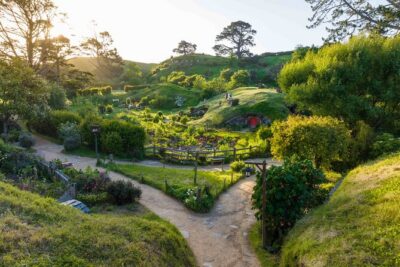 ★ 5.0Hobbiton & Waitomo Caves Guided Day Trip from Auckland incl lunchFrom $2292,677 reviews
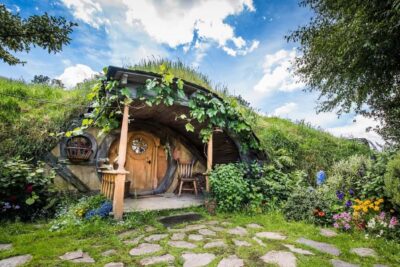 ★ 4.9From Auckland: Hobbiton & Waitomo Caves Day Trip with LunchFrom $2212,505 reviews
 ★ 4.5Auckland Dolphin and Whale Watching Eco-Safari CruiseFrom $1351,790 reviews
 ★ 4.8Auckland: Hobbiton Movie Set Day Trip with Festive LunchFrom $1821,431 reviews
 ★ 5.0Hobbiton Movie Set Small Group Tour from AucklandFrom $1831,380 reviews
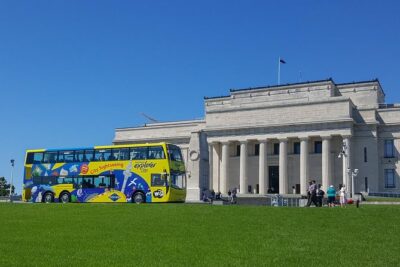 ★ 4.0Auckland Explorer: Sightseeing Hop-on Hop-off TourFrom $431,180 reviews
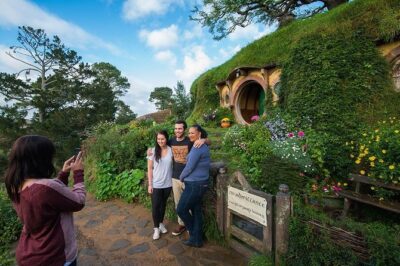 ★ 5.0Hobbiton & Waitomo Caves Small-Group Tour W Lunch from AucklandFrom $2351,117 reviews
 ★ 5.0Half-day Discover Auckland City Sightseeing TourFrom $461,080 reviews
Browse the lists this tour appears in