
REVIEW · AUCKLAND TOURS AND DAY TRIPS
Auckland Dolphin and Whale Watching Eco-Safari Cruise
Two things make this Auckland cruise a smart pick: real marine research onboard and big chances at dolphin pods. You’ll sail out from downtown, then get guided by a team that studies what you are hoping to see, in one of New Zealand’s best-known marine areas.
I like how the boat experience is built for wildlife viewing. You’re on a custom-built 65-foot catamaran, with room to watch from inside or out, plus expert commentary that helps you understand what you are actually seeing.
One thing to plan for: wildlife sightings are never guaranteed. If you go hoping for a whale every time, you could be disappointed, though dolphins are often plentiful and there is a no-extra-charge return option if you do not see marine mammals.
In This Review
- Quick hit points
- Why Viaduct Harbour and the Hauraki Gulf setup matters
- The 65-foot catamaran: comfort, viewing space, and where photos happen
- Your 4.5-hour route: what each stop adds to the day
- Stop 1: New Zealand Maritime Museum
- Stop 2: Viaduct Harbour
- Stop 3: Auckland Harbour Bridge
- Stop 4: Rangitoto Island
- Stop 5: Waitemata Harbour
- Stop 6: Hauraki Gulf
- Stop 7: Auckland Whale and Dolphin Safari (the wildlife search time)
- Stops 8 to 10: Motuihe Island, Motutapu Island, and Tiritiri Matangi Island
- Stop 11: North Head Historic Reserve
- Wildlife you might see: whales, dolphins, penguins, seals, and seabirds
- Dolphins: the usual crowd-pleaser
- Whales: possible, not guaranteed
- Penguins, seals, and the bird show
- Marine research scientists: what the commentary adds beyond spotting
- Weather, sea state, and comfort tips that actually help
- Price and value: what $135.91 buys for your day
- Who should book this eco cruise, and who should be cautious
- Should you book it or not?
- FAQ
- What is the duration of the Auckland Dolphin and Whale Watching Eco-Safari Cruise?
- Where does the cruise depart from, and where does it end?
- How much does the tour cost?
- Is food and drinks included?
- Can I see whales and dolphins on this cruise?
- What happens if I do not see marine mammals?
- What should I bring?
- What time do I need to check in?
- Can I cancel for free?
Quick hit points
- Marine scientists onboard with research-focused commentary, not generic facts
- Dolphins are the usual win, with pods that can pop up repeatedly
- A 65-foot catamaran gives you practical viewing space from inside and outside
- Hauraki Gulf Marine Park scenery plus birds, penguins, and seals as bonuses
- If you miss marine mammals, you can go again another day at no extra charge
- Picnic rules for a wildlife-first experience, so your viewing stays respectful
More ways to fill a day out of Auckland
- Hobbiton & Waitomo Caves Guided Day Trip from Auckland incl lunch
★ 5.0 · 2,677 reviews - From Auckland: Hobbiton & Waitomo Caves Day Trip with Lunch
★ 4.9 · 2,505 reviews - Auckland Dolphin and Whale Watching Eco-Safari Cruise
★ 4.5 · 1,790 reviews - Auckland: Hobbiton Movie Set Day Trip with Festive Lunch
★ 4.8 · 1,431 reviews
Why Viaduct Harbour and the Hauraki Gulf setup matters
Auckland’s marine wildlife viewing feels easier when your tour starts right in the middle of the action. This one leaves from Viaduct Harbour, so you are not wasting a chunk of your day on long drives or complicated transfers. You also get a great “first wow” factor early, with harbor views and island scenery as you head into the Hauraki Gulf Marine Park zone.
The big idea here is biodiversity. The Hauraki Gulf Marine Park is described as biologically diverse and it includes five marine preserves. That matters because it increases the odds that you will see more than one type of animal, not just one lucky sighting and then empty water.
I also like that the experience is framed as conservation and research. Every ticket supports marine mammal conservation, and you hear about studies done in partnership with local scientists, which gives the trip a purpose beyond ticking boxes.
The 65-foot catamaran: comfort, viewing space, and where photos happen
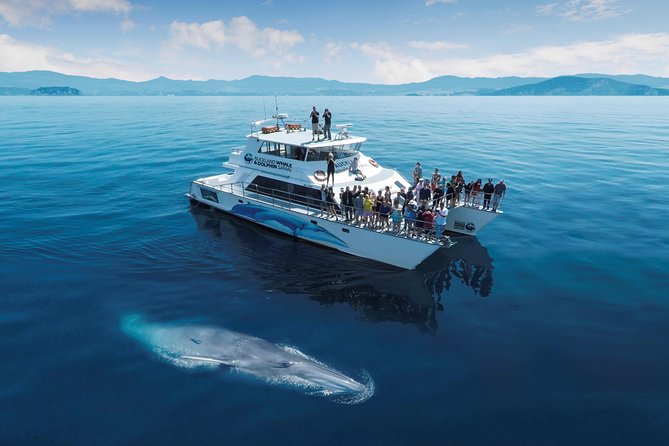
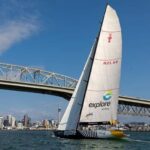
This cruise runs on a custom-built 20-meter (65-foot) catamaran, designed for wildlife viewing. The tour description says the setup helps you best view up to six types of whales, plus dolphins and other marine life. Translation for you: the boat is not just for transport, it is meant to keep eyes on the water for long stretches.
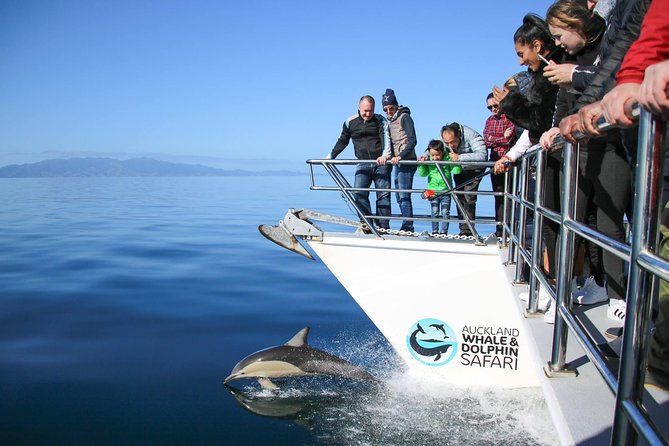
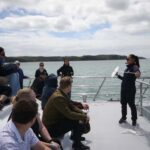
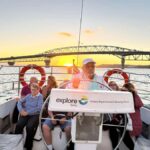
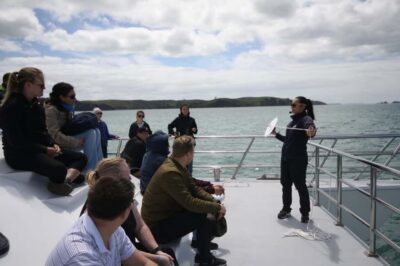
You can watch from inside or outside. When conditions are calm, the outside deck is where your camera will earn its keep, and in rougher conditions you may prefer to stay more stable indoors. One review specifically warned that the front deck can be the best spot when underway, because dolphins sometimes show interest near the bow area.
Group size can be a real factor. The tour caps at 99 travelers, and on busy days it can feel full, especially when rain pushes people inside. If you hate crowding, pick a time slot when the weather is steadier, and plan to rotate spots so everyone gets a chance at clear views.
Your 4.5-hour route: what each stop adds to the day
This safari is built like a loop through Auckland’s marine edges. You’ll meet, board, sail out through the harbor, and then spend the wildlife-focused time in the Hauraki Gulf area before returning to the same starting point.
Stop 1: New Zealand Maritime Museum
Your day starts at the New Zealand Maritime Museum at Viaduct Harbour. This is where you meet the crew, get oriented, and get ready to move from “tourist on land” mode into “spot the animals at sea” mode. It is also a good moment to check you have your basics ready, since the weather can change fast once you are out on the water.
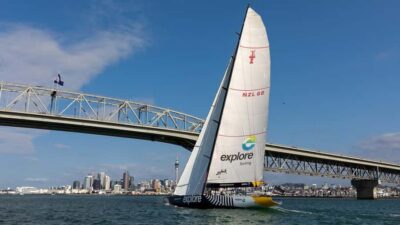
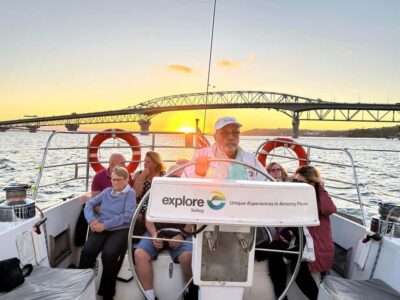
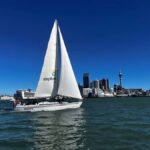
Other boats going out of Auckland
Stop 2: Viaduct Harbour
Viaduct Harbour is more than a departure point. It is the start of the scenery, plus a practical way to orient yourself before you get out into open-ish gulf waters. If you are spending time in downtown Auckland anyway, this stop makes the cruise feel like a natural part of the day.
Stop 3: Auckland Harbour Bridge
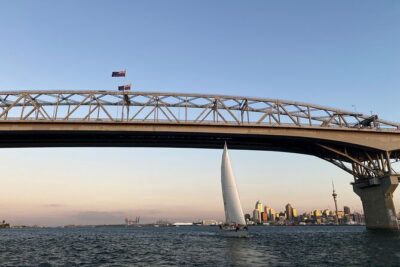
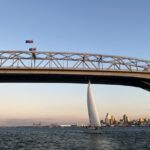
As you head along the harbor, the Auckland Harbour Bridge view gives you that classic skyline anchor. It is a short moment, but it helps break up the cruise visually before you settle into the wildlife search portion.
Stop 4: Rangitoto Island
Rangitoto Island is one of those landmarks that makes Auckland feel unmistakably New Zealand. Depending on the angle and light, you may see it clearly during transit, and it is a nice backdrop for photos even before dolphins start showing up.
Stop 5: Waitemata Harbour
This is the “in-between” phase, when you are moving from the harbor views to the broader gulf. It is also the part of the trip where you will likely get your best early briefing on what to look for, what species the crew is tracking, and how they scan the water.
Stop 6: Hauraki Gulf
Once you reach the Hauraki Gulf, the focus shifts to spotting wildlife. This is where you should expect the repeated scanning, the careful boat positioning, and the moment when the guide calls it out and suddenly everyone has their camera up.
Stop 7: Auckland Whale and Dolphin Safari (the wildlife search time)
This is the heart of the day. The tour description mentions you’ll look for whales, dolphins, seals, and rare seabirds during the roughly 4.5-hour cruise. The crew also talks about which whales they track, so you are not just staring out blankly, you are watching with a purpose.
A key detail: sightings are wildlife behavior dependent. The tour is very clear that you cannot guarantee whales, and even dolphins are not guaranteed every trip. But the odds are helped by the crew’s research approach and by the fact that the Hauraki Gulf is a protected, high-life-area ecosystem.
Stops 8 to 10: Motuihe Island, Motutapu Island, and Tiritiri Matangi Island
These island stops matter most for what they cue in your eyes. The tour highlights seabirds like Australasian gannets, petrels, shearwaters, and white-fronted terns, and islands like these are where bird activity can be a big part of what you notice.
Even if whale action is quiet, the birds and smaller wildlife moments can keep the cruise lively. Think of these stops as “bonus chapters” in your day, not just dots on a map.
Stop 11: North Head Historic Reserve
As you return, North Head Historic Reserve gives a final scenic anchor. This is your last round of views before docking back at Viaduct Harbour and ending the tour where you started.
Wildlife you might see: whales, dolphins, penguins, seals, and seabirds
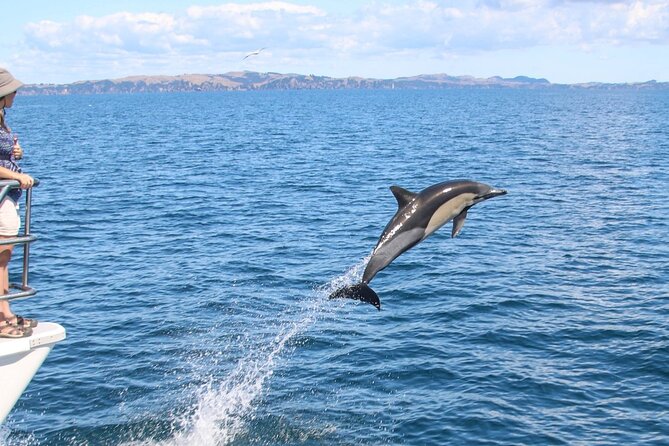
Let’s talk about the realistic wildlife menu. The tour description names several possible highlights, and the reviews strongly suggest dolphins are the most frequent payoff.
Dolphins: the usual crowd-pleaser
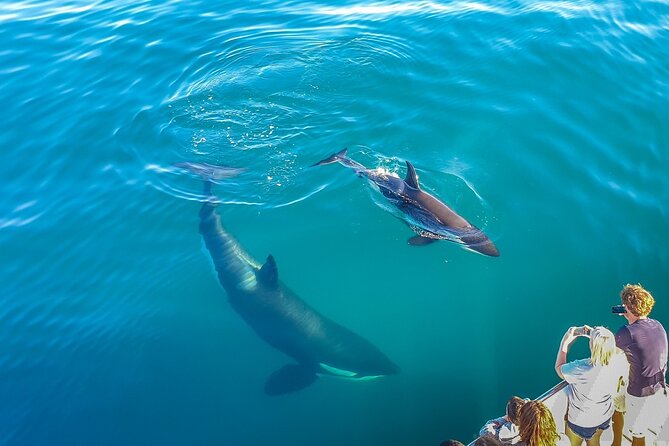
Dolphins show up repeatedly on many trips. The tour explicitly calls out bottlenose dolphins and also mentions frequently spotted pods. Reviews back this up with comments about seeing dolphins in abundance, including multiple sightings and pods that hang around for a while.
If you want a practical tip, don’t wait for the biggest splash. Often the best moment is when pods rise and reposition, and the guide points out what that behavior means.
Whales: possible, not guaranteed
The tour mentions Bryde’s whales and that the crew tracks which whales they are looking for. That same “research tracking” is what helps, but whales can still be elusive. Some reviews describe whale-free days while still rating the trip highly for the education and dolphin sightings, which tells me the day is designed to be worthwhile even without the top prize.
So if whales are your number one goal, keep expectations flexible. If you truly want whale certainty, this is not the right kind of tour to bet your whole trip on.
Penguins, seals, and the bird show
You might spot blue penguins and seals as adorable side characters. Seabirds are also part of the plan: Australasian gannets, petrels, shearwaters, and white-fronted terns are named, and you may see them soaring or plunging into the sea.
These “secondary species” are not random. They fit the same theme as the dolphin and whale search: the Hauraki Gulf is full of life and the boat crew is watching the whole system, not just one target.
Marine research scientists: what the commentary adds beyond spotting
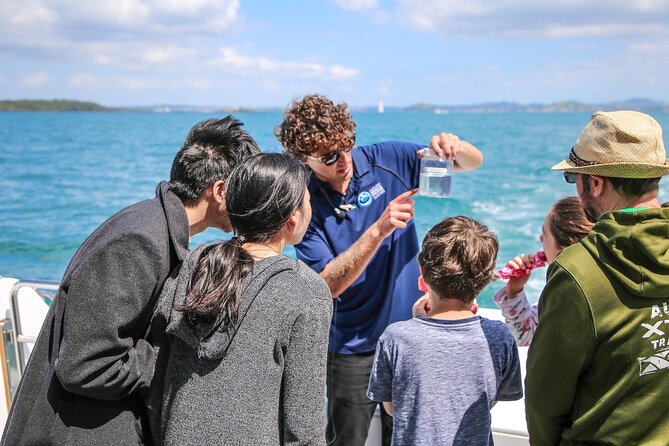
The tour stands out because the commentary comes from marine research scientists on board. That does two things for you. First, it makes the wildlife you see easier to identify. Second, it explains why the animals behave the way they do in this specific environment.
The crew also shares information about research partnerships with local marine scientists and about the ongoing conservation work your ticket supports. I like this because it changes how you experience the boat ride. You are not just hoping the sea delivers, you understand the “why” behind what you are scanning for.
This is also where the trip avoids being a generic whale-watching script. You are hearing about the species the crew tracks and how they conduct observations, which makes the whole safari feel more like a field day than a theme park.
Weather, sea state, and comfort tips that actually help
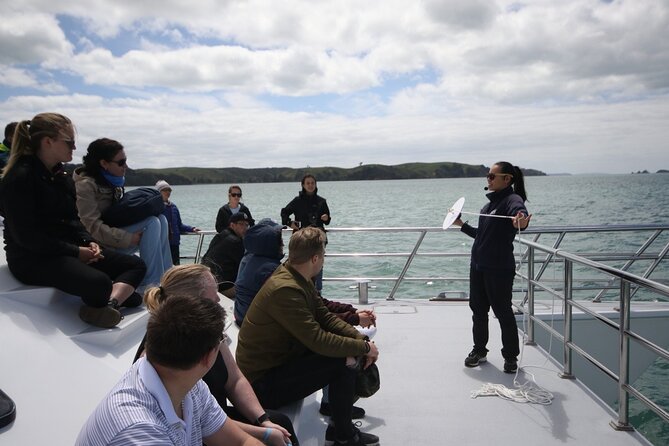
Auckland water can surprise you. The tour says weather can be unpredictable, and the experience requires good weather. One review mentioned rough seas on their scheduled day, and the captain apparently did a good job adjusting to conditions.
Here is what you should do to stay comfortable and get usable photos:
- Dress in warm layers and bring weatherproof gear. Wind on open water can cool you quickly.
- Wear sunscreen and a sun hat with a chin strap, since hats can get blown around.
- Bring sunglasses and binoculars if you own them. The birds especially reward a steady look.
- Choose flat-soled shoes for traction on a moving deck.
Also, if the boat feels crowded, that is not the end of your view. Do a simple rotation plan: spend time outside for scanning, then head inside briefly to rest, then back out. On rainy days, people cluster under cover, so being flexible helps you keep your sightline.
Price and value: what $135.91 buys for your day
At $135.91 per person for about 4 hours 30 minutes, this is not a “cheap activity.” What makes it feel like value is what is included and how the money is used.
You get:
- A marine-focused local guide and expert onboard marine research scientists
- A custom-built catamaran designed for wildlife viewing
- Conservation impact, since every ticket contributes directly to marine mammal conservation
- A no-extra-charge return option if you do not see marine mammals
You should also notice what is not included: food and drinks are not included, though you can purchase them. And there is no hotel pickup or drop-off, so you’ll need to be able to reach Viaduct Harbour yourself.
In practical terms, the price makes more sense if you care about education and conservation, not just the chance of a whale photo. If your main goal is wildlife viewing and you want the science context, you’re paying for the full package.
Who should book this eco cruise, and who should be cautious
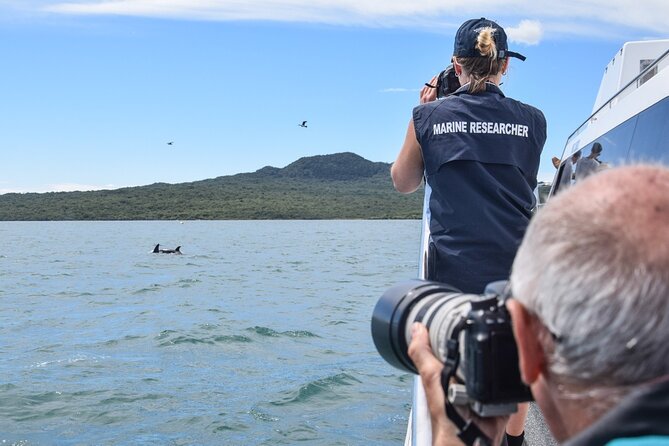
This is a strong fit if you:
- Want a downtown-friendly departure from Viaduct Harbour
- Like marine wildlife, especially dolphins and seabirds
- Enjoy learning the “how” behind spotting animals, through scientist-led commentary
- Are traveling with family and want a half-day activity that feels outdoorsy but structured
Be cautious if:
- You get motion sickness easily, because sea conditions can be choppy even with a stable catamaran
- You want guaranteed whale sightings, because the tour does not promise whales
- You hate crowded spaces in peak seasons, since the boat can be full and that can affect viewing and audio clarity
If you fall into the “I just want a relaxed boat day” category, you’ll still likely enjoy the views and the education. Just remember, the wildlife is the point, and wildlife can be unpredictable.
Should you book it or not?
I think you should book this tour if you want a real, science-informed wildlife experience in Auckland that starts right in the city. Dolphins are the most likely win, and even when whales are quiet, the trip still has a lot going on, from seabirds to penguin and seal possibilities, plus islands that keep the scenery interesting.
Don’t book this thinking you will definitely see whales on demand. If you go with flexible expectations and a good packing list, you’ll get a worthwhile half-day out on the water, with conservation purpose built in.
FAQ
What is the duration of the Auckland Dolphin and Whale Watching Eco-Safari Cruise?
It runs for about 4 hours 30 minutes.
Where does the cruise depart from, and where does it end?
It meets at the Eastern Viaduct area in downtown Auckland at the New Zealand Maritime Museum near Viaduct Harbour, and it ends back at the same meeting point.
How much does the tour cost?
The price listed is $135.91 per person.
Is food and drinks included?
No. Food and drinks are not included, but they are available to purchase.
Can I see whales and dolphins on this cruise?
Wildlife viewings are not guaranteed. Dolphins and whales are often in these waters, and sightings depend on what the animals choose to do that day.
What happens if I do not see marine mammals?
If you do not see any marine mammals during your trip, you can go again another day at no extra charge.
What should I bring?
Bring warm layers and weatherproof gear, plus a sun hat (with a chin strap), sunscreen, sunglasses, a camera, binoculars, and flat-soled shoes.
What time do I need to check in?
Check-in closes 15 minutes prior to the stated departure time. If you are late, you risk losing your allocated seats.
Can I cancel for free?
Free cancellation is available. You can cancel up to 24 hours in advance for a full refund, based on local time.
Out on the Water Near Auckland

Everything Else We Wrote Up in Auckland




Auckland, More Days Out
Just added to our Auckland notes
- Rotorua to Auckland – Afternoon Transfer with Waitomo Caves★ 4.9 · 6 reviews
- Auckland Nature Tour★ 5.0 · 6 reviews
- Auckland: GoGuided Auckland City Tour★ 4.5 · 6 reviews
- Auckland: Full-Day City Tour★ 4.6 · 6 reviews
- Auckland: Half-Day Sea Kayak Tour to Motukorea Island★ 5.0 · 6 reviews
- Private Tour – Hobbiton Movie Set & Te Puia (Rotorua)★ 5.0 · 7 reviews
Auckland Tours and Day Trips, compared.
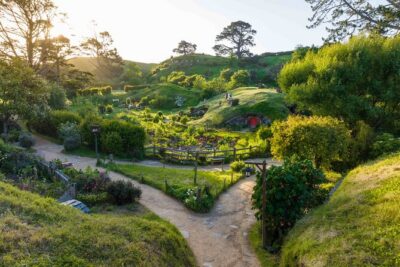 ★ 5.0Hobbiton & Waitomo Caves Guided Day Trip from Auckland incl lunchFrom $2292,677 reviews
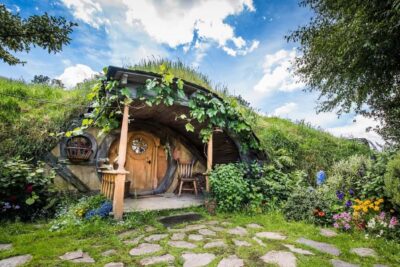 ★ 4.9From Auckland: Hobbiton & Waitomo Caves Day Trip with LunchFrom $2212,505 reviews
 ★ 4.8Auckland: Hobbiton Movie Set Day Trip with Festive LunchFrom $1821,431 reviews
 ★ 5.0Hobbiton Movie Set Small Group Tour from AucklandFrom $1831,380 reviews
 ★ 4.0Auckland Explorer: Sightseeing Hop-on Hop-off TourFrom $431,180 reviews
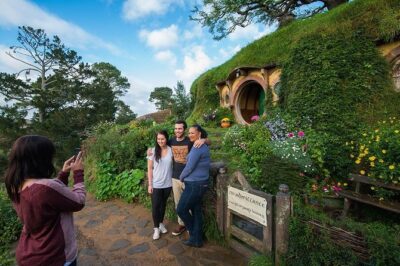 ★ 5.0Hobbiton & Waitomo Caves Small-Group Tour W Lunch from AucklandFrom $2351,117 reviews
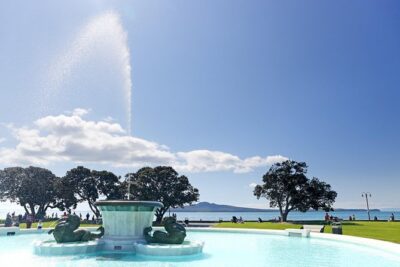 ★ 5.0Half-day Discover Auckland City Sightseeing TourFrom $461,080 reviews
 ★ 4.5Auckland: Whale and Dolphin Watching Half-Day Eco CruiseFrom $1301,072 reviews
Browse the lists this tour appears in