
REVIEW · WAIHEKE ISLAND WINE AND BEACHES
Waiheke Island Private History and Heritage Tour
Waiheke rewards curious eyes. This private, Māori perspective heritage tour pairs serious place-based storytelling with unforgettable views over the Hauraki Gulf and beyond. You’ll be out on the island for a half day, guided from start to finish with time to catch the later ferry back.
I especially like the way the day connects people to land, from the meaning of carving and traditional tattooing to what colonization did to Māori communities. I also love the nature component, because the guided walk through native bush includes plant uses, plus bird spotting when you’re up high.
One thing to consider: don’t plan on walking into a community marae casually. Cultural sites often require a formal welcome called powhiri, and they may not be staffed for drop-in visits.
In This Review
- Key things to know before you go
- Waiheke Through Māori Eyes: What This Tour Really Delivers
- Getting There and How the Day Fits Around the 4pm Ferry
- Oneroa Start and the Orientation That Actually Helps
- Pristine White-Sand Beaches and the Story Behind Them
- Māori Community Focus: Carving, Tattooing, and Language Revitalisation
- Native Bush Walk: Medicinal Plants and Quiet Bird Moments
- Pa Summit Archaeology: Kumara Pits, Shell Middens, and Defensive Terraces
- Lunch, Optional Tastings, and Keeping Your Budget Honest
- Price and Value: Is $465.43 per Person Worth It?
- Who This Private Waiheke Heritage Tour Suits Best
- A Quick Reality Check: What to Expect from a “Private Cultural Heritage” Day
- Should You Book This Waiheke Tour? My Bottom Line
- FAQ
- Is the ferry to and from Waiheke Island included in the price?
- How long is the Waiheke Island private history and heritage tour?
- What time does the tour start?
- Where does the tour begin?
- Does the tour include lunch?
- What tour features are included?
- Is this a group tour or private?
- Is a mobile ticket provided?
- What is the end of the tour, and when do you return to the mainland?
- How do cancellations work?
Key things to know before you go
- Private group, local guide: you only share the day with your party.
- Māori heritage focus: carving, traditional tattooing, language revitalization, and colonization impacts.
- Native bush walk plus pa archaeology: medicinal plant stories, then summit remains like kumara pits and shell middens.
- Big sea views built into the flow: orientation looks out over Auckland and the Pacific.
- Lunch is on you: there’s a stop for lunch at a local cafe, but it is not included.
- Return timing matters: you’ll be back in time for the 4pm ferry unless you choose to stay longer.
Still on Waiheke? Here is the rest of the island
- Waiheke island Wine Tours – PREMIUM wine tasting MAX 11 clients !
★ 5.0 · 1,378 reviews - Waiheke Island Premium Wine Tour with Tastings
★ 5.0 · 504 reviews - Waiheke Island: Zipline And Forest Walk
★ 5.0 · 483 reviews - Taste of Waiheke Food and Wine Tour
★ 4.5 · 465 reviews
Waiheke Through Māori Eyes: What This Tour Really Delivers
Waiheke Island is easy to enjoy as a scenery stop. What’s different about this tour is that it treats the island like a living storybook, with a Māori lens on how people see place, use plants, and understand older settlement areas.
You get a day that mixes three strong ingredients: views, culture, and landscape archaeology. The views do not feel like filler. They’re used as a way to orient you first, then to frame the meaning of places you’ll walk through later. And the culture is not just name-dropping. You’ll hear about carving, traditional tattooing, and how Māori language is being revitalised, plus the real impacts of colonization.
If you’re the type who likes to ask why a place matters, you’ll be in your element. If you want a scripted performance or a guaranteed formal ceremony, keep expectations flexible, because access to certain community areas is not something you can assume.
Getting There and How the Day Fits Around the 4pm Ferry
This is built as a 6-hour experience on the island, starting from Oneroa. The start time is 9:45am, and the tour ends back at the meeting point, timed for the return 4pm ferry.
Here’s the practical part: ferry tickets are not included in the tour price. You can buy return ferry tickets for $42 per adult (from the operator). That matters for value because you’re paying for the guide and the itinerary, not the boat.
You also should know the route is shaped by ferry schedules. If you’re the kind of traveler who likes to linger for sunset, you can request a different end point: you can be dropped in Oneroa and then make your own way back to the ferry by a 15-minute walk or a short bus ride.
If you hate time pressure, this tour can still work, but you’ll want to be on schedule. The whole day is planned around the 4pm return.
Oneroa Start and the Orientation That Actually Helps
Your day begins at the Fullers360 Matiatia ticket office area in Oneroa, with the tour starting at 9:45am. You’ll be greeted at the wharf on arrival, then the guide starts with an orientation around Waiheke.
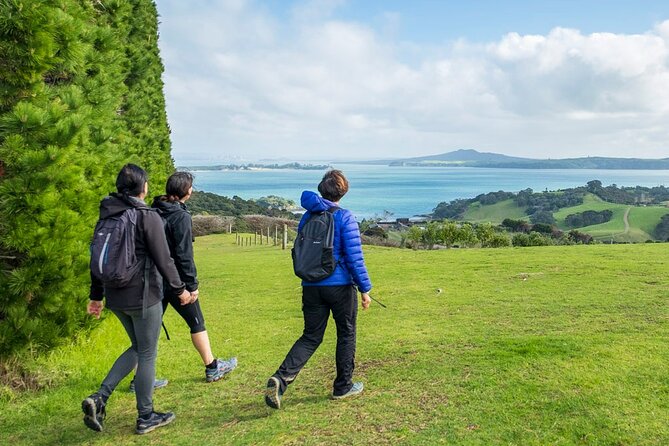
This is where the tour earns points. Many island tours “check a box” on viewpoints. Here, the viewpoint time is used to set context, including sea views of the Hauraki Gulf, Auckland City, and the Pacific Ocean. After that, you move through beaches and bush with the sense that you’re traveling across meaningful zones, not just hopping between photo spots.
I like that this part is early. By the time you reach the cultural and archaeological stops, your brain already has a map in place.
Pristine White-Sand Beaches and the Story Behind Them
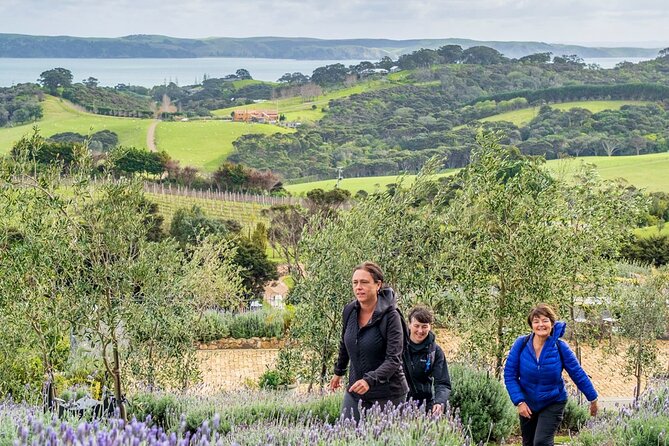
Expect time at beaches described as pristine and white-sand. These stops are not only for photos. They’re part of the guide’s storytelling about history and place, so you’re learning as you look out at the water.
Waiheke’s coastline is a big reason people come, but without context it can feel like you’re just standing in front of a pretty panorama. On this tour, you’re given background as you travel from one area to the next, so the shorelines start to mean something.
If you’re someone who loves the feel of walking near the water, this itinerary will land well. If you prefer long beach hangs with zero talking, you may find the pace more guided than relaxed.
Other private-guide options in Waiheke Island
Māori Community Focus: Carving, Tattooing, and Language Revitalisation
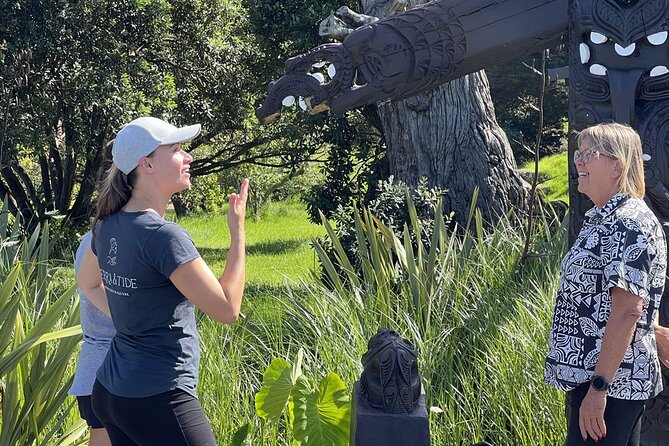
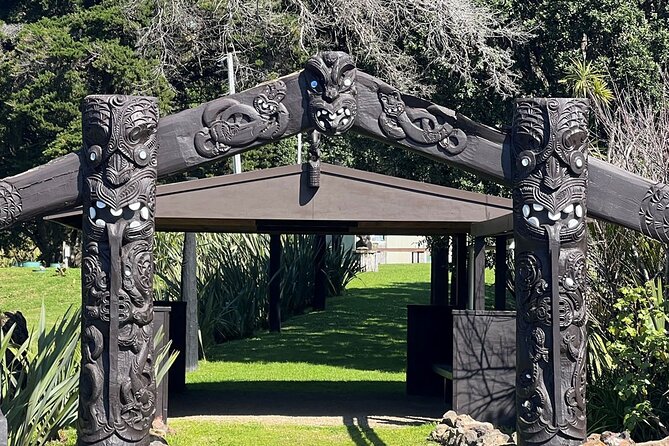
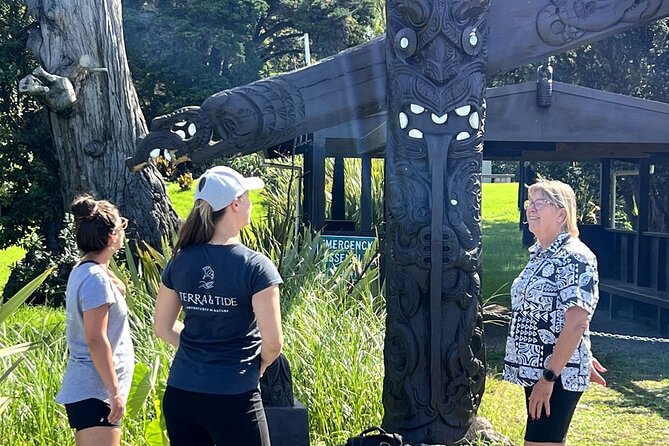
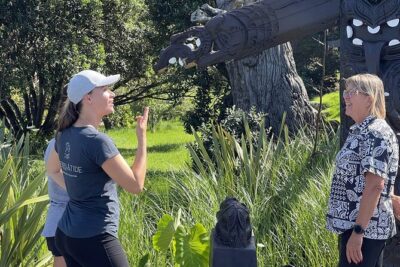
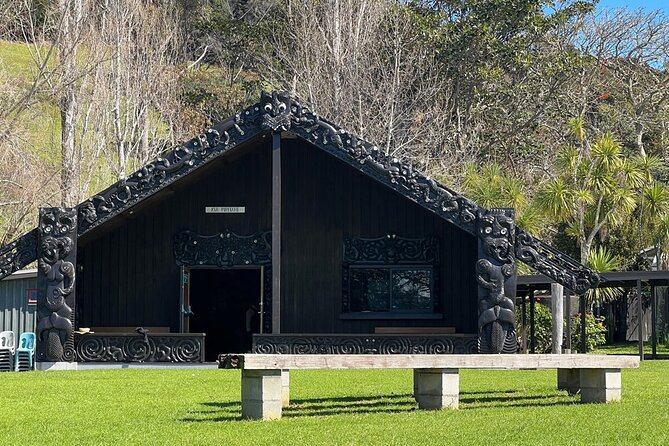
This is the heart of the experience. You’ll visit a focal point of the Māori community on Waiheke, then learn about the significance of carving and traditional tattooing, including tā moko as part of broader Māori traditions.
You’ll also hear how Māori language revitalisation is shaping life today, and how colonization affected Māori people. That matters because it changes how you read culture on the island. Instead of treating cultural elements like decorative history, you start to see them as living practice with consequences.
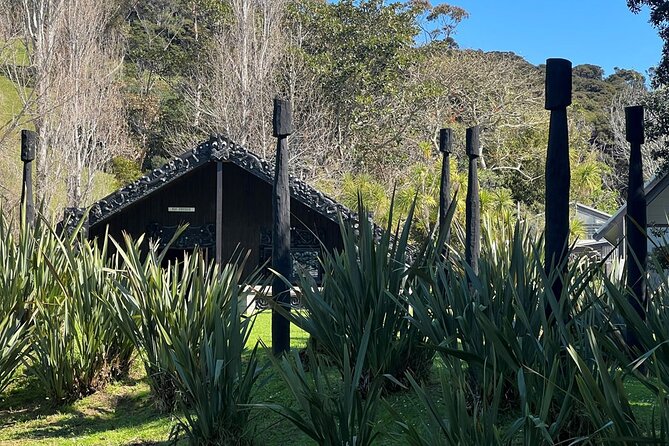
One important note: don’t assume you can just walk onto a community marae. A formal welcome called powhiri is required, and marae are not necessarily staffed for visitors at all times. Build your day around learning from your guide and visiting sites accessible to the tour, not around an expectation of unscheduled entry to private or operating spaces.
If you come with respect and flexibility, this section can be genuinely moving.
Native Bush Walk: Medicinal Plants and Quiet Bird Moments
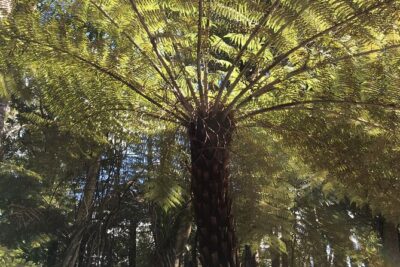
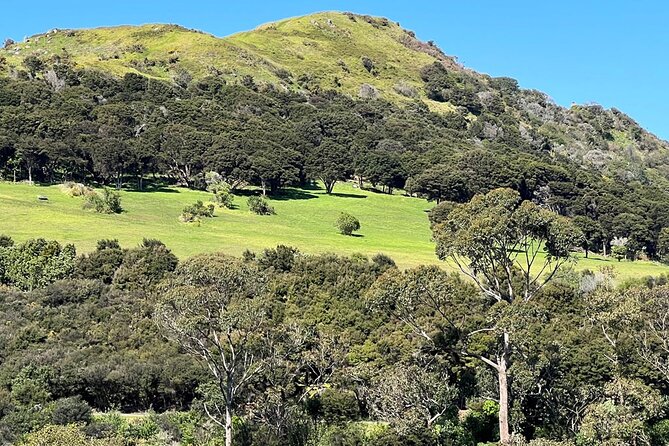
A guided walk through native bush is part of the plan, with the guide explaining traditional and medicinal Māori uses of native plants.
That’s a great combination. You’re not just hearing “this plant is important.” You’re getting told what it’s for in human terms, which makes the ecology feel practical instead of abstract. Even if you’re not a plant person, the human stories help the bush click.
As you move, you’ll likely have bird moments. The tour includes a good chance of seeing native birds such as tui, kereru, and piwakawaka. Bird spotting depends on conditions, but the fact that the itinerary expects it tells you the guide is watching for it, not rushing past.
This is the section where good walking shoes help. The itinerary includes a bush walk and a climb to a summit pa site. Plan for uneven ground and time spent moving on foot.
Pa Summit Archaeology: Kumara Pits, Shell Middens, and Defensive Terraces
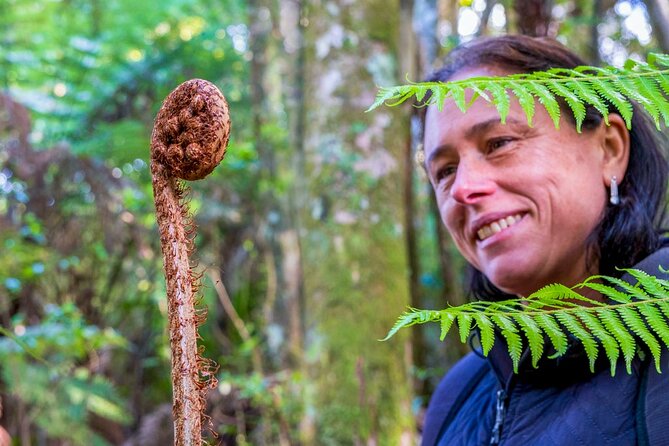
You’ll be taken to the summit of a pa (fortified village) site with archaeological remains like kumara pits, shell middens, and defensive terraces.
This is one of the most valuable parts of the tour because it ties the Māori heritage focus to physical traces. You can stand on the ground and understand that this wasn’t just a story. People built settlement systems, storage pits, and defensive features because the island demanded it.
The “why” matters here. Kumara pits point to food storage and planning. Shell middens speak to daily life and long-term use of coastal resources. Defensive terraces show why geography was turned into protection.
If you like history that you can see with your own eyes, this stop will feel more substantial than a typical heritage explanation. You’re looking at remains, and your guide is helping you connect them to what they meant.
Lunch, Optional Tastings, and Keeping Your Budget Honest
Lunch is at a local cafe with delicious food and coffee, but lunch is not included in the tour cost. So you’ll want to budget extra for your meal.
There’s also mention of optional wine and olive oil tasting. That optional cost won’t exceed $50. If you want the tastings, plan for that as a add-on. If you’d rather keep it simple, you can treat lunch as your main food stop and skip the extras.
Practical tip: since you’re away from the wharf area for much of the day, eat well when the chance comes. Don’t try to “power through” with snacks unless that’s your usual style.
Price and Value: Is $465.43 per Person Worth It?
At $465.43 per person, this is not a bargain tour. It’s priced like a private, guided experience with a specific cultural focus.
Here’s where the value comes from, not just the price tag:
- You’re paying for an expert local guide who structures the day around Māori perspectives, native bush knowledge, and pa site interpretation.
- The itinerary includes multiple distinct components, not one long stop: orientation views, beach areas, community cultural focus, bush walk with medicinal plant explanations, and a summit pa archaeology site.
- It’s private. That matters if you’re traveling with family or friends and want a slower, more responsive pace.
Here’s what to consider before you book:
- Ferry tickets are extra ($42 per adult return), and lunch is extra.
- The cultural focus is real, but access to certain areas like marae is not guaranteed in the way some visitors might imagine. You’re there to learn, not to force entry to community spaces.
If your ideal Waiheke day is about more than wineries and viewpoints, the price can make sense quickly. If you’re mostly after scenery and casual wandering, you may feel you could spend less elsewhere.
Who This Private Waiheke Heritage Tour Suits Best
This tour fits best if you want a guided, story-driven day that connects culture and ecology. You’ll likely enjoy it if you:
- care about Māori history and how it shapes what you see today
- like walking that isn’t extreme, but does involve a bush walk and a summit
- want a private group experience where the guide can pace the day for your questions
It’s also a good choice for people who prefer learning from a local perspective rather than collecting surface-level facts. The whole plan is built around understanding land through the eyes of indigenous people.
If you’re traveling with mobility limits, you should check with the operator. The itinerary includes a native bush walk and going to a summit pa site, so the walking demands may not suit everyone, even though most travelers can participate.
A Quick Reality Check: What to Expect from a “Private Cultural Heritage” Day
The tour is marketed as heritage, and it delivers heritage. But here’s the reality check I think you should hold onto:
This is not a guarantee of ritual access. You will learn about carving, tā moko, Māori language revitalisation, and colonization impacts. You’ll also visit a focal point of the Māori community and walk through culturally significant settlement remains. But you should not assume you’ll be able to access a marae without a formal powhiri.
If you keep that expectation grounded, you’ll likely come away satisfied, because the guide’s job is to educate you through accessible places and guided interpretation.
Should You Book This Waiheke Tour? My Bottom Line
If you want Waiheke with more meaning than just beaches and wine tastings, I’d book this. The best parts are the focused Māori heritage education plus the native bush and pa archaeology, all tied together with sea views that help you orient fast.
I’d hesitate only if you’re expecting a hands-on ceremony experience or guaranteed entry into a marae, because cultural protocols and staffing are not something tours can control. Also, if you’re traveling on a tight budget, the ferry and lunch add-ons can push the total higher than you first think.
So, should you book? Yes, if you want a guided, respectful, and place-based Māori heritage day on Waiheke. No, if you only want casual wandering and you don’t care about the cultural and archaeological side.
FAQ
Is the ferry to and from Waiheke Island included in the price?
No. Ferry tickets are not included. Return ferry tickets can be purchased for $42 per adult.
How long is the Waiheke Island private history and heritage tour?
It runs for about 6 hours.
What time does the tour start?
It starts at 9:45am.
Where does the tour begin?
The meeting point is at the Fullers360 Matiatia ticket office, Ocean View Road, Oneroa, Auckland 1081, New Zealand.
Does the tour include lunch?
Lunch is not included. Lunch is at a local cafe during the day.
What tour features are included?
An expert local guide is included.
Is this a group tour or private?
It is a private tour. Only your group will participate.
Is a mobile ticket provided?
Yes, the tour includes a mobile ticket.
What is the end of the tour, and when do you return to the mainland?
The tour ends back at the meeting point in time for the return 4pm ferry. You can also request to be dropped in Oneroa if you want to stay longer.
How do cancellations work?
You can cancel for a full refund if you cancel up to 24 hours in advance of the experience start time.
The Wider Waiheke Island Shortlist



Everything Else We Wrote Up in Waiheke Island

The Rest of Waiheke
Just added to our Waiheke Island notes
- Waiheke Island Private History and Heritage Tour★ 4.5 · 7 reviews
- Full Day Private Waiheke Island Wine Tour Including Lunch★ 5.0 · 7 reviews
- Waiheke Island: Scenic PREMIUM Wine Tour. Max 11 clients★ 4.9 · 8 reviews
- Private Dog Friendly Wine Tour with your Local Guide★ 5.0 · 8 reviews
- Flavours of Waiheke, wine, beer, spirits INCLUDES lunch – MAX 11★ 5.0 · 9 reviews
- Sea, Land & Sky Premium Package★ 4.6 · 12 reviews
Waiheke Island Wine and Beaches, compared.
 ★ 5.0Waiheke island Wine Tours – PREMIUM wine tasting MAX 11 clients !From $1551,378 reviews
 ★ 4.7From Auckland: Waiheke Island Wineries’ TourFrom $110934 reviews
 ★ 4.9Waiheke Island: Zipline and Native Forest Adventure TripFrom $89695 reviews
 ★ 5.0Waiheke Island Premium Wine Tour with TastingsFrom $111504 reviews
 ★ 5.0Waiheke Island: Zipline And Forest WalkFrom $92483 reviews
 ★ 4.5Taste of Waiheke Food and Wine TourFrom $179465 reviews
 ★ 4.9Waiheke Island: Wine Tour & Lunch at Award Winning VenueFrom $170370 reviews
 ★ 5.0WAIHEKE ZEITGEIST Small Groups Ultra Boutique Off Grid Wine ToursFrom $150333 reviews
Browse the lists this tour appears in