
REVIEW · AKAROA AND BANKS PENINSULA
Swimming with Wild Dolphins in Akaroa
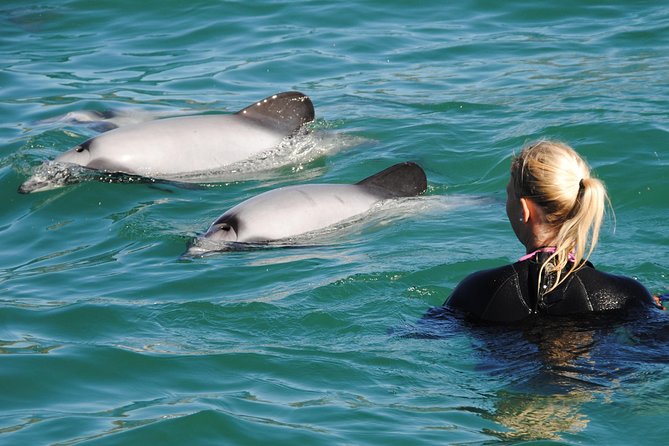
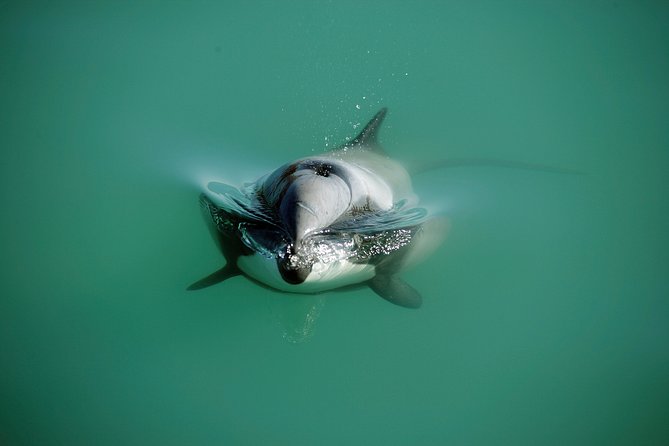
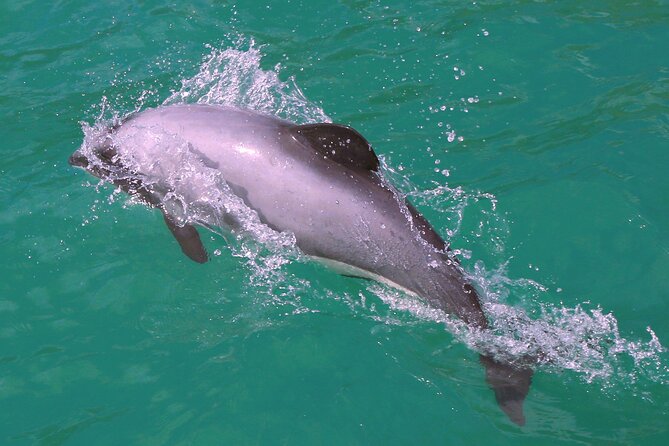
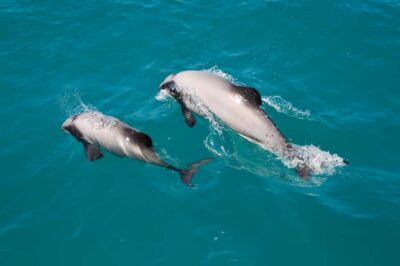
Hector’s dolphins are small, rare, and wild.
This swim in Akaroa Harbour is built around getting you safely close to New Zealand’s Hector’s dolphins, with a small headcount so the experience stays personal. I love that you’re not just dropped into the water, you also get a clear setup on how to interact responsibly before you ever splash in.
My favorite two parts are the small-group format, max 12 swimmers, and the guided attention once you’re afloat. The crew includes a skipper and a nature guide, and they actively help you make the most of the encounter while keeping the dolphins’ behavior the priority.
The main drawback to plan for is that the swim is not guaranteed. If the dolphins aren’t in the right mood, or conditions make it unsafe, you might end up watching from the boat instead of swimming.
In This Review
- Key Things to Know Before You Go
- Akaroa Harbour and Hector’s Dolphins: The Main Attraction
- Getting Started at Akaroa Main Wharf by 12:30
- The Purpose-Built Swim Boat: Comfort, Control, and Crew Care
- The 3.5-Hour Flow: Cruise Out, Learn the Rules, Swim When It Fits
- What You Actually Get in the Water (Wetsuit, Mask, and Time)
- Safety and Ethics: Why the Guide’s Role Matters
- Wildlife Bonuses: Fur Seals, Penguins, and How to Read the Day
- Gear Comfort and Seasickness Reality Check
- Who This Tour Fits Best (and Who Might Choose Another Option)
- Children and Age Rules
- Price and Value: What You’re Really Paying For
- Weather, Cancellations, and When the Sea Changes the Plan
- Should You Book the Hector’s Dolphin Swim in Akaroa?
- FAQ
- Where does the dolphin swim take place?
- How long is the experience?
- What’s included in the price?
- How many people are on each tour?
- Is the dolphin swim guaranteed?
- If I don’t see dolphins, what happens?
- What are the swimming requirements?
- What are the age requirements for children?
- What is the cancellation policy?
Key Things to Know Before You Go
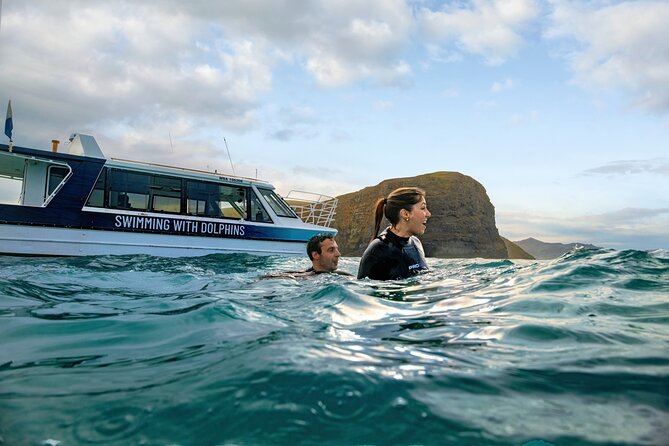
- Small-group by design: Up to 12 swimmers per departure, so you get more guidance and fewer chaotic decisions in the water.
- Purpose-built swim boat: You cruise sheltered waters first, then enter with a crew watching safety closely.
- Hector’s dolphin rules matter: The guide’s interaction tips are part of the experience, not just a lecture.
- Wetsuit and mask are included: You’re geared for cold, and you can focus on the dolphins instead of hunting gear.
- Return option if dolphins do not show: If you don’t see Hector’s dolphins, you’re given a complimentary Akaroa Nature Cruise ticket to come again.
- Sea conditions can change the day: The company requires good weather, and choppy water can affect who gets in.
Banks Peninsula, the rest of the harbour
- Akaroa Dolphins ~ Harbour Nature Cruise
★ 5.0 · 2,143 reviews - Akaroa: Dolphin Nature Cruise
★ 4.9 · 440 reviews - Akaroa Harbour Nature Cruise
★ 5.0 · 332 reviews - Swimming with Wild Dolphins in Akaroa
★ 4.5 · 261 reviews
Akaroa Harbour and Hector’s Dolphins: The Main Attraction
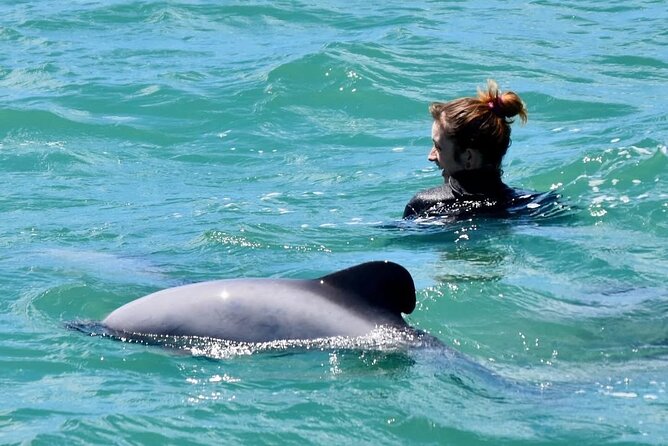
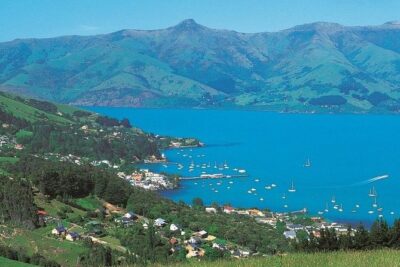
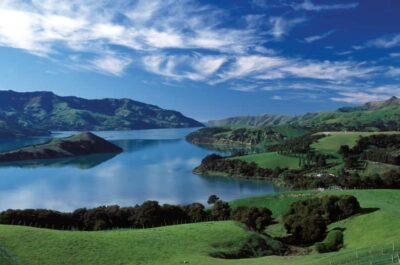
Akaroa sits on Banks Peninsula, about a 90-minute drive from Christchurch, and the harbor is the launch point for this rare dolphin encounter. The big reason this tour is special is simple: Hector’s dolphins are New Zealand’s smallest and among the rarest dolphins, and this is one of the places where you can meet them in the wild.
What I like about the way this tour is set up is that it treats the encounter like wildlife viewing first, and swimming second. You cruise out, you learn how to interact, then you swim only when the dolphins’ behavior lines up with safe, responsible conditions. That matters because Hector’s dolphins can be curious and close, but they still make their own choices.
You should also know this is not a guarantee-production line. The experience is nature-based with wild dolphins, and swims are specifically described as not guaranteed. That sounds harsh on paper, but it’s actually part of what keeps the experience ethical and realistic.
Getting Started at Akaroa Main Wharf by 12:30
Your day begins at Akaroa, Main Wharf, with the tour starting at 12:30 pm. Check-in is tight: you should arrive 15 minutes before the tour time. It’s also an easy starting point if you’re using public transport, and the tour runs as a near full out-and-back experience, ending back at the same meeting spot.
Before anyone goes into the water, you’ll gear up with provided wetsuits and a mask. The tour also includes a hot shower and a hot beverage back at the wharf. That back end is genuinely important, because even when the water feels manageable for a minute, the damp chill can linger.
This is also a tour that assumes you’ll follow safety instructions. Life jackets are not permitted, which can matter if you were planning to rely on extra buoyancy.
The Purpose-Built Swim Boat: Comfort, Control, and Crew Care
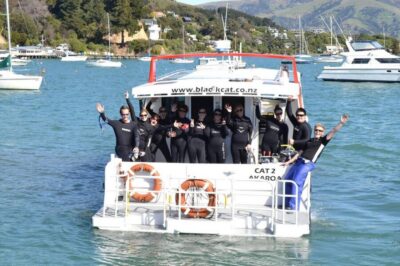
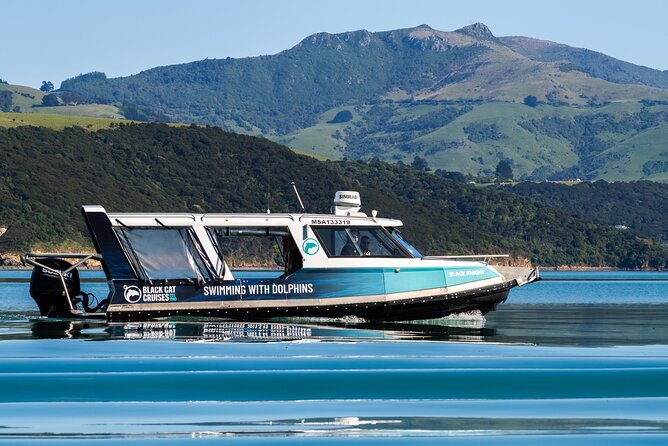
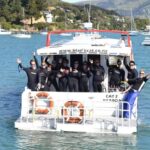
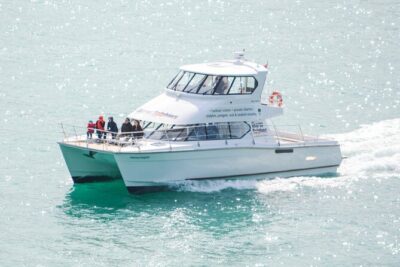
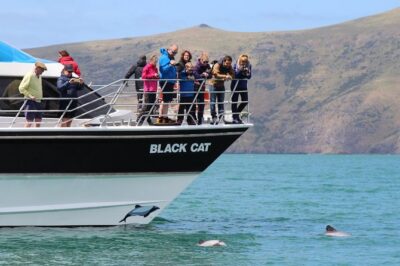
You travel on a purpose-built swim boat designed for getting people safely into Akaroa Harbour waters. The tour includes both a skipper and a nature guide, which is a strong setup because it covers two things at once: operating the boat safely and reading the dolphin behavior.
One of the best advantages of having a nature guide on board is that you’re not just seeing animals. You’re learning what you should do, what you shouldn’t do, and why. The tour emphasizes interaction responsibly, and your guide’s guidance is meant to keep the dolphins comfortable rather than forcing proximity.
You can also stay dry on board if you choose not to swim. That’s a practical option if you’re nervous about open sea conditions, or if the sea state makes you question the timing of the swim. From what’s been shared by people who’ve gone, the experience can run smoother on some days than others, and being able to watch from the boat is a real backup plan.
The 3.5-Hour Flow: Cruise Out, Learn the Rules, Swim When It Fits
The tour runs about 3 hours 30 minutes. The pacing is built for you to have time for three phases:
First, you board and get your pre-swim safety briefing. This is where the guide explains how to interact with Hector’s dolphins. You’re learning how to behave around wild dolphins, not how to chase them.
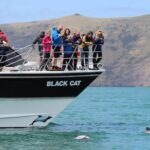
Second, you cruise out from the calmer harbor area to observe dolphins up close. On many days, you may also spot other marine life. The tour specifically mentions the possibility of NZ fur seals, and some departures include other wildlife sightings en route, which turns the day into more than a one-mission appointment.
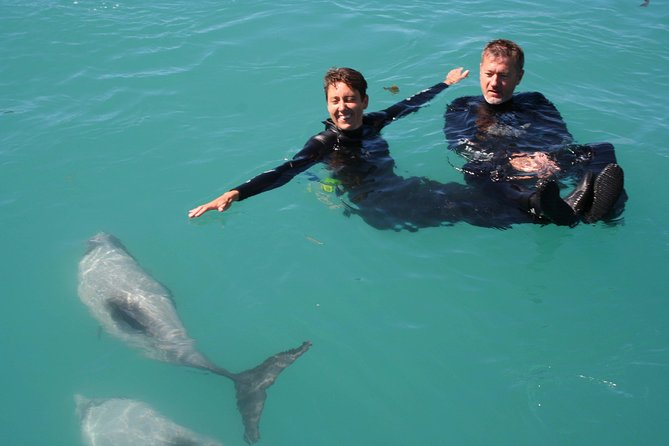
Third, you enter the water for the swim. The tour notes the waters you operate in are typically 15 to 30 metres deep, so this is not a shallow “wade in and play” situation. Even if you’re a confident swimmer, you’ll still feel the difference in open water movement and the drag of a wetsuit.
Most importantly, the dolphin swim depends on the dolphins. The crew aims for the right conditions and the right dolphin behavior. If the dolphins aren’t in a cooperative zone, you may watch from the boat instead.
Other dolphin trips near Akaroa
What You Actually Get in the Water (Wetsuit, Mask, and Time)
You’re provided a wetsuit and a mask, which makes a big difference for value. It also makes the experience more accessible, because you don’t have to guess what thickness you need for Akaroa water temperatures or scramble for snorkeling gear.
You should expect to spend time in the water when conditions and dolphin behavior line up. One featured account described around 45 minutes in the water on a good day, which suggests there is real time to experience the dolphins, not a quick “in and out” photo op.
Still, here’s the practical consideration: you must be able to swim 50 metres unaided and be confident swimming in open sea conditions. The tour also requests moderate physical fitness. If you’re relying on assistance, this is probably not the right fit.
And because there are no life jackets, you’ll want to judge your comfort level honestly. If you feel more secure with flotation support, the tour itself directs you to the Akaroa Harbour Nature Cruise instead.
Safety and Ethics: Why the Guide’s Role Matters
This is one of those tours where “rules” aren’t busywork. They affect what the dolphins choose to do next.
The tour highlights that your guide prioritizes wildlife respect and conservation. That shows up in the way the crew decides whether swimmers should enter or how close people should get. In real-world dolphin encounters, you may see dolphins approach, circle, and show interest, but you may also see them feeding or moving through the area. When dolphins are feeding, the tour approach is meant to avoid disturbance.
You’ll also get personalized attention because the group is capped at 12 swimmers. That headcount limit does two things for you: it reduces physical crowding and it makes it easier for the crew to spot who needs help, who needs a reset, and who is ready for the next instruction.
Wildlife Bonuses: Fur Seals, Penguins, and How to Read the Day
The official promise is about dolphins, and the tour also points to other wildlife such as NZ fur seals. That makes sense because Akaroa Harbour and the surrounding waters can produce multiple sightings in one outing.
In practice, you should treat non-dolphin sightings as a bonus, not a requirement. Dolphins are the main event. When people do see additional wildlife, it often makes the day feel fuller because you’re not just waiting for a single animal to appear.
My advice for your mindset: plan as if dolphins might be shy that day, then stay open to extras. If you end up watching fur seals while the crew positions the boat for a dolphin sighting, it feels like part of the job the guides do, not like you’re stuck with nothing.
Gear Comfort and Seasickness Reality Check
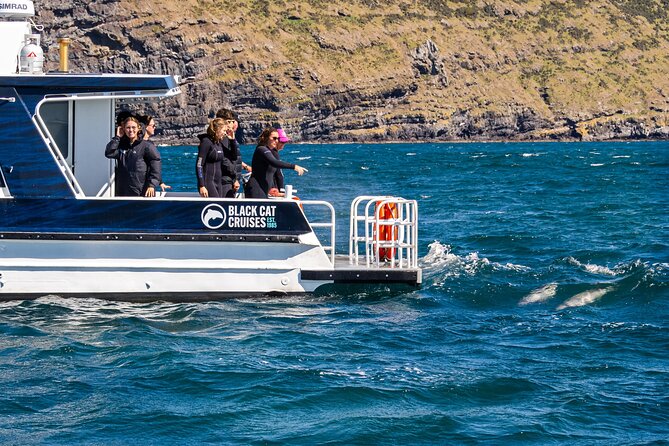
A wetsuit is provided, which means warmth is handled for you to a degree. But the bulk of a wetsuit can still change how you move and float. If you’re not used to open water swimming, that choppiness can feel like a lot.
One very practical tip from people who’ve gone: seasickness prevention helps. The tour notes it’s nature-based and weather and sea conditions matter, and if you’re prone to motion sickness, take something ahead of time as advised for your needs. You may still feel movement even in a sheltered harbor, especially if conditions build outside the calmest pockets.
Also remember the waters can be choppy on some days. Some accounts describe rougher seas affecting who felt comfortable enough to enter. That’s why it’s good to have the option to stay dry and still enjoy the wildlife cruise portion.
If you’re worried, ask yourself two questions before booking:
- Are you comfortable in open water with an active boat around?
- Are you confident using your body to adjust buoyancy and balance in a wetsuit?
Who This Tour Fits Best (and Who Might Choose Another Option)
This swim tour is best for people who meet the swim standard and are comfortable with open sea conditions. It’s also a good fit if you like structure, meaning you want a skipper and nature guide to guide your decisions, not a free-for-all.
Here’s who it suits particularly well:
- Strong swimmers who can handle open water and a wetsuit
- Wildlife-focused travelers who care about ethical interaction, not just selfies
- People who want a small group and more direct crew attention
It might not fit as well if:
- You require a life jacket (they are not permitted)
- You cannot swim 50 metres unaided
- You’re likely to panic in choppy water or dark, open conditions
- You have medical conditions that make the product not suitable, since all medical conditions need to be declared
Children and Age Rules
If you’re traveling with kids, this tour has clear age limits. Children who swim with dolphins must be at least 8 years old. Children 8 to 12 must be accompanied by an adult who is also swimming. Teen spectators 13 to 17 must be accompanied by an adult spectator. Spectators can be as young as 4 years old, depending on the role.
Price and Value: What You’re Really Paying For
At $128.06 per person, this is not a budget “tour bus” activity. You’re paying for the stuff that costs real money and effort: a purpose-built swim boat, a skipper, a nature guide, small-group capacity, and provided gear like wetsuits and masks.
You’re also paying for the emotional payoff of a Hector’s dolphin encounter that feels close and real, not staged. When a tour is small group with active guidance, it reduces wasted time. It also improves your odds of having a meaningful experience, because the crew can manage safety and positioning with fewer people in the mix.
The other value piece is what happens when dolphins do not cooperate. The tour states that if you don’t see Hector’s dolphins, you receive a complimentary Akaroa Nature Cruise ticket to try again. That’s a practical safety net in a wildlife situation where sightings are never fully under human control.
Still, remember the swim itself is not guaranteed and no refunds are given for unsuccessful swims. In other words, this is best approached as a wildlife experience with a strong chance of an incredible swim, not as a guaranteed ticket to being in the water.
Weather, Cancellations, and When the Sea Changes the Plan
This tour requires good weather. If it’s canceled due to poor weather, you’ll be offered another date or a full refund. That’s important because dolphin swims depend on conditions and safety.
Also, even when the tour runs, sea state can influence whether swimmers get in comfortably and safely. If the water is rougher than expected, some people may end up staying aboard. The tour is clear that no one is owed a swim if conditions or dolphin behavior do not support it.
Should You Book the Hector’s Dolphin Swim in Akaroa?
Book it if you want one of the rarest wildlife experiences in New Zealand and you’re ready to follow safety guidance in real open water conditions. The small group limit, the included wetsuit and mask, and the skipper plus nature guide setup are exactly the kind of details that make this feel like a well-run wildlife encounter.
Skip or switch to a non-swim cruise if you are not a confident open-water swimmer, you can’t meet the 50 metre unaided requirement, or you rely on life jackets. Also skip it if you know motion sickness will hit hard, because even with prevention, choppy conditions can still be uncomfortable.
If you’re somewhere in the middle, go in with the right expectations. Treat it as a dolphin-focused day where you’ll learn the rules, observe Hector’s dolphins up close, and then swim if the conditions line up.
Overall, this is a strong choice for animal lovers who prefer ethical, guided encounters in a small group, with a return option if Hector’s dolphins do not show.
FAQ
Where does the dolphin swim take place?
The tour starts and ends at Akaroa, Main Wharf in Akaroa, Christchurch 7520, New Zealand.
How long is the experience?
The duration is about 3 hours 30 minutes.
What’s included in the price?
The tour includes a wetsuit and mask, plus a hot shower and hot drink back at the wharf. A skipper and nature guide are also part of the experience.
How many people are on each tour?
The experience has a maximum of 12 travelers.
Is the dolphin swim guaranteed?
No. This is a nature-based experience with wild dolphins in their natural environment, so swims are not guaranteed and no refunds are given for unsuccessful swims.
If I don’t see dolphins, what happens?
If you don’t see Hector’s dolphins, you’ll receive a complimentary Akaroa Nature Cruise ticket to come another time.
What are the swimming requirements?
All swimmers must be able to swim a minimum of 50 metres unaided and be confident swimming in open sea conditions. The water is operated in depths of 15 to 30 metres.
What are the age requirements for children?
Children who swim with dolphins must be at least 8 years old. Children aged 8 to 12 must be accompanied by an adult swimmer. Children aged 13 to 17 must be accompanied by an adult spectator. Minimum spectator age is 4.
What is the cancellation policy?
Free cancellation is available up to 24 hours in advance for a full refund. If you cancel less than 24 hours before the start time, the amount paid is not refunded. If the experience is canceled due to poor weather, you’ll be offered a different date or a full refund.
Dolphin Trips Near Akaroa
Everything Else We Wrote Up in Akaroa

Banks Peninsula, Continued
Just added to our Akaroa notes
- Akaroa Explorer: Guided Electric Mountain Bike Tour★ 4.7 · 9 reviews
- Akaroa Nature and History Private Tour – The 7th Generation★ 5.0 · 10 reviews
- Akaroa Shore Excursion: Akaroa Harbour and Sheep Farm Local Tour★ 4.5 · 11 reviews
- Akaroa Shore Excursion: Banks Peninsula, Christchurch City and Giants House Tour★ 3.5 · 14 reviews
- Akaroa: Stargazing Tour with 2 Telescopes & Souvenir Photos★ 5.0 · 17 reviews
- Akaroa Shore Excursion: Akaroa Harbour and Giants House Local Tour★ 4.5 · 19 reviews
Akaroa and Banks Peninsula, compared.
 ★ 5.0Akaroa Dolphins ~ Harbour Nature CruiseFrom $802,143 reviews
 ★ 4.9Akaroa: Dolphin Nature CruiseFrom $77440 reviews
 ★ 5.0Akaroa Harbour Nature CruiseFrom $77332 reviews
 ★ 4.5Akaroa Full Day Sightseeing Tour from ChristchurchFrom $167256 reviews
 ★ 4.7Akaroa Harbour 2-Hour Dolphin Nature CruiseFrom $71235 reviews
 ★ 4.0Akaroa Shore Excursion: Banks Peninsula and Christchurch City Sights TourFrom $89228 reviews
 ★ 5.0Shore Excursion Guided Sea Kayaking through Akaroa Marine ReserveFrom $83160 reviews
 ★ 4.0Akaroa Shore Excursion: Banks Peninsula, Christchurch City Tour and the International Antarctic CentreFrom $124135 reviews
Browse the lists this tour appears in