
REVIEW · WHITE WATER RAFTING
Rangitaiki Rafting Grade 3-4
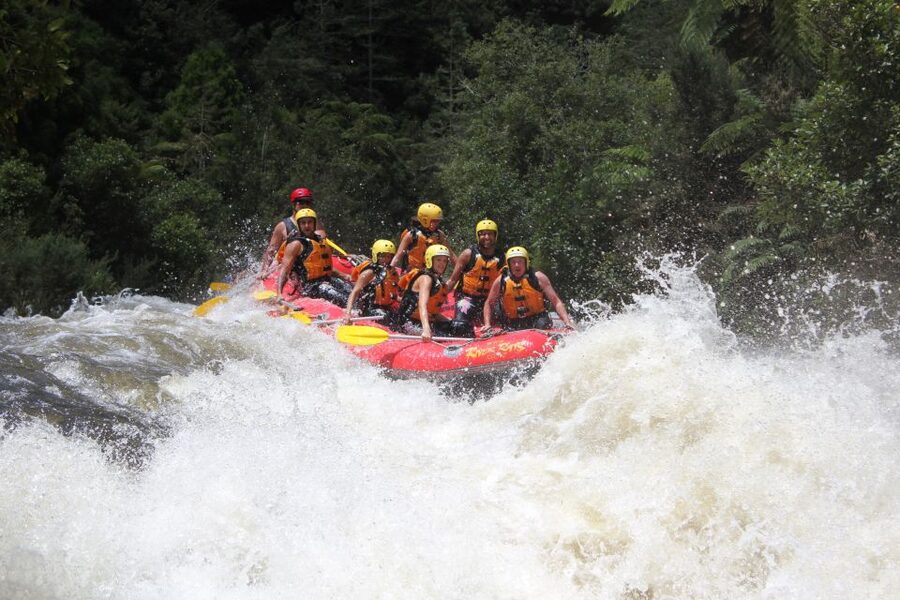
Whitewater and forest come together here. I love the push of Geoff’s Joy style rapids and the way you float past native and plantation forest in one river valley.
This run is a Grade 3-4 mix, with the main action feeling approachable but still punchy.
One thing to consider: if the river is running low, you may bump rocky bits more often than you expect, and the ride can feel more about getting unstuck than pure speed.
In This Review
- Key Things I’d Bet You’ll Notice
- Rangitaiki River Grade 3-4: What Makes It Feel Worth 6 Hours
- Transfers and Timing From Rotorua: Don’t Show Up Late
- Training Before Whitewater: The 15 to 20 Minutes That Makes It Easier
- The 14 km Run: How the Day Flows From Launch to Finish
- Geoff’s Joy and the One Grade 4 Moment: What to Expect When It Gets Serious
- Scenery Along the River Valley: Forest Views That Actually Change
- The Mid-Trip 15 Minutes: Flat Water Is Part of the Design
- Lunch and the Boat Team: Why This Works Even for First-Timers
- Price and Value: Is $117 Reasonable for a Grade 3-4 Half-Day?
- Who Should Book It, and Who Should Skip It
- What to Bring: Swimwear and a Towel Actually Matter
- Booking Tips From What Works on the Day
- Should You Book Rangitaiki Rafting Grade 3-4?
- FAQ
- How much does Rangitaiki Rafting Grade 3-4 cost?
- How long is the full experience?
- How long are you actually on the water?
- What is the rafting grade?
- Where is pickup from and what time does it run from Rotorua?
- What time does the rafting start?
- Is training included before rafting?
- What should I bring?
- What are the minimum age and weight limits?
- Who is this rafting trip not suitable for?
Key Things I’d Bet You’ll Notice
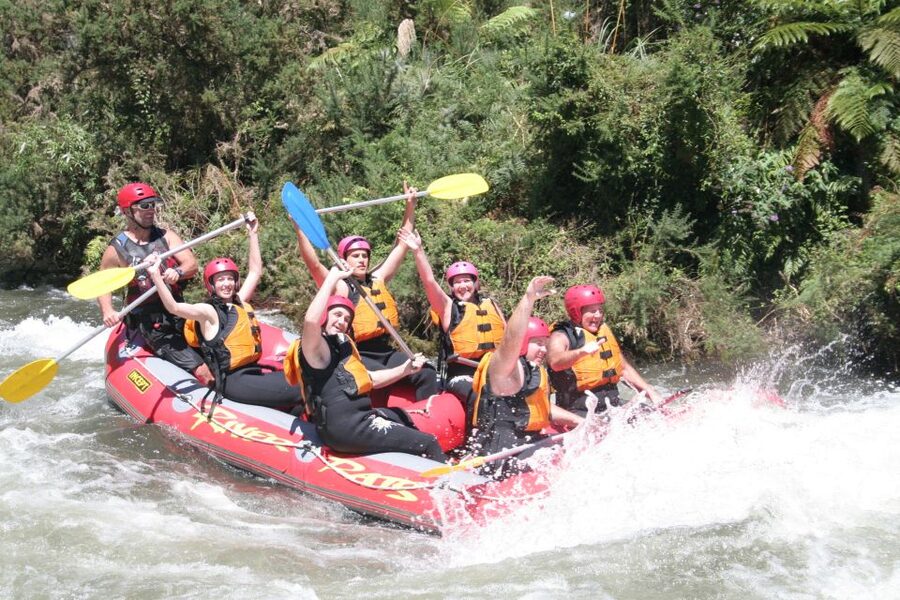
- Mostly Grade 3, with one Grade 4 rapid for that extra adrenaline spike.
- 15 to 20 minutes of training on flat water before you hit the rapids.
- 14 km total on the river, with about 1 hour 45 minutes actually on the water.
- A mid-trip 15 minute flat-water breather (photos, chatting, and optional swimming if you want).
- Native forest plus plantation trees along the same scenery-rich run.
- Light lunch and full gear included, so you are not scrambling for supplies.
More whitewater, grade by grade
- Rotorua Rafting: Kaituna River White Water Rafting & Free Sauna
★ 5.0 · 1,952 reviews - Rotorua Rafting: Kaituna River White Water Experience
★ 4.9 · 840 reviews - Rafting Rotorua Kaituna White Water Rafting | Kaitiaki Adventures
★ 5.0 · 759 reviews - Kaituna River White Water Rafting from Rotorua
★ 5.0 · 388 reviews
Rangitaiki River Grade 3-4: What Makes It Feel Worth 6 Hours
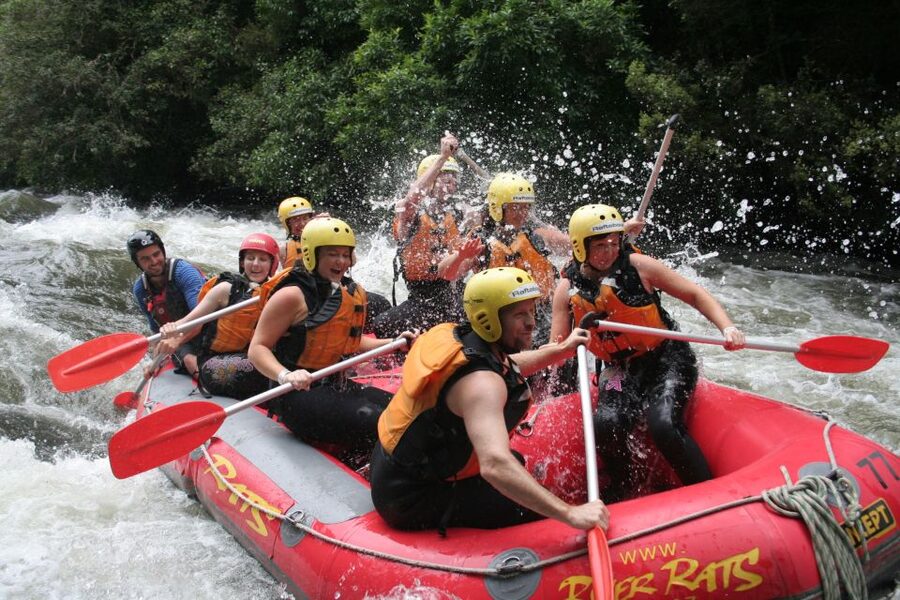
Rangitaiki rafting is the kind of Rotorua adventure that still leaves you time to enjoy the rest of your day. You are out for about 6 hours total, including transfers, but the heart of it is 1 hour 45 minutes on the river. That timing is a sweet spot for first-timers and active travelers who want real whitewater without turning the day into an all-day ordeal.
What I like is the mix of “work as a team” and “soak up scenery.” This is not just about surviving rapids. You are paddling, listening, and adjusting as you go, and you get a proper break halfway through. And the river setting does a lot of heavy lifting too. You move through a valley where native and plantation forest both show up, so the views keep shifting instead of feeling one-note.
The vibe also stays grounded. About 80% of people are first-time rafters, which tells me the outfitter expects newcomers. That usually means clear coaching and a focus on safety that does not slow the fun too much.
Transfers and Timing From Rotorua: Don’t Show Up Late
This is easiest if you are staying in central Rotorua. You can get complimentary transfers from central accommodation, with pick-up timed so you leave about 10:30 am and arrive near the base with the 11:30 am start time.
The round-trip travel part matters because rafting days can get tight if you try to tack on other plans. Plan on roughly 45 minutes travel time from Rotorua. If you are starting from Taupo instead, it is around 1 hour travel time. The activity itself is 6 hours, so give yourself some slack around the edges.
Also, bring the right mindset for a half-day like this. You will be in wet gear, you will likely get splashed, and you will want to dry off after. If you show up thinking it is like a casual walk, you will miss the point. This is active tourism, with real teamwork.
Training Before Whitewater: The 15 to 20 Minutes That Makes It Easier
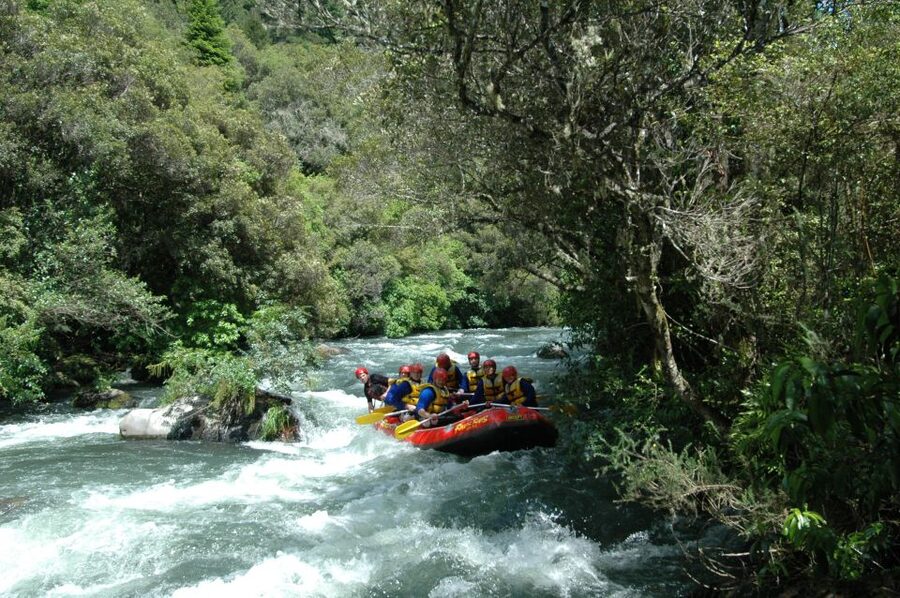
The confidence boost starts early. You get 15 to 20 minutes of training before launching into full rapids. The coaching focuses on the paddle and safety commands you need, and they practice first on flat water so you can get your bearings fast.
I really value this part because Grade 3-4 is not “sit back and hold on.” Even when rapids look intense, your outcome depends a lot on what you do in the boat. Knowing the commands ahead of time means you can stop guessing and start reacting.
During training, you learn what the guide expects from the group. Once you are in the river, you can focus on the moment instead of the mechanics. It is also a comfort factor for first-timers, since most people are learning how to paddle together at the exact time they feel a little nervous. That is a normal human thing.
The 14 km Run: How the Day Flows From Launch to Finish
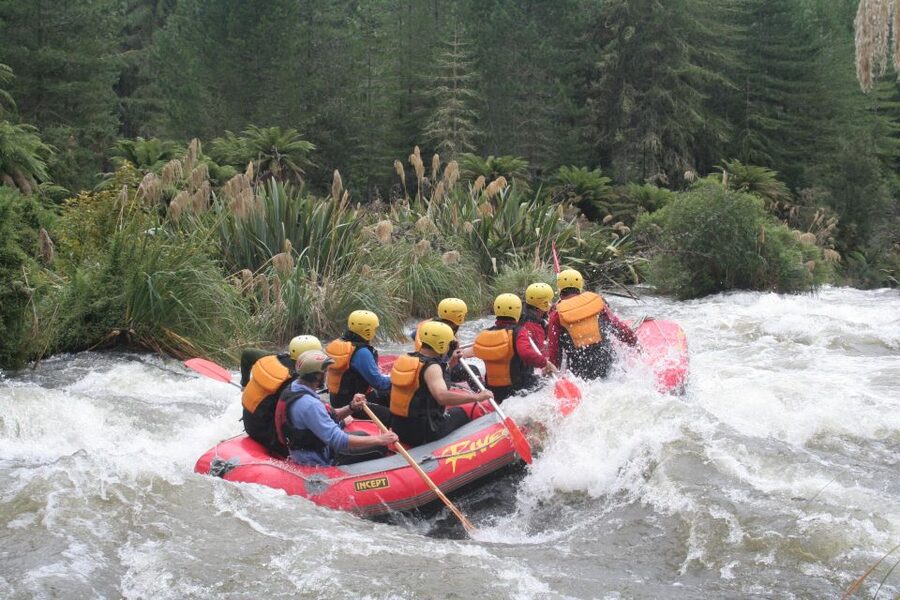
The core experience is 14 kilometers of river riding with mostly Grade 3 rapids and one Grade 4 stretch. That mix is important. Grade 3 gives you plenty of bouncy excitement and a clear sense of speed and force. Grade 4 is the “okay, now we mean it” moment, but it is only one part of the overall descent.
You should plan for a steady, active sequence rather than constant chaos. After the initial push into the rapids, the river alternates between fun, more technical sections where teamwork matters. There is a rhythm to it: paddle, react, recover, paddle again.
About halfway through, you get a 15 minute flat-water break. This is not just a pause. It is a chance to breathe, chat with the guide and the other rafters, and reset mentally. If you feel like it, you can even take a swim during that downtime.
When you finish, you will feel that mix of exhausted and proud. That is the sweet reward for a run like this: you get real effort, but you also get support and a managed pace.
Geoff’s Joy and the One Grade 4 Moment: What to Expect When It Gets Serious
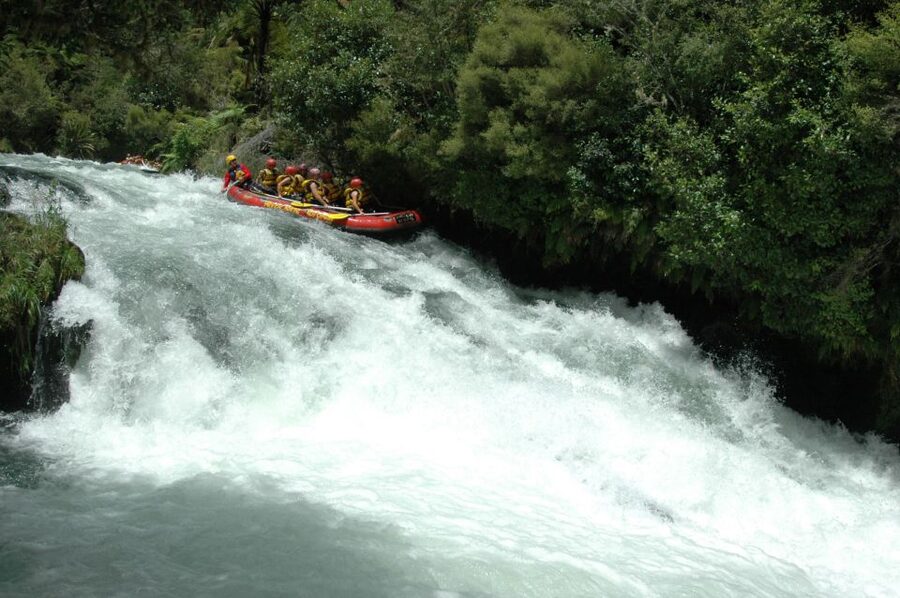
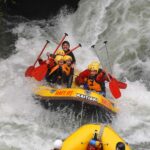
One rapid stretch is tied to a named excitement zone: the torrent nicknamed Geoff’s Joy. You do not need to hunt for it in the river, the guides steer the energy and the pacing so you know when things are starting to ramp up.
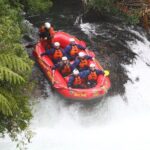
Here is the practical reality: most of the descent is Grade 3, which usually means rapids with clear waves and real movement, but not continuous “white-knuckle all the way” terror. Then one part steps up to Grade 4, and that is where you will notice more force and less room for individual mistakes.
The biggest lever you control during both grades is teamwork. If you get your paddling timing aligned, the boat tends to feel more stable through the chaos. If you fall behind, you might feel every wobble more than you need to.
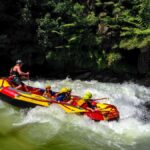
Also, water levels change how rapids feel. When the river is lower, you can get more contact with rocky areas. In that case, it can feel like the guide is doing extra work to keep everyone safe and moving. The trade-off is that you still get the whitewater thrill, just with slightly more friction.
Scenery Along the River Valley: Forest Views That Actually Change
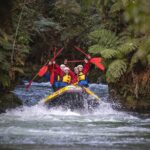
A lot of rafting trips talk up the views. This one earns it. You ride through a river valley where you can spot both native forest and plantation forest. That variety makes the scenery more interesting than a single tree-line wall the whole way.
In practical terms, scenery matters because it gives your brain a place to go when you are not paddling. Grade 3-4 gets physical. After a few minutes of active work, your eyes appreciate a change in visual focus.
You also get brief moments during the rapids where the angle opens up and you can look ahead. The river corridor is what makes the whole trip feel like more than a stunt. You are not just chasing adrenaline. You are moving through a living environment with different vegetation types showing how the land has been shaped.
The Mid-Trip 15 Minutes: Flat Water Is Part of the Design
That 15 minute flat-water break halfway through is one of the smartest parts of the trip. You get a chance to relax, dry your face a bit, and listen without wind screaming into your ears. You can chat with fellow rafters, and you can ask the guide questions while everyone regains their energy.
If you want, you can swim during this window. That choice is yours, but it is there because the break is real. It is not an empty pause where everyone just waits for the next shove.
I like breaks like this because they change your emotional arc. Instead of feeling like you are always in one long push of intensity, you get a reset. That makes the Grade 4 moment feel more manageable too, because you are not already burnt out when it shows up.
Lunch and the Boat Team: Why This Works Even for First-Timers
This trip includes a light lunch, and that matters more than people think. Rafting uses energy, and a half-day trip can leave you hungry if you only eat a snack before you go. Having food provided also keeps the mood calmer. Nobody is trying to figure out where to grab something mid-activity.
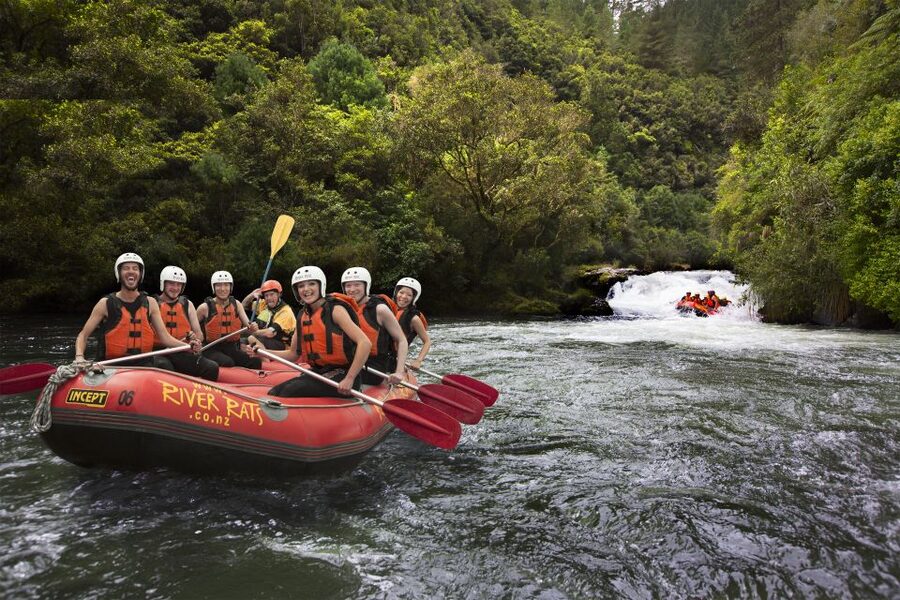
The other big piece is team dynamics. The rapids require good coordination, and the guide expects the group to paddle as one unit. That is why training is paired with time on flat water first. You learn the commands, then you practice them right away in the environment that matters.
The guide team also makes a difference. I like that the operation runs with experienced instructors, and you can feel that from how everyone is handled before launch. In the field, names that came up include Jason and Brony, and the common thread is professionalism and confidence-building coaching.
Price and Value: Is $117 Reasonable for a Grade 3-4 Half-Day?
At $117 per person, this is not a “cheap thrill,” but it also does not feel overpriced for what you get. You are paying for full safety support, specialist equipment, instruction, and the time of a professional guide team.
Look at the bundle:
- All required specialist equipment is included.
- Full training and safety coaching are included.
- Light lunch is included.
- Transfers from central Rotorua accommodation are included.
- You get a legitimate Grade 3-4 experience with 14 km on the river.
When you factor in equipment and transfers, it is easier to see value than if you only think about the rafting itself. You are not renting gear separately or arranging your own transport on a tight schedule. For many visitors, that convenience is half the benefit.
If you are comparing this to other Rotorua activities, the key question is not just price. It is whether you want something active that still has scenery and a structured break.
Who Should Book It, and Who Should Skip It
Rangitaiki rafting is best for people who are physically active and comfortable working as a team. It also fits first-timers well because the training is built in, and the trip design assumes many newcomers.
Here are the constraints you should take seriously:
- Minimum age is 10 years old.
- For children under 13: they must be accompanied by an adult, they need to be able to walk about 150 meters near the beginning of the trip, and water levels must be below 7.0 on the gauge.
- Weight limits are 40 kg minimum and 125 kg maximum (you might see this also described as 275 lbs).
- It is not suitable for pregnant women.
- It is not suitable for people with mobility impairments.
If any of those apply to you, do not try to squeeze into it. Rafting is inherently dynamic, and the safety design assumes certain movement and balance.
If you are unsure but fit the general range, the other question is personal. Do you like getting splashed, paddling in sync, and taking direction? If yes, you’ll probably love this style of whitewater.
What to Bring: Swimwear and a Towel Actually Matter
Keep it simple. You need:
- Swimwear
- Towel
Towel hire is available for a small charge, but you must request it in advance. That is an easy thing to forget, so if you are traveling light, plan ahead.
You will also want your clothing choices to match the day. Bring gear that you can get wet and dry with. Think practical, not precious.
Booking Tips From What Works on the Day
A few small decisions make a big difference:
- Aim to arrive with enough time to get fitted and coached without stress.
- Wear swimwear you can paddle in comfortably.
- Bring your own towel if you do not want to pay for hire.
- If you want the rapids to feel extra lively, remember that water levels affect how the descent feels, including the chance of hitting rocky sections.
One more practical tip: if you are sensitive to noise or motion, be ready for wind and splashes. That is part of the package with a Grade 3-4 river.
Should You Book Rangitaiki Rafting Grade 3-4?
I think you should book if you want a real whitewater hit that still feels guided and approachable. The combination of mostly Grade 3, one Grade 4 moment, and a built-in training period makes it a strong pick for active travelers and first-time rafters. Add the native plus plantation forest scenery, plus lunch and transfers, and the value starts to make sense quickly.
I would not book if you fall into the clear non-suitable categories, or if you know you hate being in wet gear while following a team-based activity. And if you are chasing the smoothest, most powerful rapids possible, keep water levels in mind, since low water can mean more contact with rocks.
FAQ
How much does Rangitaiki Rafting Grade 3-4 cost?
It costs $117 per person.
How long is the full experience?
The total duration is 6 hours.
How long are you actually on the water?
You will spend about 1 hour 45 minutes on the river.
What is the rafting grade?
The trip is mostly Grade 3 with one Grade 4 rapid.
Where is pickup from and what time does it run from Rotorua?
Pickup from central Rotorua accommodation is possible. The leaving time is 10:30 am.
What time does the rafting start?
The start time at the base is 11:30 am.
Is training included before rafting?
Yes. You receive about 15 to 20 minutes of training, starting with flat-water practice before going into the rapids.
What should I bring?
Bring swimwear and a towel. Towel hire may be available for a small charge if requested in advance.
What are the minimum age and weight limits?
The minimum age is 10. The recommended minimum weight limit is 40 kilograms and the maximum is 125 kilograms.
Who is this rafting trip not suitable for?
It is not suitable for pregnant women, people with mobility impairments, or anyone over 125 kilograms.
Everything Else We Wrote Up in Rotorua

Whitewater, Grade by Grade
Just added to our Rotorua notes
- Rotorua: Waimangu Valley Walk and Steaming Cliffs Kayak Tour★ 4.7 · 6 reviews
- Rotorua: Lake View Private Pools Experience★ 4.3 · 6 reviews
- Rotorua: Floatplane Flight with Orakei Korako Landing★ 5.0 · 6 reviews
- Rotorua: Evening Starlight Gourmet Kayak Tour with dinner★ 5.0 · 6 reviews
- Rangitaiki Rafting Grade 2★ 4.8 · 6 reviews
- One Day Birding Adventure★ 5.0 · 7 reviews
White Water Rafting, compared.
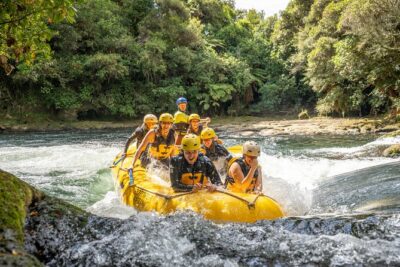 ★ 5.0Rotorua Rafting: Kaituna River White Water Rafting & Free SaunaFrom $831,952 reviews
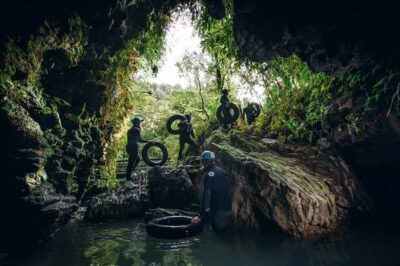 ★ 4.9Waitomo Caves: Labyrinth Black Water Rafting ExperienceFrom $1151,673 reviews
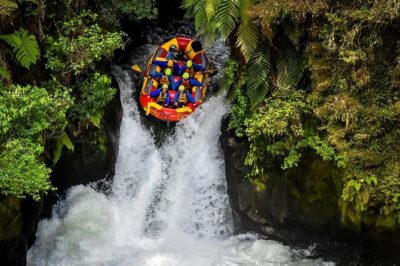 ★ 5.0White Water Rafting – Kaituna Cascades, The OriginalsFrom $831,274 reviews
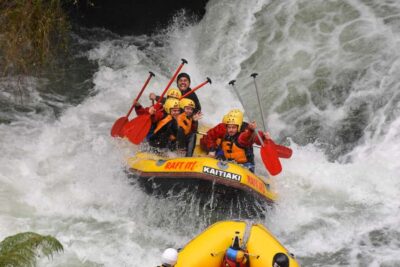 ★ 4.9Rotorua Rafting: Kaituna River White Water ExperienceFrom $49840 reviews
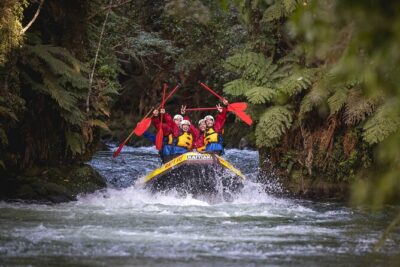 ★ 5.0Rafting Rotorua Kaituna White Water Rafting | Kaitiaki AdventuresFrom $83759 reviews
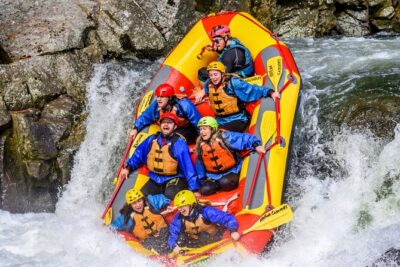 ★ 5.0Kaituna Cascades – Grade 5 Wairoa River near TaurangaFrom $117437 reviews
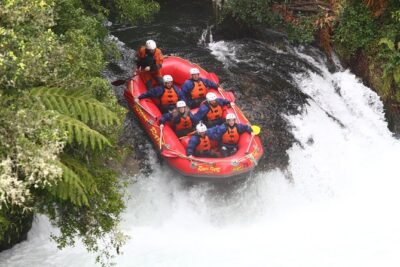 ★ 5.0Kaituna River White Water Rafting from RotoruaFrom $84388 reviews
 ★ 5.0Black Water Rafting Experience Waitomo Caves TourFrom $119362 reviews
Browse the lists this tour appears in