
REVIEW · WANAKA AND CARDRONA
Packraft Wanaka
Cold water, big views, real paddling. This Wanaka packrafting trip is built for guided adventure on the Matukituki River plus a small-group setup that helps you feel confident before you hit eddies and white-water. I also like that you get the key comforts handled for you, including all gear, snacks, a picnic lunch, and photos, so you can focus on the river. The one thing to weigh up is that you must be able to swim, and you’ll be in wet conditions even on a good day.
Guides can make or break an action outing, and this one has a track record of strong river leadership and trip commentary. In past groups, drivers and guides such as Sue (driver) and Kayleigh (river guide) have been singled out for running a smooth, well planned experience.
In This Review
- Key takeaways before you go
- Packrafting the Matukituki: what you’re really signing up for
- Getting to the mountains from 99 Ardmore Street
- Wishbone Falls walk: a calm start before the wetsuits
- Paddling basics, then eddies and white-water
- Glaciers, beech forest, and braided riverbed wildlife views
- What’s included in the $272.43 price, and why value is real here
- Who should book Packraft Wanaka, and who might think twice
- Should you book this packraft trip with Wanaka River Journeys?
- FAQ
- Where do you start, and what river do you packraft on?
- How long is the Packraft Wanaka experience?
- Do I need to be able to swim?
- Is there a minimum age or rule for children?
- What’s included in the tour?
- How many people are in the group?
- What if the weather is bad or I need to cancel?
Key takeaways before you go
- Matukituki River focus: Real packrafting on a braided river with eddies and wave trains, not a token paddle.
- Mt. Aspiring scenery, on the water: Glaciers, ancient beech forest, and braided riverbed wildlife views from river level.
- Wishbone Falls warm-up: You start with a walk to a waterfall before you change into wetsuits and launch.
- Small group size: Maximum 14 people means you get more attention during safety checks and paddling basics.
- All the essentials included: Packrafts and gear, snacks, picnic lunch, photos, plus return hotel transfers.
Wanaka and the Cardrona valley, continued
- Wildwire Wanaka- Level 2 (4 Hours)
★ 5.0 · 467 reviews - Bike the Wanaka and Hawea Trails
★ 5.0 · 346 reviews - Lake Wanaka Happy Hour Cruise
★ 4.6 · 313 reviews - Small Group Jet Boat Adventure on the Clutha River from Wanaka
★ 5.0 · 302 reviews
Packrafting the Matukituki: what you’re really signing up for
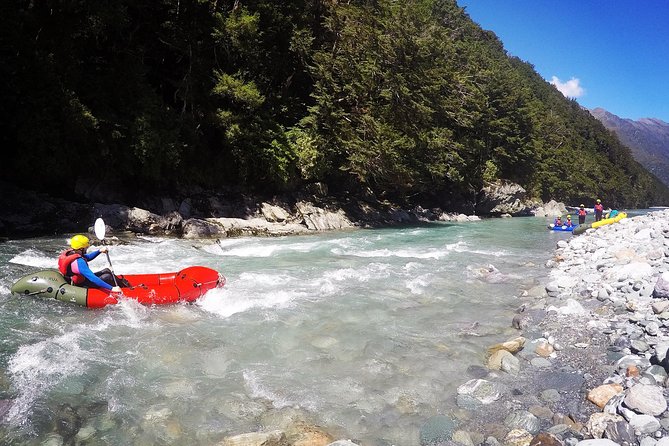
This is a full day outside Wanaka built around one main idea: you want to be in a light, stable packraft on a river that actually delivers. You’ll ride eddies and wave trains and navigate sections of white-water, with instruction happening first so you know how to control your raft before things get lively.
The Matukituki River sits in Mt. Aspiring National Park country, so you get mountain views that feel serious. It’s not just scenery from the roadside. You’ll see glaciers and ancient beech forest along the route, plus wildlife connected to a braided riverbed. That combination is why packrafting works here so well.
Be honest with yourself about the main requirement: you must be able to swim. If you can’t, this isn’t the day to “try it anyway.” Cold water and wet gear are part of the deal, even though you’re in a guided, safety-minded setup.
Getting to the mountains from 99 Ardmore Street
Your morning starts in Wanaka at 99 Ardmore Street, with a start time of 8:15 am. You’ll be picked up and brought through the early run through of trip details and risk disclosure before you move toward the park area. That early briefing matters, because packrafting is physical, and river rules only work if everyone understands them from the start.
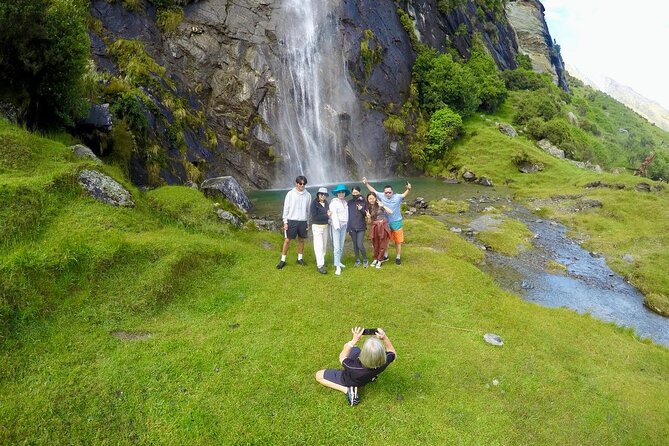
You’ll then head into Mt. Aspiring National Park by shuttle. There’s even a stop on the way for a short walk to Wishbone Falls, so you don’t spend the entire day driving and suiting up. This pacing is practical: a bit of walking before wetsuits makes the day feel like a journey, not just a gear change and a paddle.
The group size is also capped at 14 travelers, which is a sweet spot for an active outing. With a smaller group, guides can spot who needs extra help with paddling posture and raft control.
Wishbone Falls walk: a calm start before the wetsuits
One of the best things about this trip is how it breaks the day into two moods. First you take a shuttle deeper into the mountains and stop for a short walk to Wishbone Falls. Even though it’s not a long hike, it’s enough to stretch your legs and reset your brain before the river work.
After a break, you’re straight into wetsuits and ready for the packrafting portion. That timing is key. You get a visual reward from the waterfall, then you shift gears quickly so you’re not standing around too long in the lead-up.
The tradeoff is that the day is structured for momentum. If you want a slow, wander-everywhere kind of outing, you might find the schedule a bit full. For most active travelers, that’s a positive: you keep moving, and you don’t lose the day to delays.
Paddling basics, then eddies and white-water
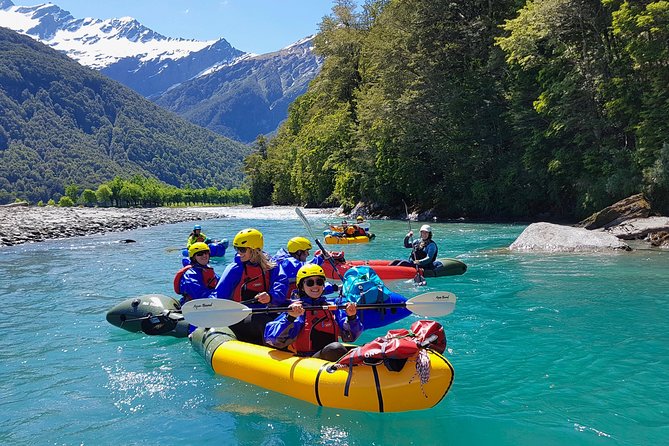
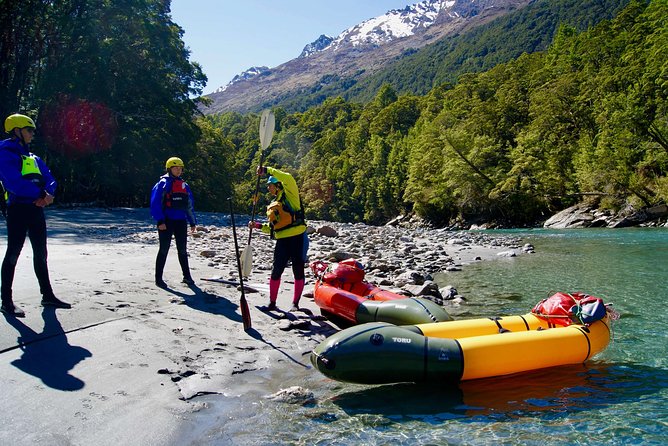
Before you start covering distance on the river, you’ll learn the basics of paddling. This is one of those “it sounds simple until you’re on water” skills, and getting it taught early pays off later. You’ll be in two-person, lightweight, stable rafts, which are designed to be easier to manage than you might expect for white-water country.
When the river section opens up, the fun becomes about reading the water. You’ll ride eddies and wave trains, which means you’re not just floating downstream. You’re learning how to position the raft, how to work with the current instead of fighting it blindly, and how to stay coordinated with your partner.
This is also where the guide attention matters most. In a bigger crowd, instruction can turn generic. In a group of up to 14, you’re more likely to get specific pointers for your stance, stroke rhythm, and where to aim the raft as you approach rougher water.
You should also expect that the day asks for moderate physical effort. You’re not doing a grind hike, but you are suiting up, stepping in and out of gear, and paddling for a long stretch.
Glaciers, beech forest, and braided riverbed wildlife views
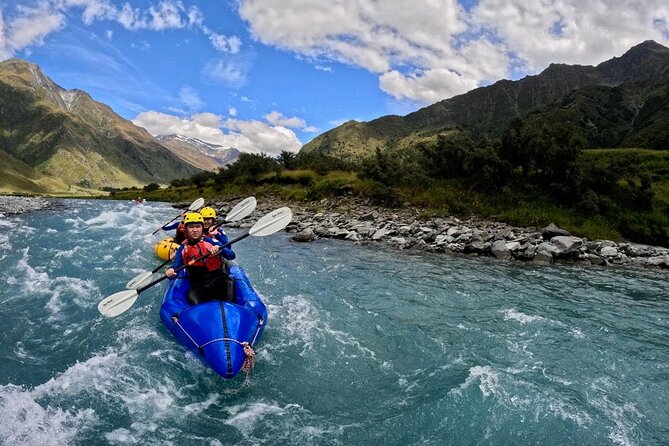
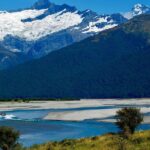
The highlight you’ll remember later is that the scenery is not above you. It’s around you, and you’re at river level. As you paddle the Matukituki, you’ll see glaciers, ancient beech forest, and the kind of braided river scenery that creates constantly changing channels.
Those braided sections are part of why eddies and wave trains are possible. They also mean you may experience shifts in water texture and flow. That’s not a problem if you’re listening to the guide and using the paddling basics you were taught.
Wildlife isn’t guaranteed on any tour, but this route runs through habitat where animals relate to the braided riverbed. Your best move is simple: keep your eyes open and don’t treat every moment like a photo break. When you miss something, you still get the big picture, which is the feel of being on a real river in national park terrain.
Another nice bonus is that you’re getting this from a packraft, not a larger craft. That smaller scale can make the day feel more personal, like you’re part of the river rather than watching it go by.
What’s included in the $272.43 price, and why value is real here
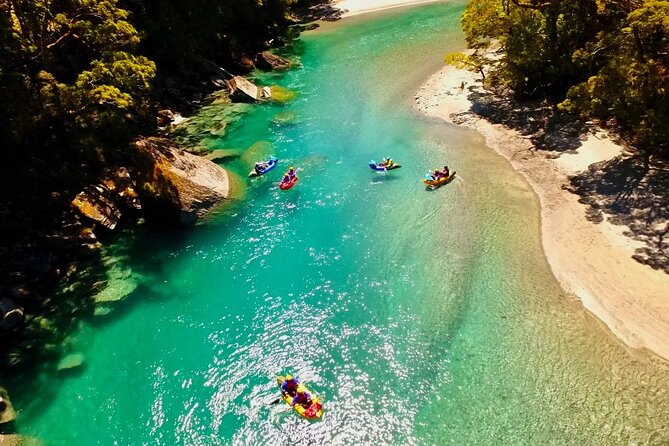
At $272.43 per person, this is priced like a guided adventure with equipment and transportation, not like a DIY activity. The value comes from what’s taken off your plate.
Here’s what you’re getting included: packraft and all gear, snacks, a picnic lunch, photos, and return hotel transfers. When you add up those pieces, the price starts to make sense. If you tried to piece this together on your own, you’d still be paying for transportation, safety gear, and someone to guide you through the river’s moving parts.
I also like that the day includes both the walk to Wishbone Falls and the packrafting on the Matukituki. You’re not paying for one narrow activity. You’re paying for a full Mt. Aspiring outing that mixes land views with water action.
One practical note: they ask for details before you go, including weight, height, shoe size, dietary requirements, and water confidence (high, med, low). That signals that the gear and the day planning are adjusted for you, not treated as one-size-fits-all.
If you’re the type who hates logistics, this kind of included-service adventure tends to feel like the easiest way to do something memorable in Wanaka without wasting your holiday time.
Who should book Packraft Wanaka, and who might think twice
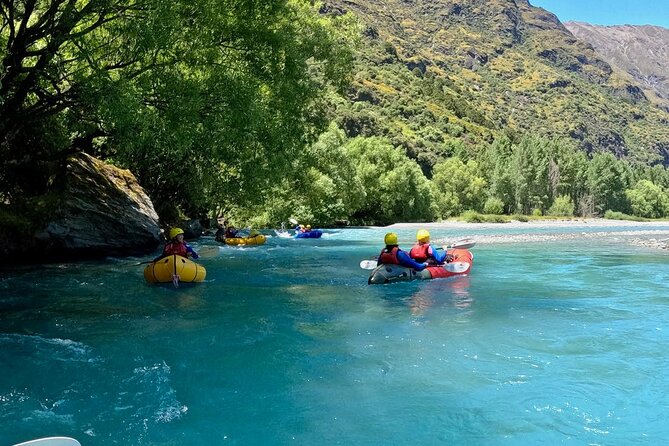
This experience is best for people who are comfortable with an active nature day and understand the core requirements. You’ll want moderate physical fitness, and you must be able to swim. The raft is stable, but you’re still on water in a river system that includes white-water elements.
You also need to be able to follow instructions and work as part of a small team, especially since you’ll be in two-person rafts. If you know you get anxious in moving water, consider your water confidence level honestly when you book. The trip asks for high, med, or low for a reason.
It can work for kids too, but with limits. Children aged 4 to 14 must be accompanied by an adult over 18. If you’re traveling as a family, this setup is worth considering, as long as everyone meets the swimming requirement and the adult can stay hands-on.
There’s also a gear consideration for larger guests. If you’re over 130 kg, it’s important to talk to the operator so you get the right size gear. That’s not a minor detail. Packrafts fit differently, and the right equipment is part of safety.
If you want a leisurely sightseeing day, you might find this too active. If you want a guided river adventure with instruction and included comfort, it’s a strong match.
Should you book this packraft trip with Wanaka River Journeys?
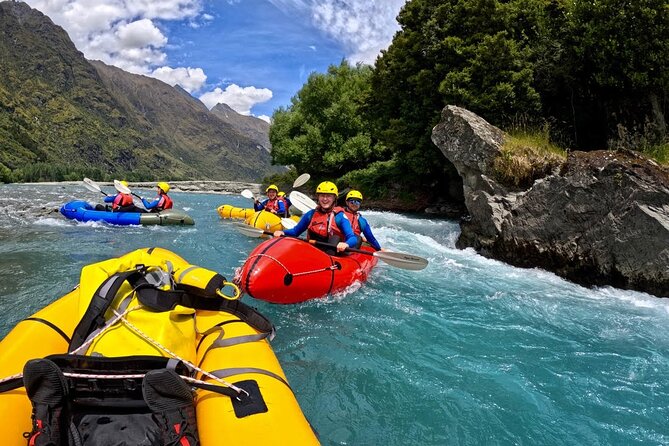
I’d book it if you want real river time, not a short novelty paddle, and you like the idea of learning packrafting basics before hitting eddies and wave trains. The small group cap and the included gear, lunch, snacks, photos, and hotel transfers make it an efficient day.
I’d think twice if swimming in cold or wet conditions is a dealbreaker for you. The requirement is clear, and the itinerary moves from a waterfall walk into wetsuits quickly.
If you’re deciding based on guide quality, the past feedback is encouraging. People have highlighted both the planning and the river leadership, with staff such as Sue and Kayleigh mentioned for excellent performance and commentary. In a day that depends on timing and calm instruction, that kind of track record matters.
FAQ
Where do you start, and what river do you packraft on?
The experience starts at 99 Ardmore Street, Wanaka (and ends back at that meeting point). The packrafting is on the Matukituki River, near Mt. Aspiring National Park.
How long is the Packraft Wanaka experience?
It runs for about 7 hours 15 minutes total, with the park and packrafting portion listed as about 5 hours.
Do I need to be able to swim?
Yes. Clients must be able to swim to participate.
Is there a minimum age or rule for children?
Yes. Children ages 4 to 14 must be accompanied by an adult over 18.
What’s included in the tour?
The tour includes return hotel transfers, all gear, a picnic lunch, snacks, and photos. You also get instruction on paddling basics.
How many people are in the group?
The tour has a maximum of 14 travelers.
What if the weather is bad or I need to cancel?
The experience requires good weather. If it’s canceled due to poor weather, you’ll be offered a different date or a full refund. You can cancel for a full refund up to 24 hours before the experience’s start time.
Everything Else We Wrote Up in Wanaka


Wanaka and the Cardrona Valley
Just added to our Wanaka notes
- Wanaka Easy Ebike Tour★ 5.0 · 7 reviews
- From Wanaka: Milford Sound Flight with Landing & Glaciers★ 4.4 · 7 reviews
- Rob Roy Glacier Guided Walk★ 5.0 · 8 reviews
- Wānaka: Scenic Helicopter Flight Wānaka Max★ 5.0 · 11 reviews
- Lake Wānaka: 3 hour Fishing Adventure by Boat★ 5.0 · 12 reviews
- 3 Hour in Wanaka Fishing Charters★ 5.0 · 14 reviews
Wanaka and Cardrona, compared.
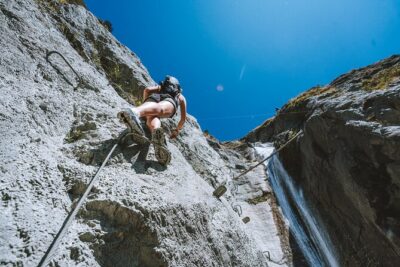 ★ 5.0Wildwire Wanaka- Level 2 (4 Hours)From $232467 reviews
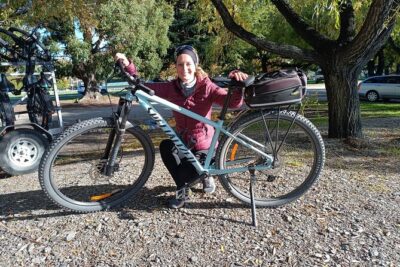 ★ 5.0Bike the Wanaka and Hawea TrailsFrom $80346 reviews
 ★ 4.6Lake Wanaka Happy Hour CruiseFrom $38313 reviews
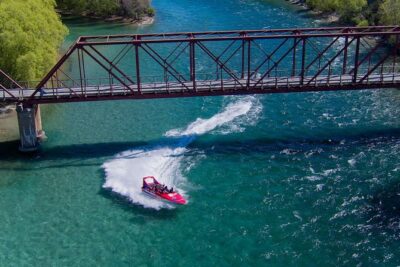 ★ 5.0Small Group Jet Boat Adventure on the Clutha River from WanakaFrom $98302 reviews
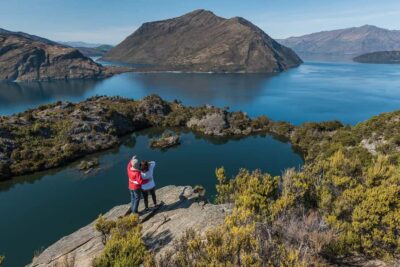 ★ 4.8Wanaka: Water Taxi & Mou Waho Island TourFrom $83299 reviews
 ★ 5.0Cardrona High Country Pub Trail Horse Riding Trek (Intermediate+)From $365261 reviews
 ★ 5.0Jet Boat and Wilderness Walk Tour from WanakaFrom $215259 reviews
 ★ 4.8Wanaka: Tandem Skydive ExperienceFrom $214252 reviews
Browse the lists this tour appears in