
REVIEW · AORAKI MOUNT COOK AND LAKE TEKAPO
Mount Cook: 3-Hour Tasman Glacier Helicopter Ride and Hike
Icewalking with a helicopter fly-by feels unreal. This 3-hour Tasman Glacier heli-hike pairs an up-close glacier walk with big aerial views of Aoraki/Mount Cook. You’re dropped on a remote glacier section, guided across ice formations, then flown back for a second scenic pass.
I love the plain, real reason to book this: you actually get up to 2 hours on the ice, not a quick touch-and-go. I also like that the experience is built around two helicopter flights, so you get the glacier from ground level and the mountain from above in the same outing. Small-group limits (up to 11) help keep it personal, and the guiding team has a strong safety-first vibe.
The main consideration is simple: it’s weather-dependent, and the itinerary only works if conditions allow the flights and glacier hike. Also, it’s not a cheap outing, so if you’re expecting a bargain, this one will feel like a splurge.
In This Review
- Key points to know before you go
- Why this heli-hike works: glacier steps and a big-mountain aerial view
- Scheduling: 8:45 AM or 10:45 AM and how 3 hours adds up
- Mount Cook Airport briefing, gear fit, and why this part matters
- The first helicopter flight: getting to the remote glacier fast
- Walking Tasman Glacier: what up to 2 hours on the ice really feels like
- What your guide focuses on: safety, pacing, and photo moments
- Second helicopter flight and the short break back at base
- Aoraki/Mount Cook views from the air: how to get more than just snapshots
- Price and value: what $537 buys you (and why it can be worth it)
- What to pack: keep warm, keep eyes protected
- Who this heli-hike is for, and who should skip it
- Should you book the Mt Cook Glacier heli-hike?
- FAQ
- How long do I spend walking on the glacier?
- What’s included in the tour package?
- Is food and drinks included?
- What should I bring?
- What are the available departure times?
- What language is the guide?
- Is this tour suitable for children or limited mobility?
- Where do I meet the tour?
Key points to know before you go
- Up to 2 hours on Tasman Glacier, with step-cutting and a guided route
- Two 15-minute scenic helicopter flights for views going and coming back
- Gear is included, including crampons, leather boots, wool socks, poles, and a waterproof jacket
- Small group size (max 11), with an English-speaking live guide
- Weather can change the plan, so build flexibility into your Mount Cook days
- Not for limited mobility or kids under 9, since the walk is on glacier terrain
Why this heli-hike works: glacier steps and a big-mountain aerial view
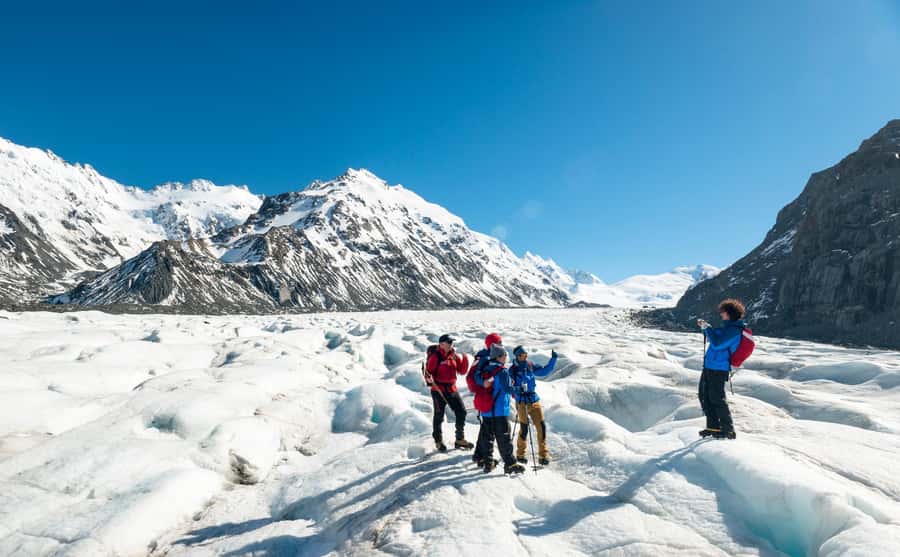
This is the rare Mount Cook activity that gives you two different kinds of awe in one morning. On the glacier you get close enough to notice the texture of ice and how the terrain shifts, while from the helicopter you see where Aoraki/Mount Cook dominates the whole area.
I also like the tour philosophy. You are not left to figure out a high-risk surface. The guide leads you, and the route is set with that glacier reality in mind, including the use of crampons and cut steps.
And yes, the helicopter portion is short. But it’s short on purpose, so you can spend your time on the ice where it actually counts.
Scheduling: 8:45 AM or 10:45 AM and how 3 hours adds up
You choose between two departures, 8:45 AM and 10:45 AM. The total experience is listed as about 3 hours, which is a good length if you want the heli-hike to fit cleanly into a Mount Cook day without burning the whole morning or afternoon.
In practice, most of that time is purposeful. You’ll start with a safety briefing, then get two helicopter rides, and the heart of it is your time on the ice where you can walk, stop for photos, and follow the guide along the formations.
If you’re the type who hates feeling rushed on tours, pick the slot that matches your energy. A later start can feel calmer if you’re still warming up after the drive into the area.
Mount Cook Airport briefing, gear fit, and why this part matters
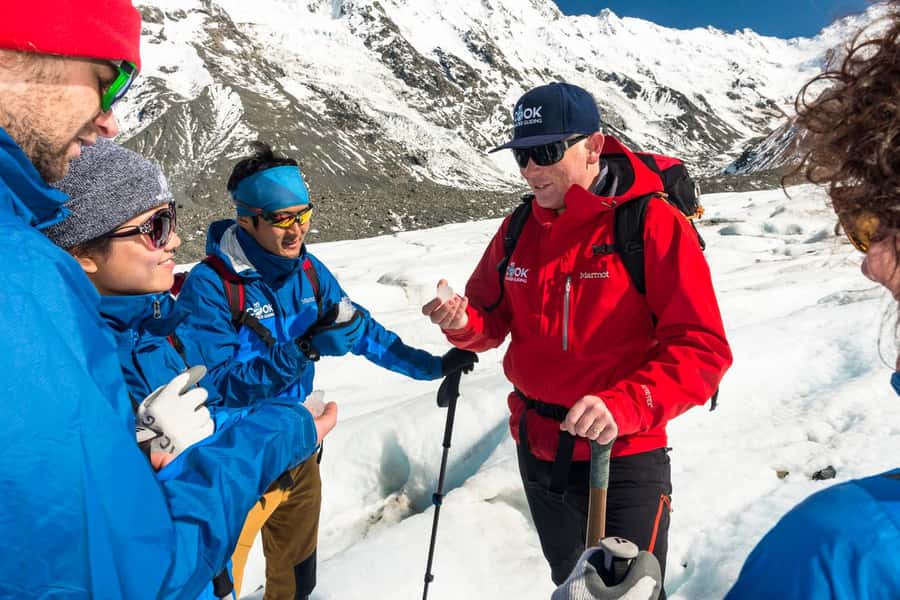
Before you ever see the ice, you’ll get a 45-minute safety briefing. This isn’t the boring stuff you can skim. On a glacier, the small rules are the difference between a smooth hike and a stressful one, especially when you’re wearing crampons and moving over uneven ice.
Then the tour gear becomes real. You’re provided with leather boots, woolen socks, crampons, walking pole(s), and a waterproof jacket. That’s a big deal for value, because buying or renting cold-weather glacier gear on your own would add cost fast.
A lot of guides in the feedback loop through the same pattern. They explain how to move safely, where to step, and what to do if the group has questions. Names that show up often include Hunter, Jimmy, Kirsten, Tory, Anna, Rich, and Liam, and people consistently highlight that the guides manage pace and safety well while still making time for photos.
The first helicopter flight: getting to the remote glacier fast
The first helicopter segment is about 15 minutes, and it takes you from Mount Cook Airport to your glacier drop-off point. Even though it’s brief, it sets the tone. You’re already seeing the terrain from above, and you’re reminded that this is not a walk you can recreate on foot without serious setup.
Helicopter flying in this region is also about visibility. Pilots often point out landmarks and help you understand what you’re looking at, which is one reason people rate the transport experience so highly.
If you care about photos, I’d pay attention to your seating when you board. A few people noted that the front seats can offer the best view going and coming, but regardless of where you sit, you should get scenic moments during the short flights.
Walking Tasman Glacier: what up to 2 hours on the ice really feels like
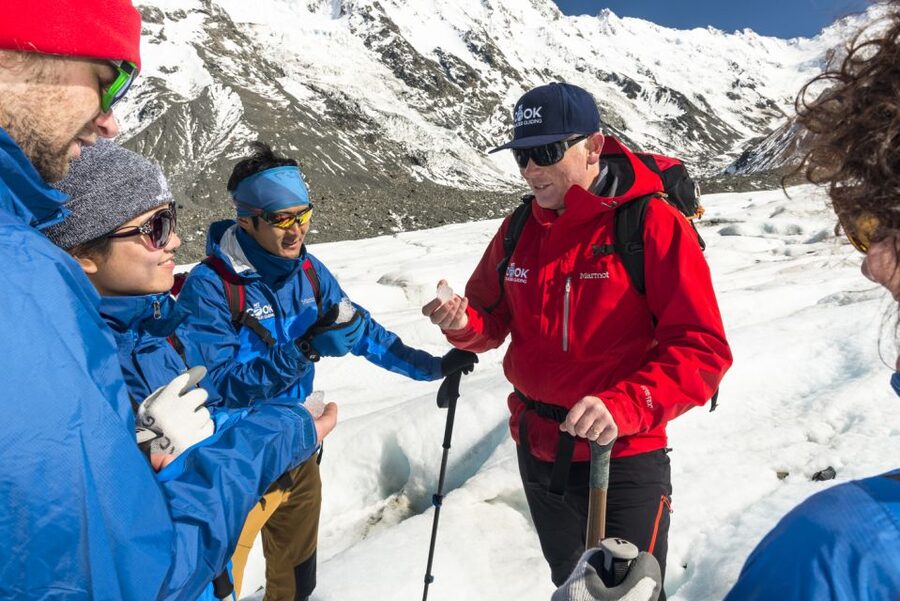
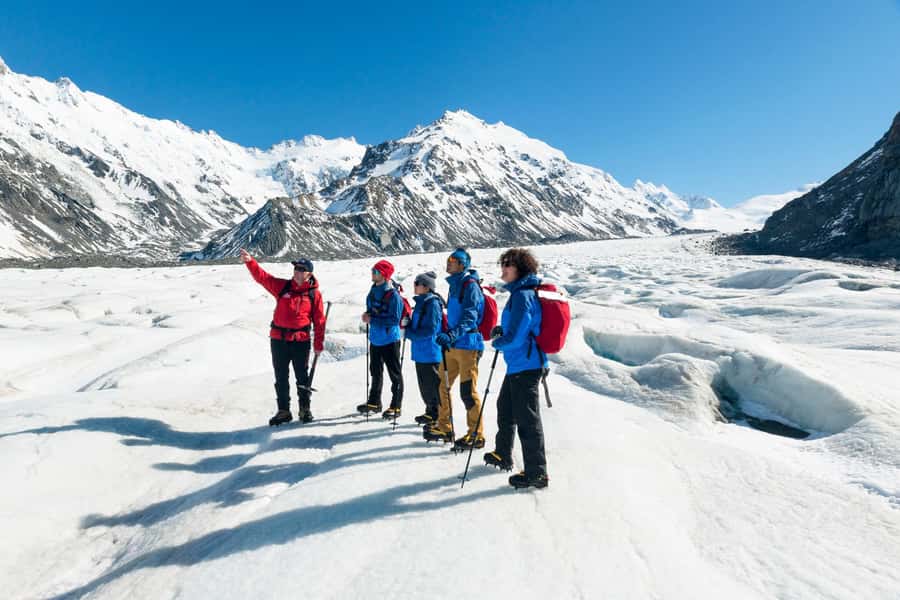
This is the main event. You’ll spend up to 2 hours on Tasman Glacier (weather permitting), moving at a guided pace with photo stops and scenic views along the way.
Your route is planned for the realities of glacier walking. You follow the guide as they cut steps in the ice, which matters because glacier surfaces can be slick and uneven. Those cut steps also make it realistic for a range of physical abilities within the limits of glacier terrain.
Some highlights you can expect to hear about from the guides and see with your own eyes include:
- ice formations that look sculpted, not frozen rubble
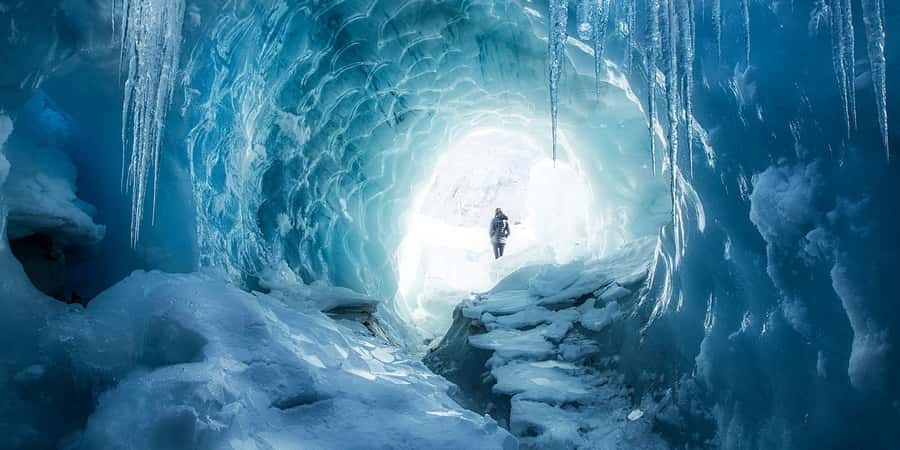
- ice tunnels and caves when conditions allow
- moulin-type openings (large vertical shafts) during the walk
- dramatic cracks and groans you might notice in the cold quiet
- occasionally, views of avalanches on far slopes from the right vantage points
Not everything is guaranteed. But the tour is designed so you’re not just walking from point A to B. There’s time built in to look, photograph, and understand what you’re standing on.
What your guide focuses on: safety, pacing, and photo moments
The best part of the glacier hike is often the human one. A strong guide keeps the group moving without speeding up. They manage footing, spacing, and questions, and they help you look without losing balance.
In feedback, many guides are singled out for being supportive and attentive. People mention guides taking extra care with group photos and helping solo travelers get pictures, and there are even stories of guides helping with special moments, like setting up a good spot for a proposal. You should still expect a glacier hike to be serious about safety, but with guides who keep it friendly.
One practical tip: if you want a photo, ask early. The guide may be moving the group through tight areas, and it’s easier to get a clean shot when you’re not scrambling at the last second.
Second helicopter flight and the short break back at base
After the ice time, you return to Mount Cook Airport with a second 15-minute helicopter flight. This is your second big view window, and it’s often where Aoraki/Mount Cook looks its most imposing, because you’re leaving the glacier area and seeing the mountain and surrounding icefields from a new angle.
Then you’ll have a 10-minute break before you arrive back at the airport. It’s short on purpose, but it gives you time to get organized, warm up a bit, and re-check how you feel after the hike.
Aoraki/Mount Cook views from the air: how to get more than just snapshots
Aoraki/Mount Cook is the star, but it can be easy to treat it like a background photo. The value here is learning to read what you’re seeing.
Here’s how I’d approach it:
- Watch for how the glacier systems spread and connect when you’re in the air.
- Use the two helicopter rides for two different perspectives, because the “same view” from a different direction can teach you a lot.
- If the pilot points out landmarks, listen closely the first time, then look again during the ride back.
People consistently mention pilots pointing out landmarks and giving a smooth, safe ride. That matters because when you feel calm, you look harder, and you notice more.
Price and value: what $537 buys you (and why it can be worth it)
At $537 per person for a 3-hour outing, this is definitely a splurge. The question is whether you’re paying for views you could get elsewhere, or for access you can’t.
In this case, a lot of what you’re paying for is included:
- two scenic helicopter flights, not just one
- an English live guide for the briefing and glacier walk
- glacier walking gear: boots, crampons, wool socks, poles, and a waterproof jacket
- guided step-cutting and route leadership on an active ice surface
If you’ve ever priced glacier hiking gear rentals and real-guided glacier access, the “gear and guide” part starts to make sense. If you care most about the glacier time itself, the value comes from the fact you’re on the ice for up to 2 hours, not a short photo stop.
My practical take: this is worth it when you want a once-in-a-visit Mount Cook standout. If you’re doing a busy itinerary and you already feel “glaciered out,” it might feel like overkill.
What to pack: keep warm, keep eyes protected
The tour lists a few basics that matter:
- Warm clothing
- Sunglasses
- Hat
Even with gear included, you’ll still feel the cold when you’re standing still for photos or waiting between the flight segments. I’d treat sunglasses and hat as mandatory, not optional, because the glare on ice can be intense.
Also, remember what’s not included: food and drinks. If you’re starting in the morning, eat beforehand and bring a plan for afterward so you’re not deciding where to grab a snack while your group is still thinking about ice.
Who this heli-hike is for, and who should skip it
This tour is not recommended for people with limited mobility, and it’s not suitable for children under 9. The reason is straightforward: it’s a glacier hike on a guided route that involves crampons, uneven ice, and the kinds of steps where footing and balance matter.
It’s also weather-dependent. If you’re traveling with a tight schedule and you absolutely must be somewhere at a certain time, consider building in flexibility around your Mount Cook day so you can take weather delays without stress.
If you do okay on rugged outdoor terrain and you’re excited by the idea of walking on a major glacier, this is a strong fit.
Should you book the Mt Cook Glacier heli-hike?
Book it if you want a true “Mount Cook highlight” with real glacier access and serious aerial views, in a small group with full gear support. The combination of up to 2 hours on the ice plus two helicopter flights is the core reason to pay for this rather than doing a simpler walk.
Skip or reconsider if any of these are true for you: you have limited mobility, you’re traveling with a child under 9, you hate weather uncertainty, or you’re trying to keep costs tight.
If you do book, I’d pick the time slot you can treat as flexible, show up warm and ready, and lean into the guide’s instructions. This is one of those experiences where listening closely pays you back immediately, in safer steps and better views.
FAQ
How long do I spend walking on the glacier?
You’ll spend up to 2 hours on Tasman Glacier, weather permitting.
What’s included in the tour package?
The tour includes two scenic helicopter flights, a tour guide, and glacier walking gear: leather boots, woolen socks, crampons, walking poles, and a waterproof jacket.
Is food and drinks included?
No. Food and drinks are not included.
What should I bring?
Bring warm clothing, sunglasses, and a hat.
What are the available departure times?
There are two time slots, 8:45 AM and 10:45 AM.
What language is the guide?
The live tour guide is English.
Is this tour suitable for children or limited mobility?
It’s not suitable for children under 9 and it’s not recommended for people with limited mobility.
Where do I meet the tour?
Meet inside the Mount Cook Airport terminal. Look for the Mt Cook Glacier Guiding desk.
Aoraki Mount Cook and Lake Tekapo, compared.
 ★ 4.5Lake Tekapo: Alpine Stargazing Experience with a GuideFrom $59626 reviews
 ★ 4.9Lake Tekapo: Stargazing ExperienceFrom $71607 reviews
 ★ 4.9Mount Cook & Lake Tekapo Day Tour from ChristchurchFrom $146483 reviews
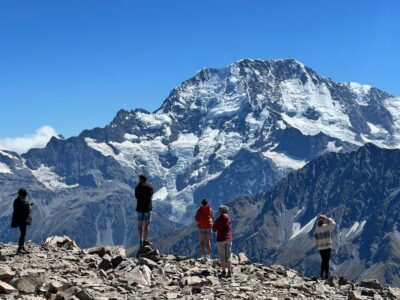 ★ 4.8Mount Cook: Scenic Helicopter Flight with Alpine LandingFrom $226442 reviews
 ★ 5.0Mt Cook Small Group Scenic Day Tour from QueenstownFrom $164407 reviews
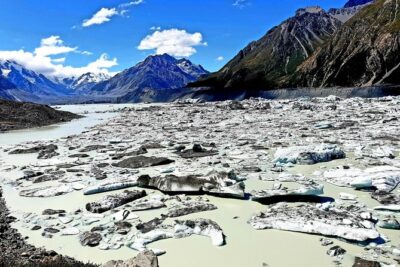 ★ 5.0Mount Cook, Lake Tekapo and Tasman Glacier Tour from ChristchurchFrom $155353 reviews
 ★ 4.6From Christchurch: Mt Cook Day Tour & Lake TekapoFrom $175331 reviews
 ★ 4.8From Queenstown: Mt Cook & Tasman Glacier Viewpoint Day TourFrom $146329 reviews
Browse the lists this tour appears in