
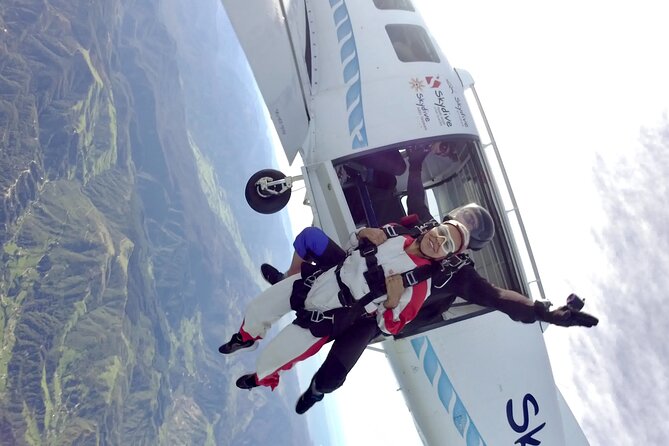
REVIEW · ABEL TASMAN AND NELSON
18,000ft Tandem Skydive over Abel Tasman
18,000ft feels unreal, even on paper. This tandem parachute jump over Abel Tasman National Park mixes real adrenaline with huge, clear views, plus you get up to 80 seconds of freefall before the parachute takes over. One thing to plan for is cold air in freefall, especially if you are older or sensitive to chill.
I really like how the crew runs the day with confidence and calm, including clear timing and jump order. That helps you focus on the moment instead of wondering what happens next. A possible drawback is that the optional photo package costs extra, so if you want memories, you may need to budget for it up front.
Skydive Abel Tasman runs this from a convenient Nelson meeting point, with limited hotel pickup in selected areas. The whole session is short, capped at small groups, and you are not juggling logistics on your own.
In This Review
- Key highlights worth your attention
- First impressions in Nelson, then straight into the sky
- Where the views come from: Motueka and the flight path
- What you actually do in the air: tandem jump, then parachute control
- Safety and the human part: how the crew keeps you calm
- Abel Tasman National Park from above, and why it matters
- “Two national parks” in the sky: what to listen for in briefing
- Timing and jump order: the detail that saves your nerves
- Cold air in freefall: the one drawback to take seriously
- Photography package: buy it for certainty, skip it for control
- Price and value: why $1,080 can make sense
- Who should book this tandem parachute jump
- Practical tips for your day, from a comfort-first point of view
- Should you book with Skydive Abel Tasman?
- FAQ
- Where does the experience start and end?
- How long is the tandem experience?
- What is included in the price?
- Is the photography package included?
- How many people are in a group?
- What is the weight limit?
- How soon will I get confirmation after booking?
- What are the operating hours?
- What happens if weather is poor?
- Is it near public transportation?
Key highlights worth your attention
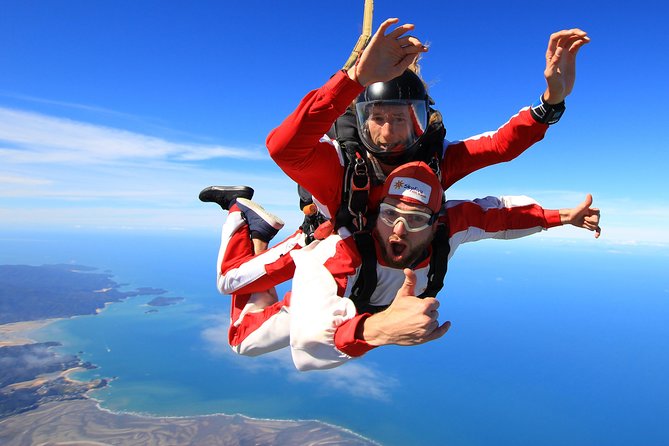
- Up to 80 seconds of freefall from 18,000ft, then a slower parachute glide back down
- Abel Tasman National Park views with Mount Arthur also in the mix
- A small-group vibe with a maximum of 8 travelers
- Friendly, professional instructors who keep you informed and help you feel safe
- Photography is optional if you want the jump captured for keeps
- Weather matters, so have a little flexibility in your schedule
More of the Abel Tasman coastline
- Abel Tasman Vista Cruise
★ 4.5 · 414 reviews - Best Abel Tasman Day trip
★ 5.0 · 229 reviews - Skywire Adventure at Cable Bay, Nelson
★ 4.5 · 189 reviews - Full-Day Abel Tasman National Park Hiking Tour with Cruise
★ 5.0 · 81 reviews
First impressions in Nelson, then straight into the sky
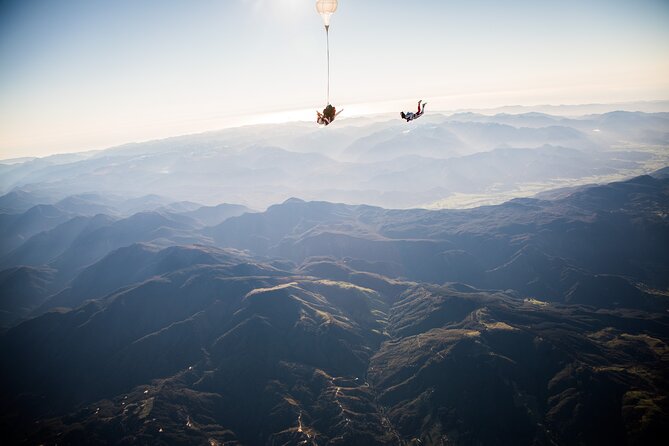
The value here starts with simplicity. You meet in Nelson, and the team handles the flight to the jump and the jump itself with a tandem instructor. If you have ever tried to organize sky time in New Zealand yourself, you know how much effort it can take to line up transport, timing, and a qualified crew. Here, you show up, get briefed, and the rest is run for you.
The day also feels designed for people who do not want a half-day project. The jump itself is short, about 15 minutes total, so you are not stuck spending hours waiting with no idea what comes next. For a lot of visitors, that is the sweet spot: big experience, limited disruption.
Where the views come from: Motueka and the flight path
Even though the meeting point is in Nelson, the drop zone base is near Motueka. That matters because your flight time is part of the show. You are not just looking up once, you get sweeping scenery from the aircraft before you go.
The operation is also marketed around being able to show you very dramatic scenery from above, including views tied to both islands. That is a bold claim, but the point for you is practical: they position the experience so you are not getting a dull, hazy flight path. The goal is views you will remember, not just the jump.
If you like taking photos and comparing what you see with maps afterward, you will appreciate the sequencing: plane views first, then the jump, then the parachute glide. It gives your brain three different “frames” of the same region.
What you actually do in the air: tandem jump, then parachute control
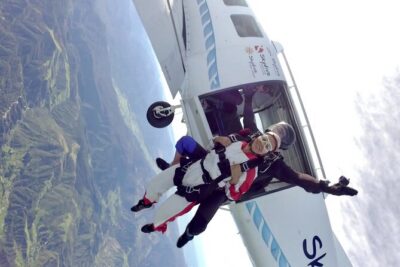
This is a tandem experience, so you are not managing anything. Your instructor leads the way from the point you exit the plane through the freefall and the parachute deployment. That is a huge deal if you are nervous, new, or you just do not want to worry about procedures you cannot rehearse.
Here is the rhythm you can expect:
- You board the aircraft and take in the scenery.
- You exit the plane for freefall, up to 80 seconds.
- Your instructor deploys the parachute.
- You float back down in a slower, controlled glide.
That freefall timing is one of the standout reasons to book. In a lot of short-air experiences, you either get less time than you hoped, or the story is mostly about the parachute ride. Here you get meaningful freefall time before the calmer phase.
Safety and the human part: how the crew keeps you calm
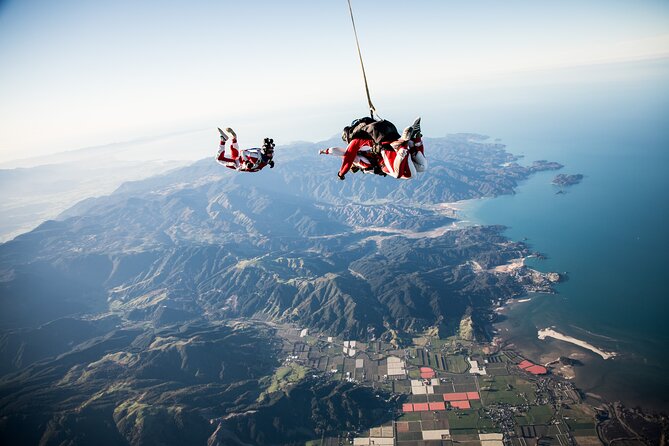
I always pay attention to staff because in high-adrenaline activities, good people make or break the experience. This one gets high marks for friendliness and professionalism. You also get clear communication on when you will jump and whether you are next in line. That kind of structure reduces the jitters that come from uncertainty.
You will likely feel a similar mix of excitement and nerves. The key is that the instructors are described as professional but friendly, and they explain things while keeping you grounded. From a traveler’s point of view, that means you spend more energy on the view and less energy on trying to figure out what is happening.
Also, the experience size helps. With a maximum of 8 travelers, the day tends to feel more personal. Smaller group numbers usually make it easier to manage pre-jump questions and keep everyone on track.
Abel Tasman National Park from above, and why it matters
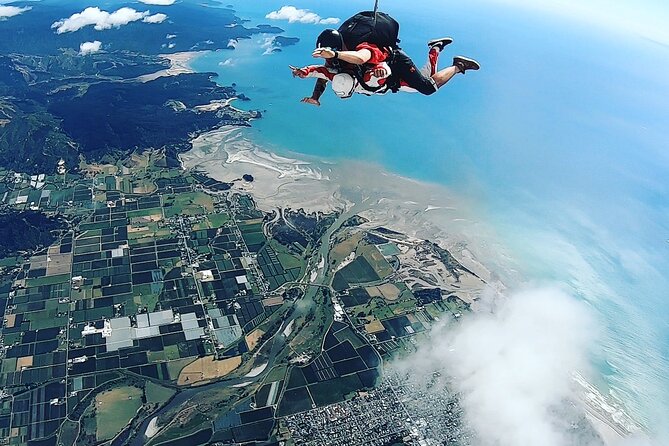
People visit Abel Tasman for a reason: coastline drama, peaks nearby, and water that looks like it does not belong on Earth. From the air, it becomes something else. The coast does not just look pretty, it becomes a map you can understand.
In particular, you get views tied to Abel Tasman, plus Mount Arthur is mentioned as being visible in the experience. That combination is what makes this jump feel more than a generic thrill. You are seeing identifiable landmarks, not just clouds and geography shapes.
From a practical travel standpoint, those visible reference points are worth a lot. You can look down and go, yes, I know where I am. That turns the experience into a lasting mental souvenir, not only a memory of feeling weightless.
“Two national parks” in the sky: what to listen for in briefing
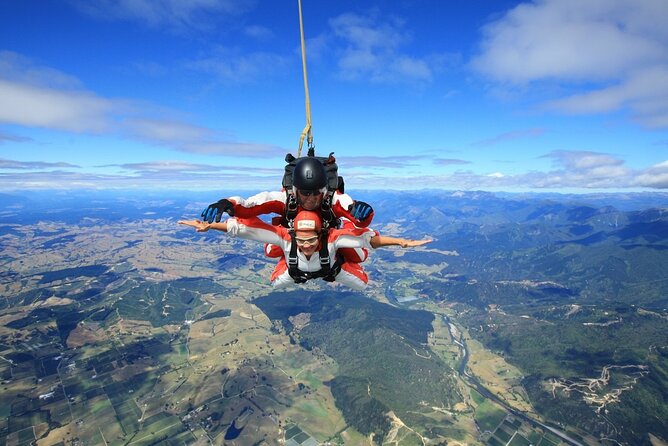
The experience is framed around seeing panoramas connected to national parks from above. That is the marketing headline, but you can translate it into something useful before you go: ask what landmarks you can expect to see on the day’s flight path.
Because conditions and wind can affect visibility, your best move is to listen closely during the aircraft briefing. If you are hoping to capture a specific view, this is where you get the context for where to look, and when. With a parachute jump, people often focus so hard on the exit that they miss the brief window of aircraft sightseeing. The briefing helps you use your attention better.
If you are the kind of person who likes to match what you see with your travel photos later, this is the kind of jump that gives you enough variety to compare.
Timing and jump order: the detail that saves your nerves
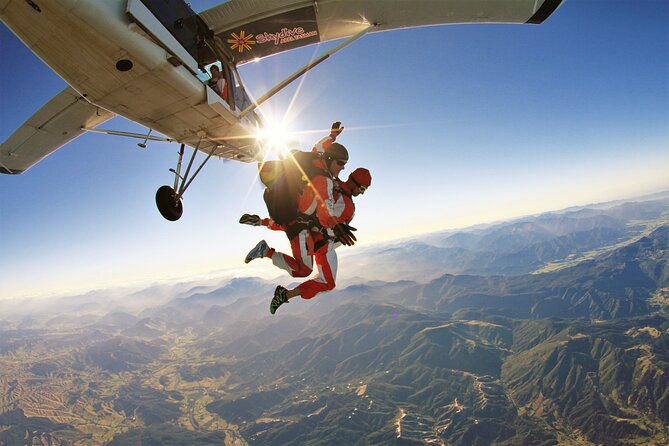
One of the most praised parts of the day is how they handle timing. You are informed about when you will jump, and whether you are next in line. That may sound small, but it is not.
When you are waiting for something intense, the uncertainty is often worse than the actual event. Clear jump order means your body can switch from waiting mode to doing mode. It also helps you be ready in the right way, like knowing when to put your focus on the aircraft rather than your phone or your own thoughts.
It is the difference between feeling rushed and feeling ready. In my experience, that alone can turn a nervous trip into a smooth one.
Cold air in freefall: the one drawback to take seriously
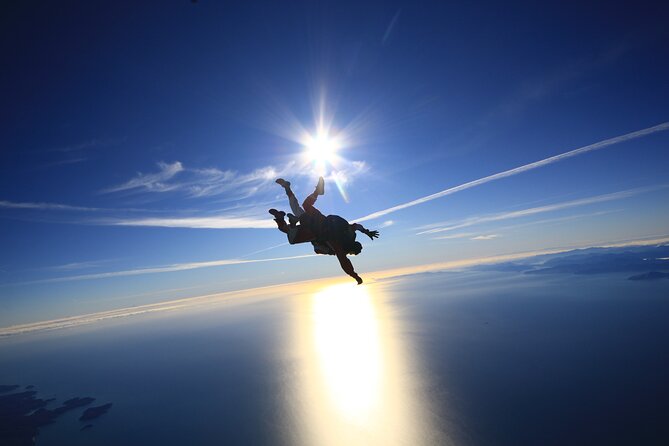
Let’s be honest. Freefall is exhilarating, but it can also be uncomfortable. One review specifically calls out that freefall was painfully cold, and the person felt they needed better face and head protection.
That lines up with what you should plan for as a traveler. Even if it is warm on the ground, you are moving fast through cool air. The wind can make the cold feel sharper than you expect, especially if you tend to get chilled easily.
Your practical move:
- Dress in layers that you can manage quickly.
- Protect your face. Ask what protection they provide, and if they recommend anything for older clients.
- If you are sensitive to cold, treat this as a gear-and-comfort issue, not a tough-it-out issue.
If you do that, the freefall tends to feel like the thrilling phase it is meant to be, not a painful one.
Photography package: buy it for certainty, skip it for control
A photography package is available for purchase, but it is not included. That is important for your budget, and it affects what you can do with your hands and attention in the air.
If you care about having photos that are actually usable, I understand the appeal. Trying to capture clear shots during a jump is hard. Even if you bring your own gear, you cannot guarantee results. A dedicated package tends to be about getting consistent, professional images when you might not be thinking about cameras at all.
If you are more of a live-experience person, you might skip it. Then your souvenir becomes the view, plus any ground photos you take before and after. Either way, you should decide before you arrive, because “maybe later” usually turns into “oops, now it costs more.”
Price and value: why $1,080 can make sense
At $1,080, this is not a casual outing. So the real question is value, not price.
Here is what you are paying for:
- A tandem instructor who controls the key moments
- Up to 80 seconds of freefall, which is a major part of the appeal
- A scenic operation that focuses on standout aerial views over Abel Tasman and nearby landmarks like Mount Arthur
- Small-group management, with a maximum of 8 travelers
- A guided aircraft-to-jump process, so you do not have to organize the hard parts yourself
If you compare this to cheaper, more generic jumps, the difference is usually the scenery and the total “smoothness” of the day. This experience is built around one big goal: putting you in the right place for the right view, without making you do logistics.
So if this is a bucket-list activity for you, the price can feel fair. If you are just curious, it might be a tough stretch. For the right person, though, it is the kind of expense that turns into a clear story you tell for years.
Who should book this tandem parachute jump
This is a great fit if you:
- Want one of the most scenic-feeling days in New Zealand, with recognizable areas below
- Prefer a guided tandem experience where you do not manage the technical side
- Like clear crew communication and a well-run schedule
- Are comfortable with the cold air factor and plan accordingly with face protection
It might not be the best fit if:
- You get easily chilled and you are not willing to prepare with warm layers and face protection
- You dislike paying extra for optional photos and want everything included up front
- You want a longer, slower activity. This is about the jump, then you move on
Practical tips for your day, from a comfort-first point of view
You will enjoy this more if you treat it like a mix of travel day and performance. A few things to think about:
- Arrive with layers that you can wear comfortably, not just warm ones. Freefall is about wind chill.
- If face protection matters to you, prioritize it early. Do not assume you will be fine with nothing.
- If you are bringing anything that you might want to keep, follow the crew’s instructions closely.
- When they tell you timing and jump order, actually listen. That helps you stay calm.
Also, bring a mindset that this is a short window of intense sensation. If you spend your waiting time tense, the actual jump can feel harder. When the crew runs things smoothly, you can focus where it counts.
Should you book with Skydive Abel Tasman?
If you want a high-quality tandem experience centered on stunning aerial views over Abel Tasman, I think it is worth serious consideration. The small group size, the emphasis on clear communication, and the instructor-led setup are all strong signs of a well-run operation. Add the freefall time up to 80 seconds and the chance to see landmarks like Mount Arthur, and you get a jump that feels tied to the region, not just the thrill.
The main reason to hesitate is the cold factor during freefall. If you tend to get chilled easily, plan your gear and face protection before you go. Do that, and the experience has a very good chance of feeling thrilling instead of miserable.
If you are ready for a short, well-managed adrenaline hit with memorable New Zealand views, book it.
FAQ
Where does the experience start and end?
It starts at Nelson, Nelson, Nelson-Tasman Region, South Island, and ends back at the same meeting point.
How long is the tandem experience?
The duration is approximately 15 minutes.
What is included in the price?
The price includes limited hotel pickup and drop-off for selected hotels only.
Is the photography package included?
No. A photography package is available to purchase.
How many people are in a group?
The maximum group size is 8 travelers.
What is the weight limit?
All passenger weights must be advised at booking, and the maximum passenger weight is 220 lbs (100 kg).
How soon will I get confirmation after booking?
Confirmation is received within 48 hours of booking, subject to availability.
What are the operating hours?
Monday through Sunday, 8:00 AM to 5:00 PM (within the listed operating period).
What happens if weather is poor?
This experience requires good weather. If it is canceled due to poor weather, you will be offered a different date or a full refund.
Is it near public transportation?
Yes, it is near public transportation.
Everything Else We Wrote Up in Nelson
More of the Abel Tasman Coast
Just added to our Nelson notes
- Wine Exposed Nelson Winery Tour★ 5.0 · 10 reviews
- Tunnel to Town – Via Mapua★ 5.0 · 12 reviews
- Great Taste Beer Tour by Bicycle (Self-guided)★ 5.0 · 18 reviews
- Self-guided E-bike cycle tour with private wine tasting★ 5.0 · 26 reviews
- Cruise, Walk, and Sail in Abel Tasman National Park★ 4.5 · 29 reviews
- Private boat charter in Abel Tasman National Park★ 5.0 · 31 reviews
Abel Tasman and Nelson, compared.
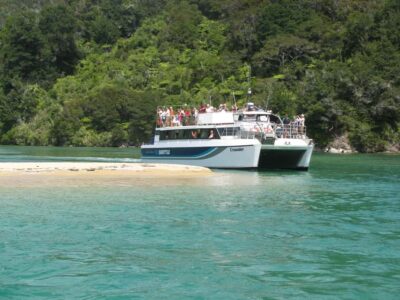 ★ 4.4Abel Tasman National Full Park Scenic CruiseFrom $59855 reviews
 ★ 4.6Abel Tasman: Sea Shuttle Cruise and Walking Tour ComboFrom $74704 reviews
 ★ 4.5Abel Tasman Vista CruiseFrom $67414 reviews
 ★ 4.8Abel Tasman National Park: Sailing and Self-Guided WalkFrom $80238 reviews
 ★ 5.0Best Abel Tasman Day tripFrom $248229 reviews
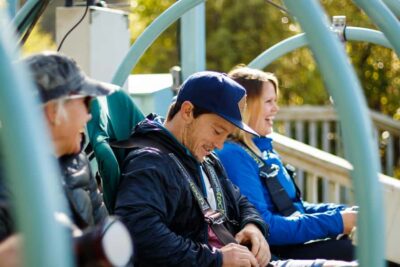 ★ 4.8Nelson: Cable Bay Adventure Park Skywire ExperienceFrom $65207 reviews
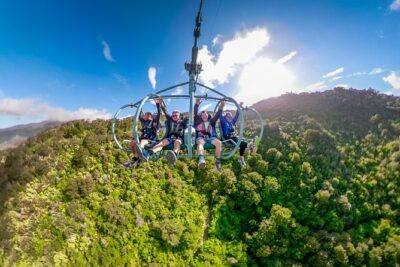 ★ 4.5Skywire Adventure at Cable Bay, NelsonFrom $68189 reviews
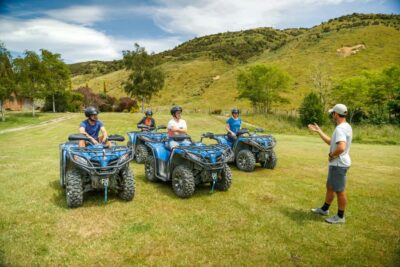 ★ 4.8Nelson: Guided Quad Biking Tour Through Forest and FarmlandFrom $80106 reviews
Browse the lists this tour appears in