
REVIEW · WELLINGTON TOURS AND ATTRACTIONS
Wellington: Half Day Seal Coast Safari
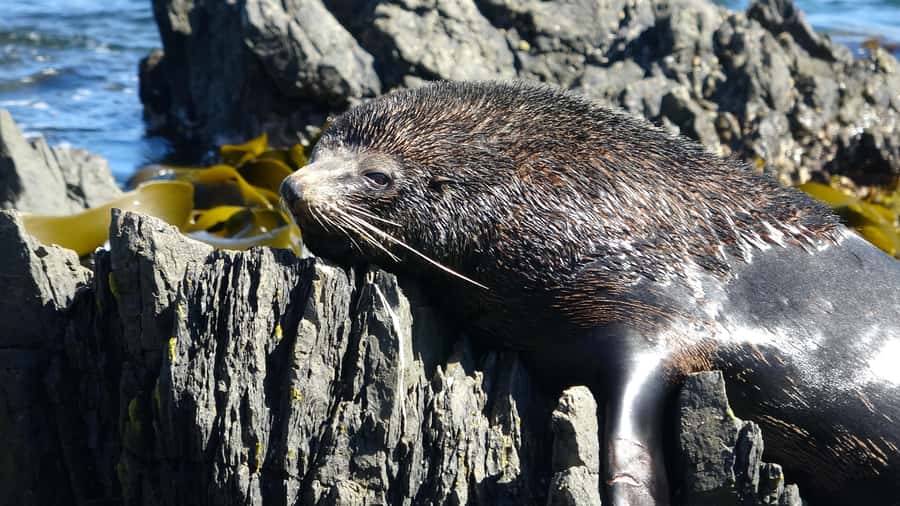
Fur seals in Wellington’s backyard. I love the 4WD ride through private farmland and the way this tour actually gets you close to NZ fur seals at sea level, without turning it into a long drive day. The views over Cook Strait and the Kaikoura Ranges make the whole morning feel like you left the city and then remembered you did not.
This is still a safari, so expect some bumpy farm tracks and a rocky, sandy track on the way to Tongue Point. If you are not great with jolts, or you need very smooth ground underfoot, plan for that. With a small group capped at 10, guides such as Grant and Sarah tend to keep the pace easy and the stops meaningful.
In This Review
- Key things that make this Wellington seal safari special
- The Drive That Makes This Half-Day Feel Longer
- Otari-Wilton’s Bush: Native Forest and Birdlife from the Skybridge
- Terawhiti Station, Wind Power, and the Capital Kiwi Project
- Karori Rock Lighthouse and Tongue Point Fur Seals at Sea Level
- What the Safari Feels Like: Weather, Pacing, and the 4WD Jolt
- Price and Value: Why $116 Makes Sense for This Route
- Who Should Book (and Who Might Prefer Something Else)
- Tips I’d Use Before You Go
- Should You Book the Wellington Half Day Seal Coast Safari?
- FAQ
- How long is the Wellington Half Day Seal Coast Safari?
- Where does pickup happen?
- What is the walking like?
- What animals will I see?
- Does the tour run in bad weather?
- Is this tour suitable for wheelchair users?
Key things that make this Wellington seal safari special
- Private access through Terawhiti Station, so you get views and routes you would not find on your own
- Otari-Wilton’s Bush skybridge for canopy views, native birds, and context on how the forest has bounced back
- Real conservation stories, including the Capital Kiwi project reintroducing kiwi after around a century away
- Tongue Point fur seal viewing with safe viewing distances, plus light refreshments while you watch
- Weather-proof planning, since the safari runs in all conditions and routes can shift for the day
The capital keeps going, see these too
- Wellington: Wētā Workshop Guided Tour Ticket
★ 4.7 · 997 reviews - Wētā Workshop Experiences Tour – Wellington
★ 5.0 · 875 reviews - Wellington: Return Cable Car Ticket
★ 4.6 · 714 reviews - Half Day Tour of Wellington
★ 4.5 · 638 reviews
The Drive That Makes This Half-Day Feel Longer
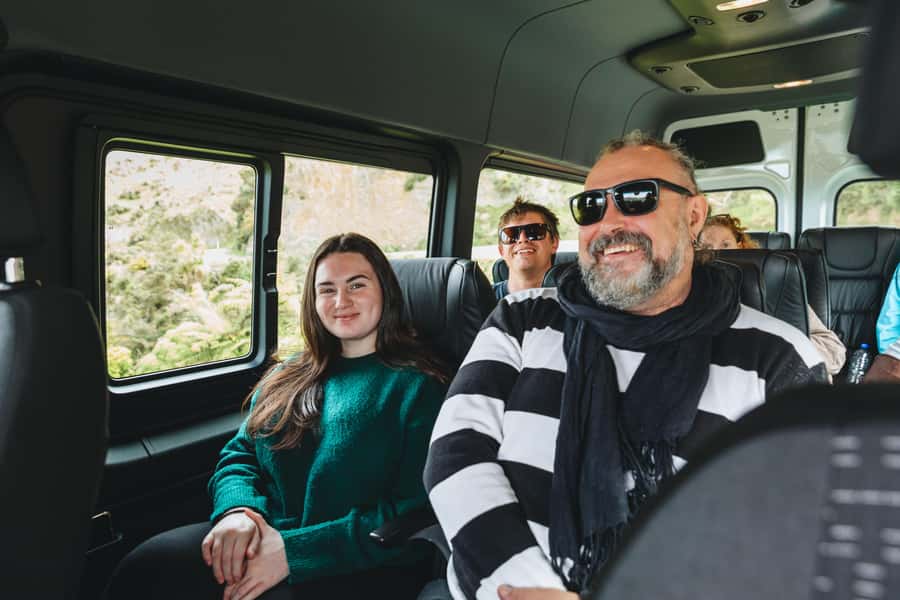
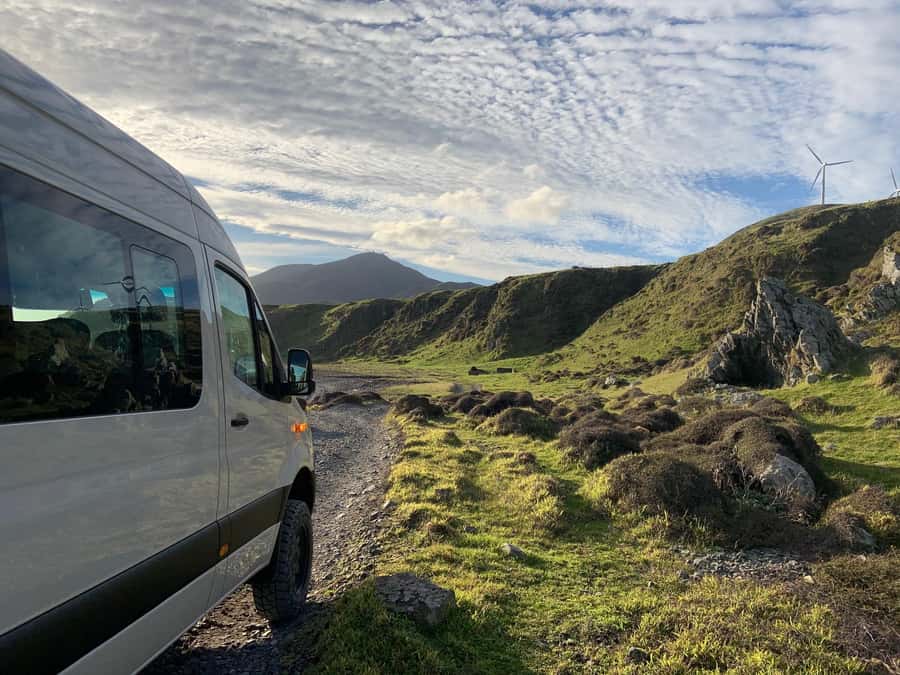
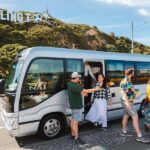
This tour lasts about 210 minutes, which sounds short until you start moving. You begin in central Wellington and get picked up in an exclusive 4WD Mercedes van, a setup that matters here because the roads twist and change fast once you leave town. In practice, that means you are not just riding to a single photo spot, you are traveling through the edges of the Wellington region as it really looks and feels.
What I like most is that the driving is part of the experience, not just transportation. The route takes you across farmland, up toward high viewpoints, and then back down to sea level where the air feels different. It is the classic New Zealand effect, the one where you go from city to country to coast so quickly you start planning your next hike before you even get home.
The small group size also changes the vibe. With up to 10 participants, your guide can pace the stops, keep an eye on timing, and give you moments to photograph without the herd feeling.
Otari-Wilton’s Bush: Native Forest and Birdlife from the Skybridge
You start with Otari-Wilton’s Bush, a 100-hectare patch of ancient and regenerating native forest. It is also New Zealand’s only botanical garden focused solely on native plants, which is a neat detail because it helps you understand what you are seeing instead of just taking it for granted.
Then there is the skybridge. Walking across it gives you a true canopy perspective, like you are standing inside the forest rather than at the edge of it. Your guide talks through flora and fauna that are endemic to New Zealand, and that context makes the birds and plants more than a pretty background.
This is also where the tour earns its bird points. You can often spot native birds such as tui, kaka, kākāriki, and kererū, with karearea sometimes showing up. The tour adds a strong reminder of why those sightings matter: these birds were extinct or endangered in the Wellington region as recently as about 25 years ago. That is the kind of local conservation story that sticks, because it turns a quick nature stop into something you understand.
One practical note: the tour does not require major walking, but you should still wear comfortable shoes since you will move between viewpoints and paths. If you like birds and native plants, this first stop is your anchor.
Terawhiti Station, Wind Power, and the Capital Kiwi Project
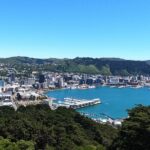
After the forest, the drive shifts toward the south coast, using private access through Terawhiti Station. That matters more than it sounds. Instead of spending the best part of the tour on public roads, you get to use farm routes and ridgelines that open up big sightlines over the Cook Strait and the South Island beyond.
Along the way you might see sheep, cows, and goats. Even if you do not, the scenery and the working-farm feel are part of why this tour feels different from the usual bus-to-viewpoint-and-back pattern.
At the top, you get the wider views: Cook Strait, the Kaikoura Ranges, and the snow-capped peaks of the South Island on clear days. Your guide also connects that view to current projects. This area is tied to the Capital Kiwi project, which has reintroduced wild kiwi after a full 100 years since they were last seen and heard in the hills.
Now, a quick reality check: the tour description focuses on the project and the story around it, not on guaranteed kiwi sightings. Kiwi are famously hard to spot. Still, if you care about conservation in real places, this portion gives you a way to understand what is being attempted and why it fits the local landscape of farms and hills.
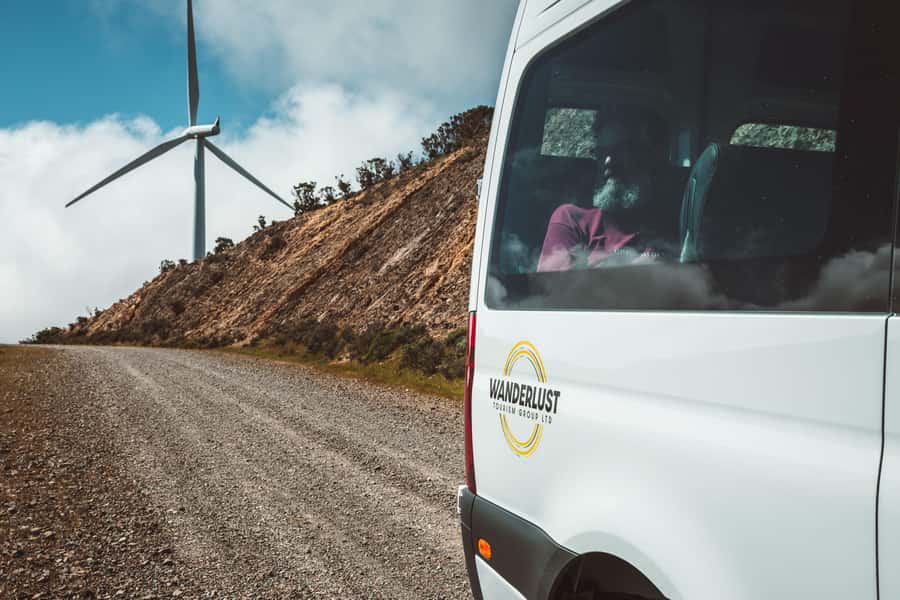
The drive also includes a ridgeline road created for Project West Wind, a wind farm supplying enough electricity to power all homes in the Wellington region. You will see the wind turbines, but more importantly, you will hear how the wind farm and the farming operation are connected in challenging conditions. It is a good example of how modern infrastructure can coexist with agriculture, and it turns the turbines into part of the story rather than just scenery.
Karori Rock Lighthouse and Tongue Point Fur Seals at Sea Level
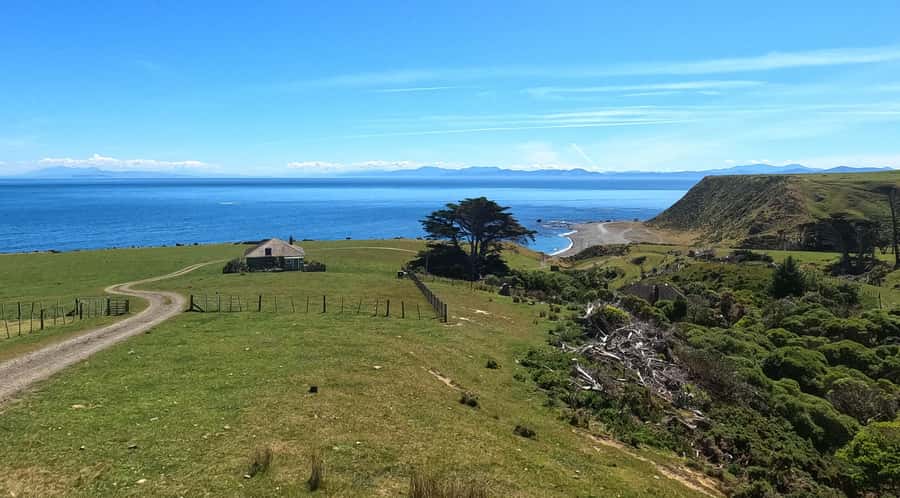
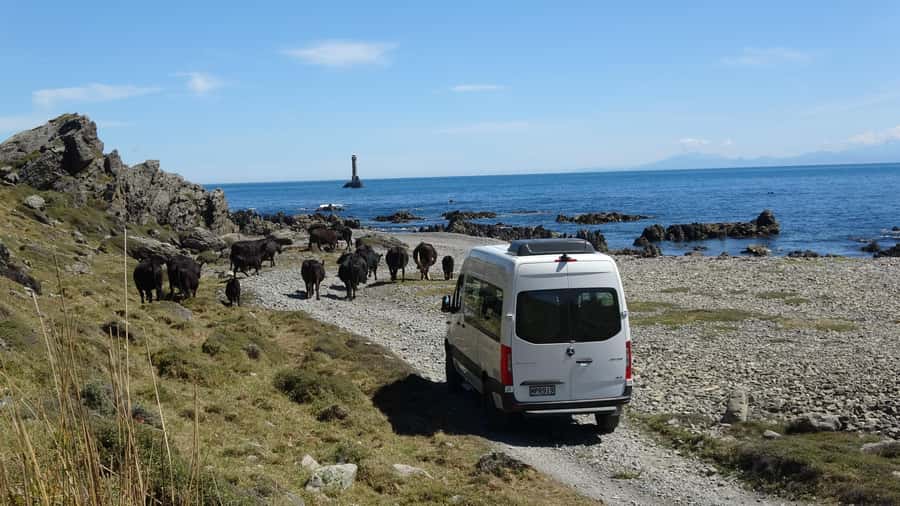
Then comes the main event. As you descend toward sea level, the Karori rock lighthouse appears in the distance, better known as the leaning lighthouse. Seeing it from the high angle gives it a sense of place before you reach the coast, and once you are near Tongue Point, it feels like one more piece of the rugged South Coast puzzle.
From there, you traverse a rocky, sandy track to the fur seal colony. The walking is described as minimal overall for the tour, but this is still uneven ground. Bring shoes that can handle sand and rock, because you will want your footing when you slow down for photos.
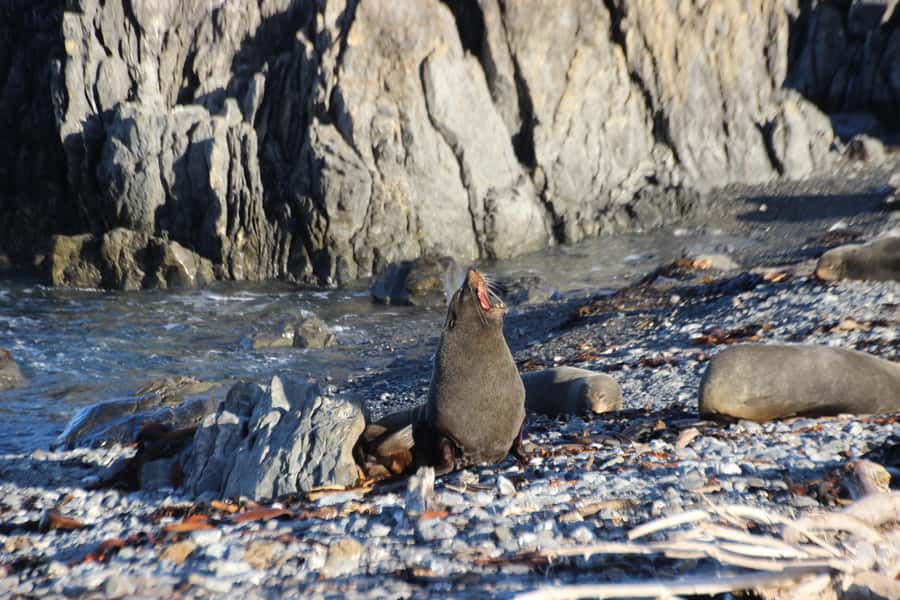
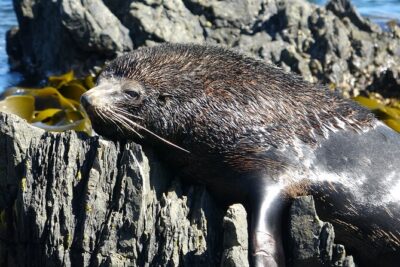
At Tongue Point, you get to observe New Zealand fur seals in their natural habitat. You do not rush through it. You wander the beach while they sunbathe, play, and swim, and your guide keeps you at a safe distance for the seals’ safety and yours. Many people love that close viewing setup, with one review specifically calling out photos taken from roughly 10 to 15 meters away.
Your guide also shares the history, ecology, and conservation behind the seals returning in stronger numbers. That turns the fur seals from cute animals into evidence of something working. Plus, you can watch ferries crossing between New Zealand’s main islands, which adds motion to the coastal scene while the seals do their own slow performance.
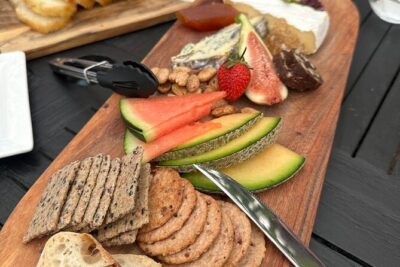
Light refreshments happen here too. The tour includes refreshments, and on rough weather days I would expect a warm pause, like the coffee or tea stops people describe in the experience.
If Tongue Point is your only goal, you still get more value than a quick coastal stop because the tour stitches the seals into a broader route, from native forest to working farms to conservation projects.
Other four-wheel-drive runs near Wellington
What the Safari Feels Like: Weather, Pacing, and the 4WD Jolt
This safari runs in all weather. That is great news, but you should take it the right way. Expect the tour to adapt routes based on conditions. If it is rainy or foggy, you might lose some distant mountain views, but the guide can still find a good way to reach the coastline and keep the schedule running.
Pacing is generally relaxed. The stops are spaced so you have time to look, listen, and photograph. Small group size also helps here. You are not stuck taking turns or sprinting to keep up.
The one thing you should mentally prepare for is the ride itself. Several reviews point out bumpy, rough farm tracks. One person flat out said be ready to get shaken a bit, and that the 4WD earns its stripes on uneven terrain. So, yes, it is a safe, guided experience, but it is not a flat-smooth city van tour. If you are prone to motion sickness, consider that ahead of time.
Comfort tips based on what people mention most:
- Wear warm clothing. Wellington weather can swing fast, and one review called out being chilly at times.
- Bring sunscreen and sunglasses anyway. Coastal wind does not cancel sun.
- Use camera settings you already know. You will be moving between forest light and coastal brightness.
Minimal walking is required overall, but the seal section does include that rocky, sandy beach approach. If you can handle short uneven stretches, you will be fine.
Price and Value: Why $116 Makes Sense for This Route
At $116 per person for about 3.5 hours, you are paying for access plus transportation, not just scenery. And in this case, both are real.
First, you are paying for the private farmland access through Terawhiti Station. That is what gets you onto routes and viewpoints that are hard to reproduce without a car and without local permissions.
Second, you are paying for the 4WD Mercedes van that can handle the ridgeline roads and rough sections safely. It is not just comfort, it is capability, which matters when the tour’s best features happen off the main roads.
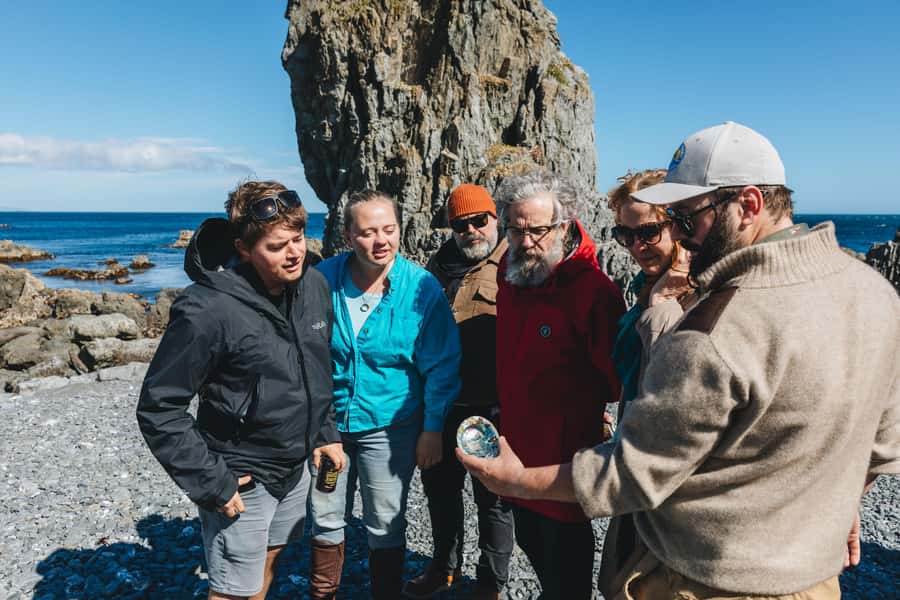
Third, you get interpretive value. The tour includes Otari-Wilton’s Bush context, conservation stories tied to the kiwi project, and the seal ecology and history at Tongue Point. Guides like Grant, Chewy, Hamish, and Gina are repeatedly praised in reviews for storytelling and for making the stops feel connected instead of random.
Is it pricey for what it is? Yes, it can feel that way if you compare it to simple bus sightseeing. But if you want a half-day plan that gives you native birds, working farms, turbine views tied to local power, and fur seals at sea level with a guide shaping the meaning of it, this is more like buying access to a curated route than paying for a generic ride.
For me, the value comes from the combination: city convenience plus real country access plus nature you cannot do as well without transport.
Who Should Book (and Who Might Prefer Something Else)
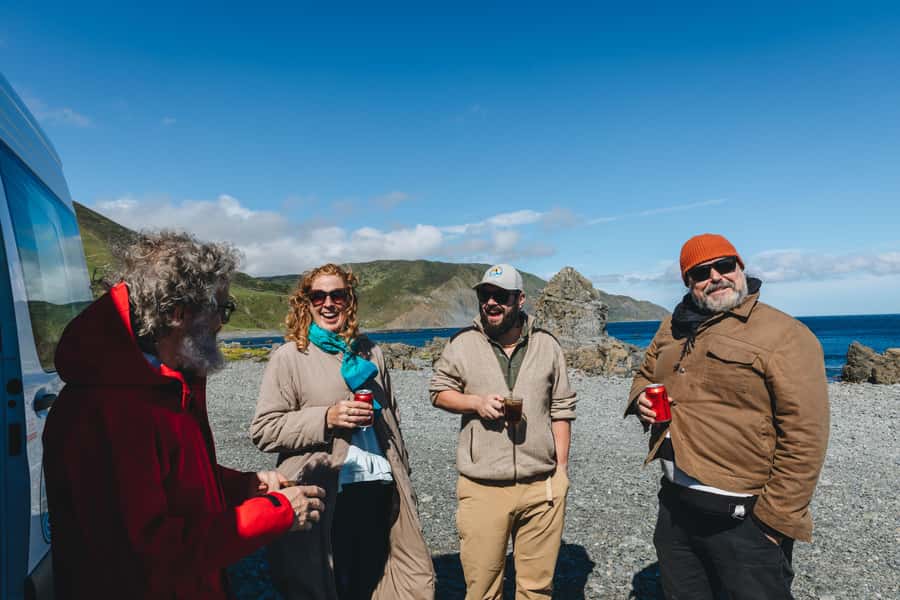
This tour is ideal if you want a short Wellington plan that feels like an adventure. It is especially good for:
- Nature lovers who want native bird chances at Otari and fur seal viewing at Tongue Point
- People who do not have a car and want to get to rugged spots safely
- Visitors who like guided context, from Māori references included in commentary to conservation explanations on the ground
- Anyone who enjoys scenic drives with viewpoints over the Cook Strait and the South Island
It may not be the best fit if:
- You need step-free access or you require wheelchair accessibility. The tour is not suitable for wheelchair users.
- You cannot handle bumpy roads or uneven ground. The farm tracks and beach approach are part of the route.
- You only want one thing, like fur seals with minimal moving around. Here, you get a full mini route, not a single-purpose event.
Tips I’d Use Before You Go
If you want your day to feel smooth, plan for the weather and the route type:
- Comfortable shoes are non-negotiable for that rocky, sandy coastal track.
- Bring warm clothing. Wellington can feel cooler than you expect, especially with wind.
- Pack sunglasses and sunscreen for the bright coastal sections.
- Leave luggage or large bags behind. The tour does not allow them.
- If you are sensitive to motion, consider that you will be on a 4WD over uneven tracks.
Should You Book the Wellington Half Day Seal Coast Safari?
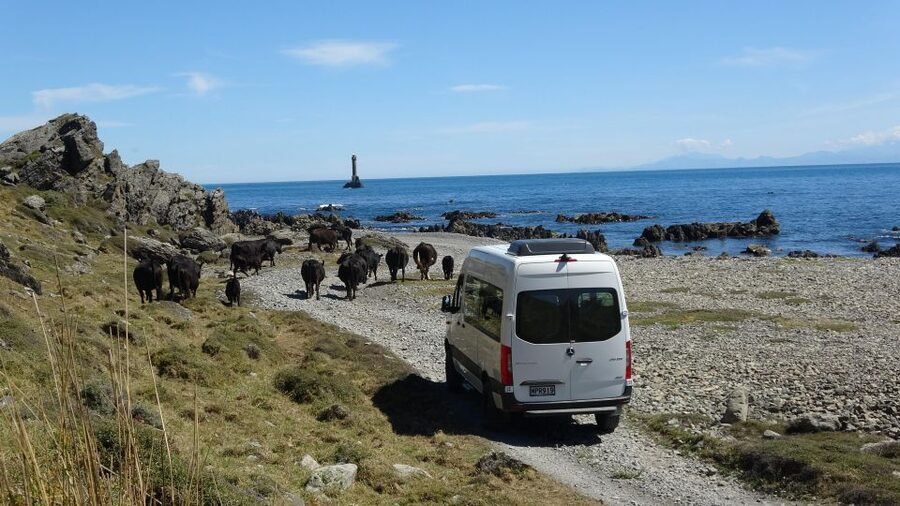
If your Wellington trip has a hole in it, and you want a half-day that mixes native forest, private farmland access, big South Island views, and fur seals at sea level, this is an easy yes. The biggest reason to book is simple: it is one of the rare short tours that gets you close to real wildlife and real places, not just a drive-by photo stop.
But if you are mainly looking for a super-smooth, minimal-movement outing, you might feel the bumpy tracks and the coastal approach. For the right traveler, though, this tour hits that sweet spot of access, story, and unforgettable fur seal time within reach of the city.
If you want me to tailor advice, tell me your travel dates and whether you get motion sickness, and I’ll suggest what to prioritize.
FAQ
How long is the Wellington Half Day Seal Coast Safari?
The tour duration is 210 minutes, about 3.5 hours.
Where does pickup happen?
Pickup is included from central Wellington locations and the cruise terminal. You’ll be asked to choose your pickup point when booking, and for driving into the city you can park near Te Papa and meet at the main entrance.
What is the walking like?
Minimal walking is required. There is still a rocky, sandy track used to reach Tongue Point, where you view the fur seals.
What animals will I see?
You will visit Otari-Wilton’s Bush where native birds may be seen, and you will reach Tongue Point to observe New Zealand fur seals in their natural habitat.
Does the tour run in bad weather?
Yes. The safari runs in all weather, and routes may be adjusted depending on weather and other conditions.
Is this tour suitable for wheelchair users?
No. It is not suitable for wheelchair users.
Four-Wheel-Drive Runs Near Wellington
Everything Else We Wrote Up in Wellington


The Capital, Continued
Just added to our Wellington notes
- Wellington Zoo General Entry Tickets★ 3.9 · 7 reviews
- Wellington Full Day Private Tour in Electric Tesla SUV★ 5.0 · 7 reviews
- Private Martinborough Wine Tour in an Electric Vehicle – Tesla Model Y★ 5.0 · 7 reviews
- Martinborough Chefs shared wine tour ŵ lunch from Wellington★ 4.5 · 7 reviews
- Easy Rider Two-Hour Wellington eBike Tour★ 5.0 · 7 reviews
- A Taste of Kapiti – Kapiti Foodie Delights Tour★ 5.0 · 7 reviews
Wellington Tours and Attractions, compared.
 ★ 4.7Wellington: Wētā Workshop Guided Tour TicketFrom $35997 reviews
 ★ 5.0Wētā Workshop Experiences Tour – WellingtonFrom $36875 reviews
 ★ 4.6Wellington: Return Cable Car TicketFrom $7714 reviews
 ★ 4.5Half Day Tour of WellingtonFrom $79638 reviews
 ★ 4.8Wellington: Guided City Tour with Cable Car TicketFrom $53553 reviews
 ★ 5.0Wellington’s Original LOTR Experience – includes Weta and LunchFrom $201529 reviews
 ★ 5.0Kapiti Island Classic Guided Day TourFrom $191522 reviews
 ★ 4.0Northern Explorer Train Journey from Wellington to AucklandFrom $157513 reviews
Browse the lists this tour appears in