
REVIEW · QUEENSTOWN TOURS AND DAY TRIPS
Queenstown: Tandem Paraglide – Winter – Coronet Peak 5400ft
Queenstown gets real high, fast. A 5,400-foot winter tandem paraglide off Coronet Peak is one of those rare activities where the views feel like they start instantly, not after you wait all day. I like that the experience leans into what you care about most, big height, long time up there, and a smooth, guided landing.
One practical catch: you need access to the takeoff area, and that usually means a chair-lift ski-field pass unless you already have one.
In This Review
- Key Takeaways Before You Go
- A 5,400-Foot Launch That Changes the Whole Perspective
- From Queenstown Check-In to Coronet Peak: How the 2 Hours Moves
- The Chair-Lift Pass and the Snow Walk: Small Details, Real Impact
- Safety Briefing and Tandem Setup: What Happens Before You Fly
- Your 15 to 20 Minutes in the Air: Glide, Look Around, Repeat
- The Views: Snow-Capped Peaks and a Bird-Eye Moment
- Price and Value: Is $216 Worth It in Winter?
- Who Should Book This Tandem Paraglide, and Who Should Skip It
- After the Landing: How You Wrap Back Into Queenstown
- Should You Book SkyTrek Coronet Peak Tandem Paragliding in Winter?
- FAQ
- Where do I check in for this tandem paragliding experience?
- How long is the experience, and how much time is spent flying?
- What is included in the price of $216 per person?
- Do I need a ski-field chair-lift pass to reach the takeoff location?
- What language is used during the experience?
- What group size should I expect?
- What is the maximum weight limit?
- Is this experience suitable for young children?
- What is the cancellation policy?
Key Takeaways Before You Go
- 5,400 feet from New Zealand’s highest commercial launch means serious height and serious views
- Longer flight time compared to many lower launch options, with an easy pace in the air
- Small group (up to 5) so you feel less like a numbered passenger
- A clear, step-by-step tandem process from harness fit to the first steps into launch
- Winter snow adds texture to the trip, including a short walk to the launch area
Queenstown has plenty left in it
- Queenstown: Walter Peak Gourmet BBQ & Lake Whakatipu Cruise
★ 4.8 · 2,713 reviews - Queenstown: Milford Sound Coach & Cruise Full-Day Trip
★ 4.7 · 2,592 reviews - Shotover River Extreme Jet Boat Ride in Queenstown
★ 5.0 · 2,540 reviews - Milford Sound Fly-Cruise-Fly Tour from Queenstown
★ 5.0 · 1,792 reviews
A 5,400-Foot Launch That Changes the Whole Perspective
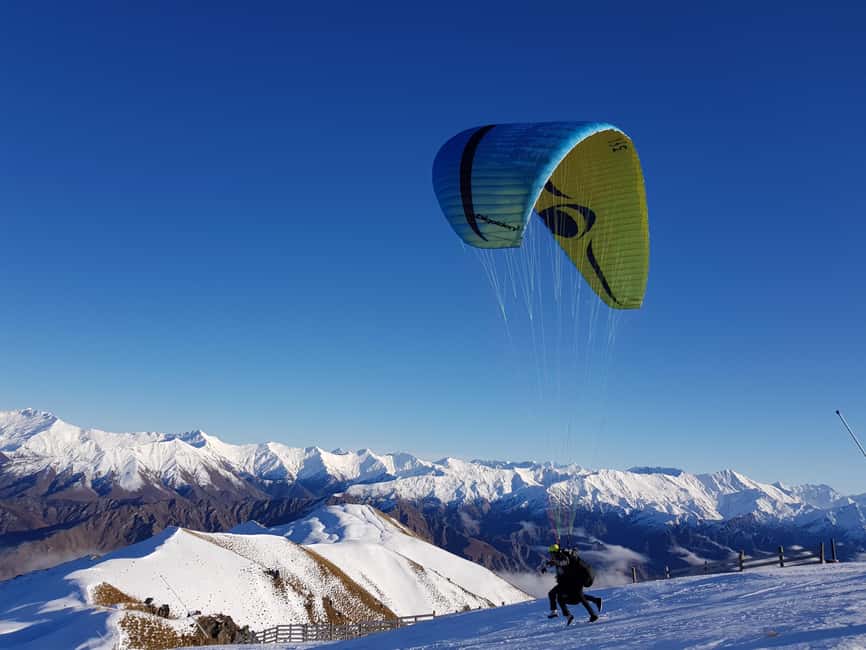
The headline is the launch height. Coronet Peak’s commercial launch sits at 5,400 feet, and that is exactly why this flight feels different from the shorter, lower takeoffs you might see elsewhere in the region. More altitude gives you more room to enjoy the glide, and SkyTrek also highlights the longest flight time for this style of setup.
In winter, the scenery is all snow and sharp edges. Even if you are just used to looking at the Remarkables from the ground, your brain has trouble recalibrating once you are above it all. Your eyes keep searching for roads and buildings, then you realize the whole valley is laid out under you like a map.
I also like that this is tandem. You get the thrill, while your pilot handles the flying. That sounds obvious, but in practice it means you can focus on your body, your breathing, and the view, instead of thinking about controls or timing.
The main drawback is logistics for the takeoff access. The chair-lift part is not included, and it can add a chunk of cost if you do not already have a winter pass.
From Queenstown Check-In to Coronet Peak: How the 2 Hours Moves
Your day starts at the SkyTrek desk inside the Ziptrek Ecotours Shop, right in central Queenstown. Plan to arrive a bit early so you can check in without feeling rushed. After that, you are on a courtesy shuttle to the Coronet Peak ski-field area.
The drive is about 20 minutes. That matters more than you might think, because it gets you out of town and into the winter staging zone without dragging the activity out. Once you reach the end of the Coronet Peak ski-field road, your pilot keeps the flow moving.
Next comes the chair-lift portion. Your pilot guides you to it, and this is where you need the ski-field pass. If you have your own ski-pass, you use it. If not, you can buy a one-off pass at check-in. In winter 2024, that one-off price is $35.
From there, it is all about getting to launch safely and efficiently. You ride up, then do a short walk in snow to the takeoff area. It is brief, but you should wear footwear and outer layers you trust on slick surfaces.
The Chair-Lift Pass and the Snow Walk: Small Details, Real Impact
This experience includes the flight and the courtesy transport, but it does not include the chair-lift access. That is the one add-on you need to think about before you go.
Why does that matter? Because it controls how early you need to show up and how smooth your start feels. If you arrive with the right pass, you lose almost no time. If you are buying at check-in, you want to stay calm and let the staff handle it.
Once you are at the top of Coronet Peak, you and your pilot walk to the launch area. In winter, that walk is on snow, so you want to be prepared for cold feet and a bit of slippery footing. Dress warm, and keep your focus on your footing rather than on taking photos at every step.
This is also where the atmosphere shifts. On the ground, you think of Queenstown as a fun base for hikes and adventure. At the top, it becomes a launch platform. The wind, the cold, the staging, all of it makes you realize you are about to add a new dimension to your time in New Zealand.
Safety Briefing and Tandem Setup: What Happens Before You Fly
Before anything starts moving fast, you get a proper safety briefing. Your pilot explains what you will need to do to become airborne together. This is where tandem paragliding earns its trust. You are not just being strapped in and pushed.
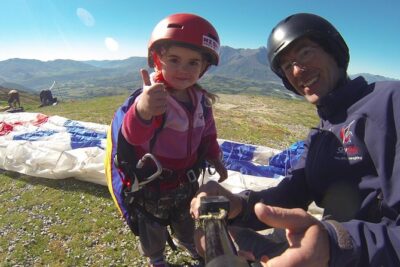
You are fitted with harnesses and a helmet, and they are checked for fit and safety. Then the pilot prepares for launch. In winter, this matters even more because cold hands and bundled clothing can make movement awkward, so you want to know how to hold yourself and where to place yourself during the steps.
During the final minutes, you will notice the rhythm. Everything is deliberate: gear check, positioning, briefing, then launch prep. One of the best review signals here is that people describe it as clockwork. That is what you want for an adventure at altitude.
The actual inflation happens behind you when the glider is ready. The process is part mechanical, part sensory. First you feel the gear come alive, then you shift into launch mode.
Other drop zones we have written up

Your 15 to 20 Minutes in the Air: Glide, Look Around, Repeat
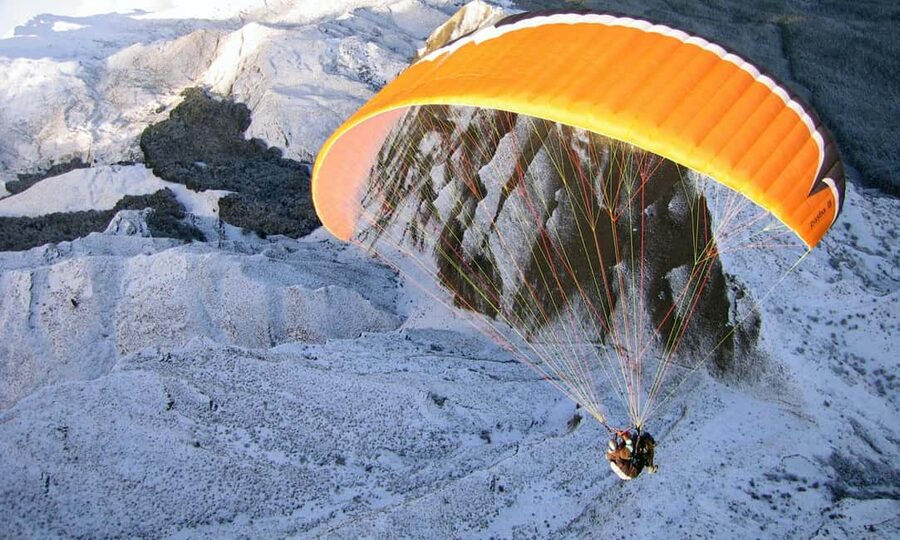
After a couple of steps with your pilot, you become airborne. From that point, you can expect a gradual, controlled ride. The pilot navigates the paraglider over the ski-field, and then you slowly descend.
SkyTrek notes a typical time of about 15 to 20 minutes in the air. That is the golden window where you can relax your shoulders and really take in what is under you. It is long enough to stop thinking about the steps and start thinking about the view.
What it feels like is mostly about perspective. Mountains stop being background. They become scale. Snow patterns and ridges turn into lines you can trace with your eyes. And because you are descending gently toward a valley-floor landing, you do not get that sudden, stomach-dropping feeling that can happen in some adrenaline sports.
Landing is also described as gentle. The pilot guides the flight all the way to a safe touchdown on the valley floor. After that, equipment gets packed up, and your ground crew takes care of the next step.
One extra detail worth calling out from an experience like this: if your pilot is friendly and confident, you might get a chance to do small control input while staying fully safe. One of the named pilots in the feedback, Tai, is specifically mentioned as experienced and as someone who let the participant try to control it. You should not assume that is guaranteed every time, but it gives you a good sense that some pilots will share the thrill by letting you participate.
The Views: Snow-Capped Peaks and a Bird-Eye Moment
You came for the feeling of flying. But the other half of the reason people love this is what you see once you are up.
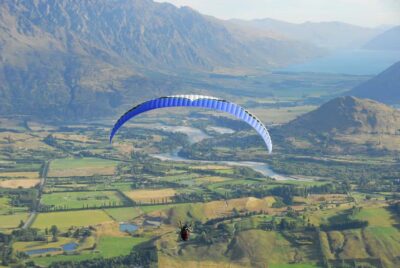
This winter flight centers on snow-capped mountains and a sweeping view over the ski area and surrounding terrain. Even if you have already seen Queenstown from a viewpoint, this is a different scale. You are not looking at mountains and thinking how far away they are. You are seeing how they stack, layer by layer, with winter light bouncing off the snow.
The height is the difference maker. When you take off at 5,400 feet, you are far enough out that the valley looks calm and structured, like a living map. That makes the whole experience feel bigger than the 2-hour total time.
And the fact that your flight is described as longer ties directly into your enjoyment. You spend more time looking and less time waiting for the ride to end. For many first-timers, that is the difference between seeing something amazing for a minute and remembering it for years.
Price and Value: Is $216 Worth It in Winter?
The listed price is $216 per person for winter tandem paragliding. What you get for that money is the flight plus the courtesy transport to Coronet Peak.
The only major cost you should plan for on top is the chair-lift ski-field pass. In winter 2024, the one-off pass price is $35 if you do not already have your own. That means a realistic winter cost for many people can be closer to $251 per person, depending on whether you already have a pass.
Here is how I think about the value.
You are paying for a lot of altitude-specific logistics: shuttle timing, a chair-lift access window, winter gear prep, and a pilot who manages safety and navigation. You also get a small-group setup, with a limit of 5 participants. In other words, you are not just paying for the jump, you are paying for the whole carefully controlled staging.
If you already planned to visit the Coronet Peak area anyway, the chair-lift pass might be part of your day already. If you were only coming for one thrilling flight, factor in the ski pass and then compare the overall time commitment. This is about 2 hours door to door, not an all-day production.
For many first-time Queenstown visitors, $216 plus a ski pass can still feel like good value because you get a once-in-a-lifetime kind of view with a short time investment. The biggest reason it may not feel worth it is if you are on a tight schedule or you dislike cold outdoor waiting. Winter does bring that reality.
Who Should Book This Tandem Paraglide, and Who Should Skip It
This is a strong fit if you want a premium, scenic adventure without needing any flying skills. Tandem means you are not learning to control a paraglider. You are just doing the fun part: being airborne and enjoying the view.
It is also a great pick if you like structure. The process is step-by-step, from check-in to harness fit to inflation to launch steps. The feedback about things running like clockwork is a good sign that nervous first-timers often feel more at ease.
A few clear limitations and considerations:
- Maximum weight limit is 120 kg.
- Not suitable for children under 6 years.
- Sessions are typically in the morning and afternoon, so check the timing you want for your day.
- The experience is in English, so if you need a specific language, verify that the English instruction is comfortable for you.
If you hate cold and snow and do not like waiting outside at elevation, you might find winter harder than expected. You can still dress for warmth, but your comfort depends on your winter clothing plan.
After the Landing: How You Wrap Back Into Queenstown
Once you land on the valley floor, the rest is mostly easy. Equipment gets packed up, and the ground crew helps with the ride back.
You return to Queenstown with the overall experience taking about 2 hours. That short overall time window is part of the appeal, because you can often pair it with other Queenstown activities later the same day.
It also helps that the courtesy transport is part of the experience. You are not dealing with complicated transit at the ski area. You just follow the flow and let the team handle it.
Should You Book SkyTrek Coronet Peak Tandem Paragliding in Winter?
I think you should book this if you want the most dramatic kind of mountain view in the shortest amount of time. The combination of 5,400 feet, a small group size, and a 15 to 20 minute flight makes it feel efficient, not rushed.
You should also book it if you like confidence and calm. The guidance is built around safety checks, a briefing, and a deliberate launch process. If you are the type who wants to understand what is happening before you commit, this format is designed for that.
Skip it, or at least reconsider, if cold outdoor time is a deal breaker for you or if you are sensitive to snow conditions while walking to the launch area. Also double check your ski pass situation ahead of time so the chair-lift step does not surprise you at the desk.
If you are landing in Queenstown for a few days and you want one big, iconic adventure, this is exactly the kind of activity that turns your photos into memories.
FAQ
Where do I check in for this tandem paragliding experience?
Check in at the Skytrek desk inside the Ziptrek Ecotours Shop in central Queenstown.
How long is the experience, and how much time is spent flying?
The full experience takes about 2 hours. You typically spend about 15 to 20 minutes in the air.
What is included in the price of $216 per person?
The price includes the flight and the courtesy transport to Coronet Peak.
Do I need a ski-field chair-lift pass to reach the takeoff location?
Yes. A ski-field pass is required to ride the chair-lift to access the takeoff location. You can use your own ski pass or buy a one-off pass from the operator at check-in (price noted as $35 in winter 2024).
What language is used during the experience?
Instruction is provided in English.
What group size should I expect?
It runs as a small group, limited to 5 participants.
What is the maximum weight limit?
The maximum weight limit is 120 kg.
Is this experience suitable for young children?
It is not suitable for children under 6 years old.
What is the cancellation policy?
You can cancel up to 24 hours in advance for a full refund.
Everything Else We Wrote Up in Queenstown


Other Drop Zones

Still in Queenstown? Keep Going

Just added to our Queenstown notes
- Queenstown: Whimsical Sensory Night Walk at LUMA Enchanted★ 5.0 · 6 reviews
- Queenstown to Tekapo Small Group Tour One Way★ 4.6 · 6 reviews
- Queenstown: Helicopter & Wine Tasting Tour★ 5.0 · 6 reviews
- Lake Wakatipu: 3 Hour Fishing Adventure by Boat★ 5.0 · 6 reviews
- Queenstown International Airport To and From City Center Transfer★ 5.0 · 7 reviews
- Milford Sound Tour: Cruise & Flight★ 5.0 · 7 reviews
Queenstown Tours and Day Trips, compared.
 ★ 5.0Premium Milford Sound Small Group Tour & Cruise from QueenstownFrom $2163,001 reviews
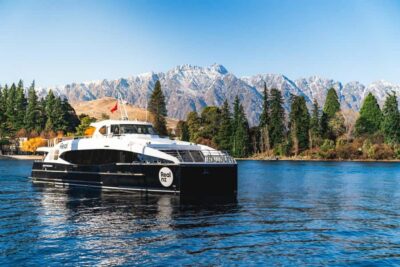 ★ 4.8Queenstown: Walter Peak Gourmet BBQ & Lake Whakatipu CruiseFrom $952,713 reviews
 ★ 4.7Queenstown: Milford Sound Coach & Cruise Full-Day TripFrom $1442,592 reviews
 ★ 5.0Shotover River Extreme Jet Boat Ride in QueenstownFrom $1132,540 reviews
 ★ 5.0Milford Sound Fly-Cruise-Fly Tour from QueenstownFrom $4621,792 reviews
 ★ 4.7Queenstown: Shotover River and Kawarau River Jet Boat RideFrom $891,682 reviews
 ★ 4.9From Queenstown: Milford Sound Full-Day Trip by Plane & BoatFrom $4471,558 reviews
 ★ 5.0Queenstown: Lake Wakatipu Scenic Cruise (90 Minutes)From $491,462 reviews
Browse the lists this tour appears in